All posts by Our Reporter

NYSC Warns Employers Against Neglecting Corps Members, Seeks Better Welfare and Safer Workplaces

The National Youth Service Corps (NYSC) has called on employers of corps members across Nigeria to take greater responsibility for their welfare, security and workplace experience, warning that poor treatment of young graduates undermines the objectives of the national service programme.

The call was made on Tuesday during the 2026 Corps Employers’ Workshop held in Sokoto, with the theme: “Fine-Tuning Stakeholders’ Collaboration to Enhance Corps Members’ Welfare and Workplace Experience.”

The workshop brought together NYSC officials, government representatives, employers and other stakeholders to review challenges affecting corps members and strengthen partnerships aimed at improving their service year experience.

Representing the NYSC Director-General, Brigadier General Olakunle Oluseye Nafiu, the Acting Director of the North-West Area Office II, Alhaji Usman Yakubu Yaro, stressed that employers remain critical partners in ensuring that corps members operate in safe, supportive and productive environments.

He said corps members should not be viewed as temporary labour but as young professionals equipped with skills and knowledge capable of contributing meaningfully to national development.

NYSC Raises Concern Over Corps Members’ Rejection

A major concern highlighted at the workshop was the increasing cases of corps members being rejected by their places of primary assignment.

According to the NYSC Director-General, some employers and corps members engage in deliberate arrangements to facilitate rejection, a development he described as detrimental to the objectives of the scheme.

He urged stakeholders to discourage such practices and ensure that corps members are properly integrated into their assigned organisations.

Nafiu also expressed concern over the underutilisation of corps members, noting that many graduates are not given responsibilities that reflect their academic backgrounds, skills and professional abilities.

He emphasised that organisations stand to benefit more when corps members are assigned meaningful roles that allow them to contribute effectively.

Delayed Clearance, Accommodation and Welfare Challenges

The NYSC management also identified delays in issuing monthly clearance to qualified corps members as another challenge affecting the smooth running of the programme.

The Director-General criticised organisations that fail to formally request corps members but still expect the NYSC to deploy personnel to them, describing such attitudes as counterproductive to effective manpower planning.

Earlier, the NYSC Sokoto State Coordinator, Mr. Gabriel Tyoyer Ter, listed several challenges confronting corps members in the state, including absconding, poor treatment at places of primary assignment, inadequate support for Community Development Service (CDS) projects and accommodation difficulties.

He said the employers’ workshop was designed to create a platform where stakeholders could discuss practical solutions and develop strategies to improve the overall service experience of corps members.

Strengthening Partnership for National Development

The Sokoto NYSC coordinator reaffirmed the commitment of the scheme to promoting national unity, youth empowerment and socio-economic development through the service programme.

He noted that the NYSC Management/Corps Employers’ Forum had continued to strengthen cooperation between the scheme and employers, resulting in improved deployment, monitoring and utilisation of corps members.

Stakeholders at the workshop pledged renewed commitment to working with the NYSC to enhance the welfare, safety and productivity of corps members serving across Sokoto State.

The consensus was that a stronger partnership between employers and the NYSC remains essential to achieving the founding vision of the scheme — building a united Nigeria through meaningful youth engagement and service.

Dangote Refinery Dumps Naira for Dollar Pricing as Petrol Now Sells at $0.779 Per Litre

Dangote Petroleum Refinery has officially commenced the sale of Premium Motor Spirit (PMS), popularly known as petrol, in United States dollars, marking a significant shift in Nigeria’s downstream petroleum market.

Under the new pricing template, which took effect on Monday, July 13, 2026, the refinery fixed the ex-depot price of petrol at $0.779 per litre, while Automotive Gas Oil (diesel) now sells at $1.087 per litre and aviation fuel at $0.942 per litre. Coastal deliveries of petrol have also been priced at $1,044.62 per metric tonne.

The development effectively ends naira payments for petrol, diesel and aviation fuel purchased from the refinery, reversing the naira-based transaction model introduced under the Federal Government’s naira-for-crude policy, which began on October 1, 2024.

In a notice issued to petroleum marketers and customers, the refinery announced that all previously issued naira-denominated Proforma Invoices (PFIs) and Deal Recaps for both gantry and coastal transactions had become invalid.

According to the notice signed by the refinery’s Group Commercial Operations, customers were instructed not to make payments using the old naira invoices, as all transactions for the affected products will now be conducted in US dollars.

The refinery, however, clarified that the new pricing arrangement does not apply to Liquefied Petroleum Gas (LPG), which will continue under its existing payment structure.

Why the Change?

Industry sources attributed the decision to the growing mismatch between the currency used to purchase crude oil and the currency used to sell refined petroleum products.

Although the refinery previously benefited from the Federal Government’s naira-for-crude initiative, recent crude oil supplies from the Nigerian National Petroleum Company Limited (NNPCL) have increasingly been denominated in US dollars.

According to industry insiders, Dangote Refinery has recently received fewer crude cargoes under the naira-for-crude arrangement while continuing to sell a substantial portion of its refined products in naira. This exposed the refinery to foreign exchange risks amid fluctuating exchange rates and volatile international crude oil prices.

Aligning refined product sales with the currency used to procure crude oil, analysts say, is aimed at reducing exchange-rate losses and improving commercial sustainability.

What It Means for Nigerians

The refinery’s decision is expected to have significant implications for petroleum marketers, who depend heavily on Dangote Refinery for nationwide fuel distribution.

While the refinery has adopted dollar-denominated pricing, the retail pump price paid by consumers will still depend on several variables, including:

The prevailing naira-to-dollar exchange rate.

International crude oil prices.

Transportation and logistics costs.

Regulatory charges.

Marketers’ operating costs and profit margins.

The transition also raises fresh concerns about the future of the Federal Government’s naira-for-crude policy, which was designed to support local refining, reduce pressure on Nigeria’s foreign exchange market and promote more stable fuel prices.

With Dangote Refinery supplying a substantial share of Nigeria’s refined petroleum products, industry stakeholders are expected to closely monitor how the new pricing regime affects fuel prices, market competition and the broader economy in the coming weeks.

Bottom Line

Dangote Refinery’s decision to price petrol, diesel and aviation fuel in US dollars represents one of the most significant changes in Nigeria’s downstream oil sector since fuel market deregulation. While the move is expected to help the refinery manage foreign exchange risks, its long-term impact on fuel prices, marketers and consumers will largely depend on exchange rate stability and the Federal Government’s next steps regarding the naira-for-crude policy.

FG Develops New National Framework to Reintegrate Ex-Combatants and Strengthen Counter-Terrorism Efforts

The Federal Government has taken a significant step toward addressing Nigeria’s growing security challenges by unveiling a comprehensive set of Standard Operating Procedures (SOPs) to guide the implementation of its Disarmament, Demobilisation and Reintegration (DDR) programme.

The initiative is designed to strengthen the country’s non-military approach to tackling terrorism, violent extremism, armed banditry and other forms of conflict by providing eligible individuals with structured pathways to abandon violence and successfully reintegrate into society.

The development was announced on Monday in Abuja by the National Coordinator of the National Counter Terrorism Centre (NCTC), Office of the National Security Adviser, Major General Adamu Laka, during the National Validation Workshop on the SOPs for the DDR programme at both the federal level and in the pilot states of Kaduna, Katsina and Zamfara.

According to Laka, the newly developed SOPs transform the objectives of the National DDR Framework into practical guidelines that will ensure transparency, accountability, professionalism and effective coordination among all institutions responsible for implementing the programme.

He explained that the procedures were formulated after extensive consultations involving key stakeholders and were informed by Nigeria’s security realities, lessons from previous national experiences and internationally recognised best practices.

The framework clearly outlines the responsibilities of participating institutions, strengthens inter-agency collaboration, standardises operational procedures and ensures that all DDR activities comply with human rights principles and the rule of law.

Laka emphasised that while military operations remain crucial in dismantling terrorist and criminal networks, sustainable peace requires complementary non-kinetic strategies that encourage those willing to renounce violence to safely return to civilian life.

He noted that consultations conducted across Nigeria’s six geopolitical zones revealed overwhelming support for a nationally coordinated, community-driven and human rights-based DDR system capable of responding to evolving security threats such as terrorism, violent extremism, banditry, communal clashes, farmer-herder conflicts, organised crime and separatist violence.

The validation workshop also marked an important milestone in institutionalising a transparent and coordinated DDR architecture across Nigeria, with special attention given to the pilot states of Kaduna, Katsina and Zamfara due to their unique security challenges.

Speaking at the event, the Director of Preventing and Countering Violent Extremism at the NCTC, Ambassador Abimbola Wońosikou, said the SOPs were created to harmonise existing rehabilitation and reintegration initiatives under one coordinated national framework.

She disclosed that State DDR Committees have already been established in Kaduna, Katsina and Zamfara to oversee implementation at the sub-national level. These committees include representatives from state governments, security agencies, the judiciary, traditional and religious institutions, women’s and youth organisations, civil society groups and technical experts.

According to Wońosikou, the SOPs provide detailed guidance on institutional responsibilities, case management, referral systems, information sharing, community engagement, monitoring and evaluation, coordination mechanisms and safeguards for protecting human rights.

She clarified that while the DDR programme provides rehabilitation opportunities for eligible individuals willing to abandon violence, those found responsible for serious criminal offences will continue to face prosecution in accordance with Nigerian law.

Wońosikou also stressed the importance of a coordinated public communication strategy to combat misinformation and improve public understanding of the programme’s objectives.

Representing the United Nations Peace Support Office, Mario Nascimento commended Nigeria for adopting a modern DDR framework that reflects the country’s changing security landscape.

He noted that Nigeria’s approach now extends beyond rehabilitating former combatants to strengthening community resilience and promoting shared responsibility for sustainable peace.

Nascimento emphasised that successful reintegration cannot occur in isolation but requires the active participation of host communities, civil society organisations, local authorities and the private sector.

The new Standard Operating Procedures are expected to serve as the operational backbone of Nigeria’s DDR programme, reinforcing the Federal Government’s commitment to reducing violence, preventing the return of former combatants to armed groups, strengthening community resilience and promoting long-term national peace and stability.

Trump’s IRS Case Backfires as Judge Condemns Lawsuit and Orders Disciplinary Action

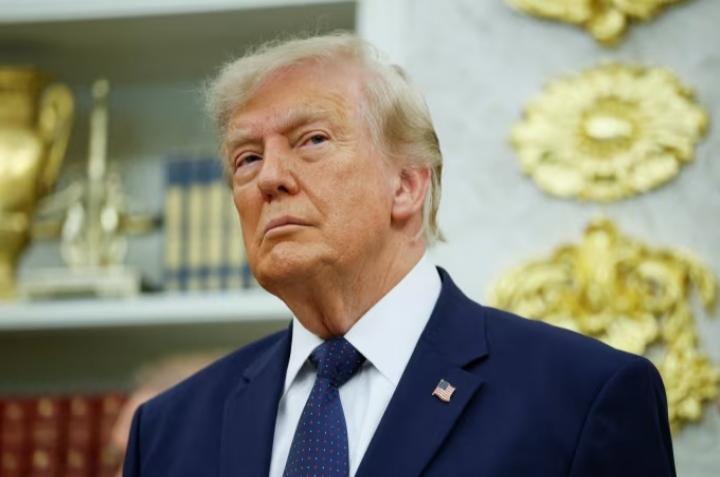
A U.S. federal judge has sharply criticized President Donald Trump and the attorneys who represented him in a controversial lawsuit against the Internal Revenue Service (IRS), describing the case as an attempt to manipulate the judicial system for political and personal advantage.

In a strongly worded 56-page ruling issued on Monday, U.S. District Judge Kathleen Williams concluded that the lawsuit was filed in bad faith and was designed to provide legal legitimacy to actions that extended far beyond the boundaries of the law.

According to the court, the case sought to support the creation of a proposed $1.8 billion “anti-weaponization” fund, intended to compensate individuals and organizations aligned with President Trump. The lawsuit was also cited as justification for a Trump administration directive that would have granted the President and his businesses immunity from potential past tax-related liabilities.

Judge Williams ruled that the conduct of both Trump’s legal team and the U.S. Department of Justice (DOJ) during the litigation was deeply troubling.

“The nature of the suit itself and the conduct of the parties and counsel from its filing make plain that this was an attempt to use the Court to provide some legitimacy to an agreement to confer immunity to people and entities affiliated with the President and to earmark billions of dollars from American taxpayers to redress grievances not defined in the law,” the judge wrote.

The judge further criticized the Justice Department, stating that government lawyers abandoned their responsibility to defend the interests of the United States by agreeing to a settlement that departed from established DOJ policies and pursued objectives that were neither legally authorized nor permissible.

As part of the ruling, Judge Williams ordered sanctions against the attorneys involved in the case. She also directed that her opinion be forwarded to attorney disciplinary authorities in New York and Washington, D.C., where professional ethics complaints involving Acting Attorney General Todd Blanche and Associate Attorney General Stanley Woodward are already under review.

Additionally, one private attorney who represented Trump has been referred to the Florida Bar for possible disciplinary proceedings, while another has been barred from appearing before the U.S. District Court for the Southern District of Florida for one year.

The ruling also suggests that retired judges who challenged the legality of the proposed settlement may be entitled to recover their legal costs.

Responding to the decision, a spokesperson for Trump’s legal team defended the lawsuit, arguing that the IRS had improperly allowed a politically motivated employee to leak confidential tax information concerning Trump, his family, and the Trump Organization to media organizations, including The New York Times and ProPublica. The spokesperson maintained that President Trump remains committed to holding accountable those responsible for what his team describes as unlawful disclosures.

The U.S. Department of Justice had not publicly commented on the ruling at the time of publication.

The decision marks another significant legal setback for President Trump and underscores the judiciary’s willingness to scrutinize legal actions viewed as exceeding constitutional and statutory limits.

Oxford Scientists Launch Human Trials of New Ebola Vaccine Amid Escalating Congo Outbreak

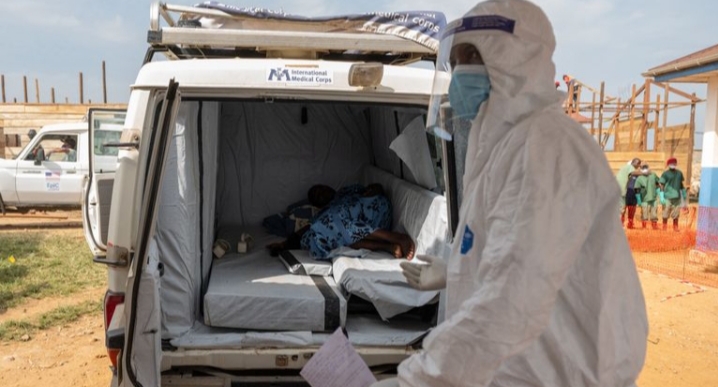
Scientists at the University of Oxford are preparing to begin human trials of a promising new vaccine designed to protect against the Bundibugyo strain of Ebola, as health authorities race to contain a deadly outbreak in the Democratic Republic of Congo (DRC).

The clinical trial, expected to commence in the coming weeks pending regulatory approval, will assess the vaccine’s safety and ability to trigger an immune response in 50 healthy volunteers aged between 18 and 55 years in the United Kingdom.

The vaccine, known as ChAdOx1 BDBV, was developed in record time following the World Health Organization’s (WHO) declaration of the Bundibugyo Ebola outbreak as a Public Health Emergency of International Concern on May 17. Remarkably, the candidate vaccine reached the trial stage in just 57 days, highlighting the speed of modern vaccine research and global scientific collaboration.

Researchers revealed that 620,000 doses of the vaccine have already been manufactured and stockpiled for potential emergency use, while 4,000 investigational doses have been allocated specifically for the Oxford clinical trial.
One major advantage of the vaccine is that it uses the same ChAdOx viral vector technology employed in the widely used Oxford/AstraZeneca COVID-19 vaccine, enabling scientists to accelerate its development and production.

Professor Teresa Lambe, the study’s lead scientific investigator, said the worsening Ebola outbreak underscores the urgent need for effective vaccines.
“The ongoing Bundibugyo ebolavirus outbreak continues to devastate affected communities, underlining the urgent need for effective vaccines and treatments,” she said.

She added that the rapid development of the vaccine demonstrates the value of strong international scientific partnerships in responding swiftly to emerging health emergencies.

The outbreak continues to worsen. According to the latest figures released on Monday, the DRC has recorded 1,926 confirmed Ebola cases, including 702 deaths, making the search for an effective vaccine increasingly urgent.

Health experts believe that if the vaccine proves safe and effective during the trial, it could become an important tool in controlling future outbreaks of the Bundibugyo strain, one of the less common but highly dangerous forms of the Ebola virus.

The Oxford trial represents another significant step in global efforts to strengthen preparedness against emerging infectious diseases and prevent future public health crises.

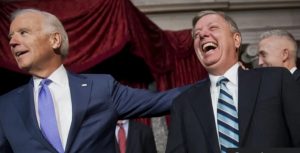
Lindsey Graham: The Republican Senator Who Rode the Winds of Political Change Dies, Leaving Behind a Complex Legacy

The death of longtime Republican Senator Lindsey Graham has triggered reflections on a political career that mirrored the dramatic transformation of the Republican Party and American politics during the era of Donald Trump.

For more than two decades in the United States Senate, Graham built a reputation as a conservative voice on national security, foreign policy, and America’s role in global affairs. But beyond his policy positions, his career became a remarkable study of political adaptation — moving from one of Donald Trump’s fiercest critics to one of the former president’s most dependable allies.

Graham, who represented South Carolina in the Senate for 23 years, was once closely associated with the late Senator John McCain, a Republican known for his independence and willingness to challenge his own party. Their partnership reflected Graham’s earlier political identity as a conservative who valued bipartisan cooperation.

When Graham launched his own presidential campaign in 2015, he campaigned on reducing partisan hostility in Washington, famously suggesting that leadership required lawmakers to sit together, debate issues, and find common ground.

However, the rise of Donald Trump dramatically changed the political environment Graham operated in.

During the 2016 Republican primary, Graham became one of Trump’s most outspoken critics. He condemned Trump’s comments about McCain’s military service, calling him unfit for the presidency. Their feud escalated after Trump publicly revealed Graham’s phone number during a rally, leading to a flood of hostile messages directed at the senator.

At the height of his opposition, Graham warned that if Republicans nominated Trump, the party would suffer political damage and “deserve it.”

Even after Trump won the 2016 presidential election, Graham initially remained cautious. But as Trump reshaped the Republican Party, Graham’s position changed significantly.

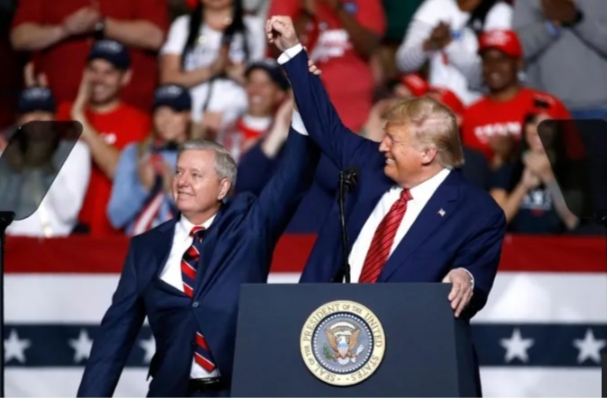
He became one of Trump’s closest allies in Congress, frequently defending the president’s policies, appearing regularly on television, and supporting key decisions by the administration.

One of the defining moments of Graham’s influence came during the confirmation battle of Supreme Court Justice Brett Kavanaugh. Graham strongly defended Kavanaugh against allegations of sexual misconduct, which Kavanaugh denied, helping secure his confirmation in a closely divided Senate vote.

However, Graham’s relationship with Trump briefly fractured after the 2020 presidential election, when Trump refused to accept defeat by Joe Biden.

Following the January 6, 2021 attack on the US Capitol by Trump supporters, Graham publicly declared that he was distancing himself from Trump, saying their political journey had reached a painful conclusion.

But that separation did not last.

Graham later supported Trump during his return to national political dominance and defended his presidency, arguing that he judged Trump based on his record in office. By the 2024 election cycle, Graham was once again firmly aligned with Trump’s political movement.

Despite his close relationship with Trump, Graham maintained friendships across party lines. Several Democratic lawmakers who disagreed with his politics still acknowledged his ability to build personal relationships and negotiate across the aisle.

Trump himself highlighted this quality, noting that Graham could communicate with Democrats and help resolve disagreements.

The Battle to Replace a Senate Veteran

Graham’s passing has created uncertainty for Republicans in Washington and South Carolina. The senator was preparing for another term and had already secured his party’s nomination without opposition.

South Carolina Governor Henry McMaster is expected to appoint an interim replacement, while Republicans will organize a fresh primary election to determine the party’s candidate for the November general election.

Although South Carolina remains a strongly Republican state, the open Senate seat could become a significant political contest if national political conditions shift.

Whoever succeeds Graham will inherit a position once occupied by a senator with decades of experience, deep relationships across party lines, and considerable influence in Washington.

Lindsey Graham’s legacy will likely remain one of the most debated political stories of his generation — a career defined by conservative principles, changing alliances, and the extraordinary political transformation brought about by the Trump era.

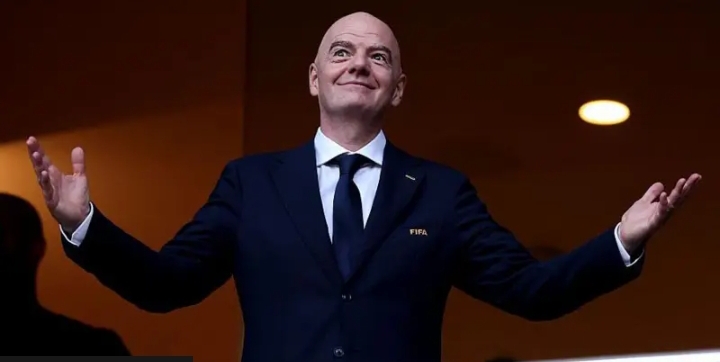
FIFA Weighs 64-Team World Cup as Infantino Pushes for Greater Global Inclusion

FIFA President Gianni Infantino has confirmed that world football’s governing body will consider proposals to expand the FIFA World Cup to 64 teams, saying the success of the newly introduced 48-team format has strengthened the case for broader global participation.

Speaking in an interview with Swiss broadcaster Blue Sport, Infantino said discussions on further expansion would take place after the conclusion of the 2026 FIFA World Cup.

According to him, the World Cup should reflect the global nature of football by creating more opportunities for nations from every continent to qualify and compete on the biggest stage.

“When organising a World Cup, it’s important to organise it for the whole world—not just Europe and South America, but effectively the entire world. Every nation should be allowed to dream of participating in the World Cup,” Infantino said.

Success of the 48-Team Format

The FIFA president described the expanded 48-team tournament, which debuts at the 2026 World Cup, as a major step toward making football more inclusive.

He pointed to Africa’s improved representation, noting that more African nations are reaching the knockout stages in international competitions, which he believes demonstrates the value of giving more countries the opportunity to compete.

The decision to increase the tournament from 32 to 48 teams was approved by the FIFA Council in 2017 and takes effect at the 2026 World Cup, which will be co-hosted by the United States, Canada and Mexico.

Proposal for a 64-Team Tournament

The idea of expanding the World Cup even further gained momentum after South America’s football governing body, CONMEBOL, formally proposed a 64-team tournament for the 2030 edition.

The 2030 FIFA World Cup will be primarily hosted by Spain, Portugal and Morocco, while Argentina, Uruguay and Paraguay will stage the opening matches to commemorate the tournament’s centenary. Uruguay hosted the inaugural FIFA World Cup in 1930.

Although the proposal remains under consideration, FIFA has not announced any decision on the matter.

Opposition from Football Leaders

The proposal has, however, drawn criticism from several senior football administrators.

Aleksander Čeferin described the idea as a “bad idea,” warning that a larger tournament could undermine both the quality of the World Cup and the integrity of the qualification process.

Similarly, Salman bin Ibrahim Al Khalifa cautioned that further expansion could create “chaos” for international football scheduling.

Concacaf President Victor Montagliani also expressed reservations, arguing that a 64-team competition could negatively affect the broader football ecosystem.

Hosting Challenges and Financial Benefits

Expanding the tournament would significantly increase logistical demands. A 64-team World Cup would likely feature 128 matches, requiring more stadiums, infrastructure, accommodation and transportation than ever before.

Questions have also been raised about whether future hosts, including Saudi Arabia, which is set to stage the 2034 FIFA World Cup, could successfully manage an event of such scale.

Despite these concerns, supporters argue that expansion would allow nearly one-third of FIFA’s 211 member associations to qualify, giving smaller football nations greater exposure and development opportunities.

A larger tournament would also generate additional broadcasting, sponsorship and commercial revenue, enabling FIFA to distribute more financial support to its member associations worldwide.

For now, FIFA says it will continue consulting stakeholders before any formal decision is taken. While no immediate expansion has been approved beyond the 48-team format, the debate over the future size of football’s biggest tournament is expected to remain a major topic in global football governance.

Ex-Minister Uche Nnaji to Face ICPC in Court Over Alleged Forgery, Fake NYSC Certificate

The Independent Corrupt Practices and Other Related Offences Commission (ICPC) is expected to arraign former Minister of Science and Technology, Chief Uche Nnaji, before the Federal High Court in Abuja on Monday over allegations bordering on forgery and the presentation of false official documents.

The arraignment follows Nnaji’s arrest by security operatives at the Nnamdi Azikiwe International Airport, Abuja, on July 1, shortly after his return to the Federal Capital Territory (FCT). The ICPC had confirmed that the arrest was part of an ongoing investigation into allegations against the former minister.

According to the anti-corruption agency, Nnaji is accused of forging academic credentials, including an alleged degree certificate purportedly issued by the University of Nigeria, Nsukka (UNN).

He is also alleged to have presented a forged National Youth Service Corps (NYSC) discharge certificate during his ministerial screening process in 2023.

The former minister is expected to take his plea before Justice Joyce Abdulmalik of the Federal High Court.

The allegations have attracted significant public attention, particularly because they relate to the authenticity of credentials submitted for public office. As of the time of filing this report, the court is yet to determine the merits of the allegations, and Nnaji remains entitled to the presumption of innocence until proven guilty in accordance with the law.

Another High-Profile Arraignment Scheduled

In a separate development, the Nigeria Police Force is also scheduled to arraign the Director-General of the alleged Presidential Foreign Intervention Promotion Council (PFIPC), Prince Adeniyi Adeyemi, before the same court on Tuesday.

According to a charge marked FHC/ABJ/CR/562/2025, Adeyemi and two other defendants will face an eight-count charge bordering on alleged forgery, impersonation and related offences.

The charge, filed on November 27, 2025, by police prosecutor Wisdom Madaki, lists several witnesses expected to testify during the trial.

Among them are the Chief of Staff to the President, Hon. Femi Gbajabiamila, alongside Paul Emmanuel, Jeremiah Imoukhede, Ituah Sylvester, officials from the Office of the Accountant General of the Federation (OAGF), Akimbo Shola, Adamu Balongu, and a Deputy Superintendent of Police.

The proceedings in both cases are expected to attract considerable public interest as the courts begin hearing allegations involving senior public figures and individuals accused of document forgery and related offences.

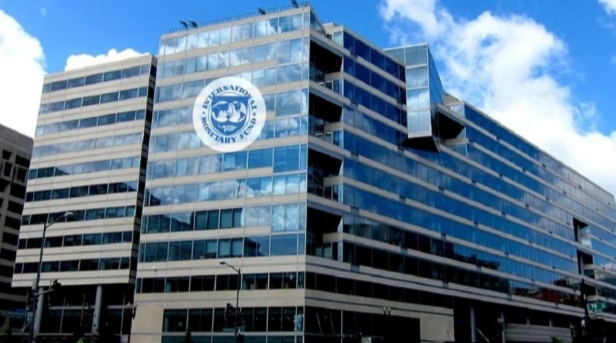
IMF Warns Nigerians to Brace for Higher Prices in 2026 as Poverty, Food Insecurity May Worsen

The International Monetary Fund (IMF) has projected that Nigerians are likely to face higher prices for essential goods in 2026, warning that the rising cost of living could deepen poverty and food insecurity even as the country’s macroeconomic environment shows signs of improvement.

The projection is contained in the IMF’s July 2026 World Economic Outlook (WEO) Update, which assessed global and regional economic trends.

According to the Fund, Nigeria’s economy is benefiting from improved macroeconomic stability and favourable terms of trade. However, it cautioned that increasing prices of food, energy and other essential commodities remain a major threat to household welfare.

«”Nigeria is supported by improved macroeconomic stability and favourable terms-of-trade effects, though higher prices for essentials are expected to further aggravate poverty and food insecurity,” the IMF stated.»

Global Energy Crisis Driving Inflation

The IMF attributed the inflationary outlook largely to the ongoing global energy crisis, which continues to push up the prices of fuel, transportation and essential commodities across many economies, particularly countries that depend heavily on energy imports.

According to the report, global headline inflation is expected to rise from 4.1 percent in 2025 to 4.7 percent in 2026, before moderating to 3.9 percent in 2027. The upward revision was driven mainly by higher food and energy prices.

The Fund also raised its earlier inflation forecast released in April 2026 by 0.3 percentage point for 2026 and 0.2 percentage point for 2027, reflecting stronger-than-expected inflationary pressures worldwide.

Inflation Outlook Differs Across Countries

The report explained that inflation will not affect all economies equally. Factors such as exchange rate movements, labour market conditions, persistent services inflation and country-specific economic policies will determine how severely individual countries experience rising prices.

The IMF noted that inflation is expected to decline only gradually in several advanced economies, including the United Kingdom, the United States, Japan and the euro area, while China is also projected to witness a modest increase in inflation from current low levels.

Geopolitical Tensions Pose Major Risk

Beyond inflation, the Fund warned that renewed geopolitical tensions—especially in the Middle East—remain the biggest threat to the global economy.

According to the IMF, any escalation of conflict could disrupt global supply chains, increase commodity prices, weaken currencies, trigger financial market volatility and ultimately slow global economic growth.

However, the report observed that a smoother reopening of the Strait of Hormuz and lower commodity prices than currently anticipated could improve global growth prospects while easing inflationary pressures.

AI Could Boost Growth—but Risks Remain

The IMF also highlighted artificial intelligence (AI) as a potential driver of stronger global economic growth if investments in AI infrastructure continue.

Nevertheless, it warned that excessive optimism surrounding AI and rapidly rising financial markets could create new macro-financial risks if not carefully managed.

IMF Recommends Fiscal Discipline

To strengthen economic resilience, the IMF advised governments benefiting from higher commodity revenues and technological growth to avoid excessive public spending.

Instead, it recommended rebuilding fiscal buffers through prudent debt management, improved tax administration and more efficient public expenditure.

The Fund also urged increased investment in infrastructure, education, renewable energy, digital technology and targeted social protection programmes to promote inclusive and sustainable economic growth.

Finally, the IMF called for stronger international cooperation to address commodity price pressures, debt vulnerabilities and global trade challenges. It also cautioned against export bans, warning that such measures often worsen supply shortages and increase price volatility.

For countries facing severe debt challenges, the Fund reiterated that timely debt restructuring under the G20 Common Framework, alongside continued IMF financial support where necessary, remains critical to maintaining economic stability.

‘Why Peter Obi May Not Apologise or Pay N25,000 Airport Fine’ — Lawyer Challenges Keyamo’s Directive

A Senior Partner at Justice Chambers, Ekemini Udim, has offered a legal perspective on the controversy surrounding the alleged parking violation involving the presidential candidate of the Nigeria Democratic Congress (NDC), Peter Obi, arguing that the former Anambra State governor may not be legally required to apologise or pay the ₦25,000 fine demanded by the Minister of Aviation and Aerospace Development, Festus Keyamo.

The controversy followed a statement issued by Keyamo on Friday after an internal investigation into Obi’s claim that the tyres of his vehicle were unjustly clamped at the Nnamdi Azikiwe International Airport.

According to the minister, CCTV footage and findings from the investigation showed that Obi’s vehicle was left unattended in a restricted parking area after he was dropped off at the domestic terminal on July 4, 2026. He stated that airport security personnel clamped the vehicle in line with existing regulations.

Keyamo further alleged that although the vehicle was later released following communication between Obi and an airport manager, the prescribed ₦25,000 parking violation fine was not paid. Consequently, he called on Obi to publicly apologise to airport officials and return within seven days to settle the fine.

Reacting in a video shared on Facebook, Udim argued that the minister lacks the legal authority to pronounce anyone guilty or compel the payment of a fine, insisting that such powers belong exclusively to courts of competent jurisdiction.

The legal practitioner cited previous judicial decisions involving the Federal Road Safety Corps (FRSC), where both the trial court and the Court of Appeal held that the agency could not unilaterally impose fines without first obtaining a court determination of liability.

He argued that if the same legal principle applies to the Federal Airports Authority of Nigeria (FAAN), then the agency cannot independently determine guilt or enforce punitive fines without judicial backing.

Beyond that argument, Udim maintained that criminal liability is personal under Nigerian law. According to him, responsibility for an alleged offence rests solely on the individual who committed it and cannot automatically be transferred to another person.

He contended that if Obi was not the person driving and parking the vehicle at the time of the alleged violation, then holding him personally responsible for the offence would be inconsistent with the legal principle of personal criminal liability.

According to Udim, the crucial question is whether Obi personally parked the vehicle or whether the alleged infraction, if any, was committed by his driver. He maintained that unless Obi was directly responsible for the act, demanding that he personally pay the fine and issue a public apology would lack legal justification.

The airport parking dispute has generated widespread public debate, with legal and political observers offering differing interpretations of the minister’s directive and the applicable provisions of Nigerian law. Whether the matter proceeds to litigation or is resolved administratively remains to be seen.