Category Archives: COMMENTARY

EMETU–KALU ALLIANCE, A FORMIDABLE FORCE FOR CONTINUITY AND PROGRESS IN OHAFIA SOUTH BY NNANNA ECHEME

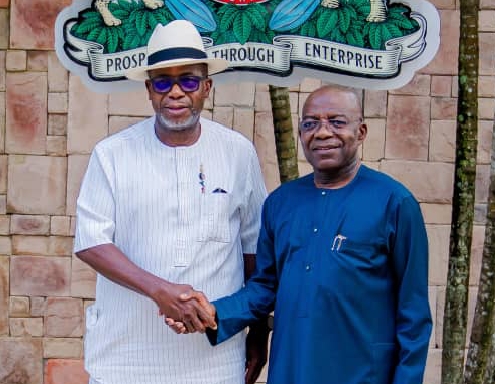
The enduring partnership between His Excellency, Engr. Ikechukwu Lekwachi Emetu, FNSE, Deputy Governor of Abia State, and Hon. Kalu Mba Nwoke (Etiokwe), Member Representing Ohafia South State Constituency, remains a cornerstone of political stability, grassroots development, and progressive leadership.

United by a shared vision of accountability and service, their synergy bridges the state government and the grassroots, driving infrastructure development, youth empowerment, quality representation, and inclusive governance.

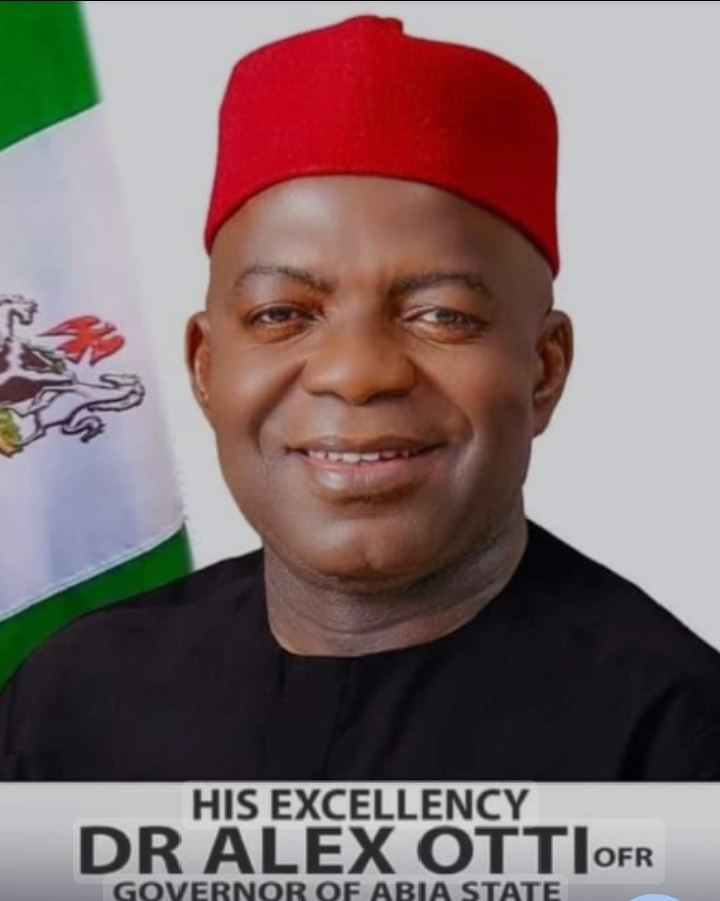
As Abia State looks toward the future, this formidable alliance plays a vital role in consolidating support for the transformational leadership of Governor Alex Chioma Otti, OFR, whose reforms have restored hope and positioned the state for sustainable growth. It is equally instrumental in highlighting the remarkable performance and dedicated constituency service of Hon. Kalu Mba Nwoke.

Together, Deputy Governor Emetu and Hon. Kalu Mba Nwoke represents a winning team dedicated to genuine service, community advancement, and the Labour Party’s vision for a prosperous Abia State.

We call on party faithful, stakeholders, and all well meaning citizens of Ohafia South to remain united in supporting continuity and good governance under Governor Alex Otti, ably supported by Deputy Governor Ikechukwu Emetu and Hon. Kalu Mba Nwoke( Etiokwe).

Ahia Oma na ere onweya.

Nnanna Echeme,
writes from ndi Ubiri Ndi Inyima Compound, Amaekpu Ohafia.
07/08/2026.

Gov Otti explains reasons for acquiring electric buses to drive Abia transportation scheme By Charles Ogugbuaja, Ph.D.

-announces traffic laws compliance, enforcement measures

Governor Alex Otti, OFR, of Abia State has explained that his administration chose acquisition of electric buses in the state’s transformed transportation scheme to enthrone cost -effectiveness, cost – benefit -analysis measures, green- clean energy and environment- friendly intra- city, inter -city and inter -state route operations, in line with the modern global standards.

Gov Otti gave the insights on Thursday, August 6, 2026, during the inauguration of additional 20 electric buses to hitherto, existing 20 buses in a colourful ceremony at the expansive Prof. Nnenna Oti Bus Terminal, Isi Gate, Umuahia.

The state can confidently boast of 40 fossil fuel -free buses shuttling commuters within and outside the state.

The Abia number one citizen also directed the extension of the working hours of the field officials of the Abia State Road Traffic and Safety Management Agency (ARTSMA), and related task force personnel with streamlined shift systems to 10p.m. daily (including Saturdays and Sundays) to ensure strict compliance to traffic laws and regulations, irrespective of the calibre of the road users.

Gov Otti likened the Abia transportation initiative to a critical driver of economic and social developments.

He warned against acts of “vandalism, sabotage, indiscipline, criminality, and reckless conducts” among other vices.

The Governor said: “No one has the right to violate traffic regulations or endanger the lives and property of others. Beating traffic lights, driving against traffic, overloading and reckless parking will attract severe sanctions. Whoever attempts to drag us back to the darkness of the past will have a very difficult time. We are determined to close the gap between where we are and where we want to be.

“Transportation is the oil that lubricates the wheels of prosperity. It moves people, drives commerce and expands the frontiers of opportunity. The progress of any civilisation ultimately depends on how its transport system evolves to meet the realities of the time.”

Gov Otti announced the establishment of an independent monitoring and evaluation team, cascading to recommendations to higher authorities for further necessary actions, to ensure compliance to the operations.

He directed the inter-agency team to protect government assets, maintenance of the buses, ensuring prioritising staff welfare, and punish offenders.

Recalling the efforts of the transport scheme since December 2025 it was flagged-off, Gov Otti noted a significant milestone recorded.

He disclosed that the buses were fitted with larger cargo compartments for the physically challenged persons to ensure improved service delivery, affordability, safe and reliable journeys of the passengers, maintaining that the introduced orderly queues, technology-driven payment systems, and dependable services comparable to global standards, must be sustained.

He urged citizens to pay their taxes appropriately to enable the state government serve them better with necessary amenities, stressing that constructive dialogue and feedback from the public were open, symbiotically.

“If you have genuine concerns, communicate with us. This administration is responsible enough to listen and address legitimate challenges,” Gov Otti urged.

In his address, the Commissioner for Transport, Dr. Chimezie Isaac Ukaegbu, commended the Abia Governor for the initiative in repositioning public transportation sector in the state via clean energy, laced with people – centric policies, noting that the total 40 electric buses would enhance the lives of workers, students, families and other commuters across the State and beyond. He reminded that the innovation incorporated infrastructure maintenance, route planning, and promotion of cleaner air through zero-emission transportation technology.

Dr. Ukaegbu assured the governor and masses that he would ensure that the buses would be
professionally managed and properly maintained, warning the drivers and operators involved in the buses to uphold professionalism, discipline, and strict compliance to the road safety regulation and laws.

WRITER’S NOTE: Again, the good Lord has done it for us, through Gov Alex Otti, OFR. The transportation fleets are moving in a trajectory manner.

ABOUT ABIA

Abia, one of the 36 states in Nigeria, meaning the various blocs of Aba, Bende, Isiukwuato, and Afikpo, was created in August 7, 1991, by the erstwhile military President of Nigeria, Gen. Ibrahim Badamosi Babangida (rtd). The state has moved from the yesteryears of cankerworm to the present glorious and liberated era under the watch of His Excellency, Gov Alex Chioma Otti, OFR.

Dr. Ogugbuaja, an advocate of good governance, leadership, and a deep supporter of good governance in Abia State, holds a B.Sc. (Mass Comm), an M.Sc. (Mass Comm), an M.Sc. (International Affairs & Diplomacy), a Ph.D. (Mass Comm), a PGDE, a Certified Teacher (TRCN), a Dip. (Desktop & Graphics), a Cert.(Biz Mgt. & Enterpr), a Cert.(Population & Demography studies), & a Cert.(Printing).

August 7, 2026

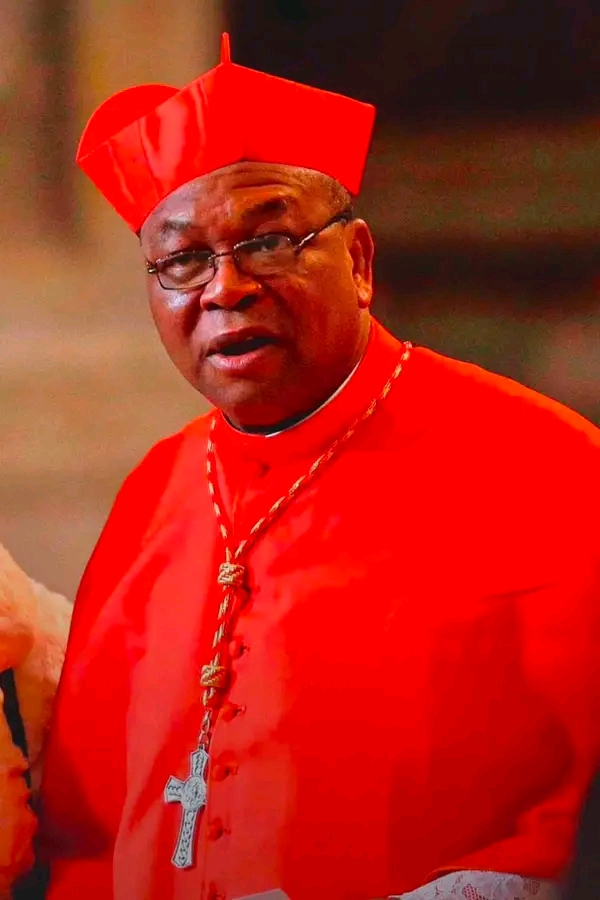
Onaiyekan: My First and Final Epistle on the Matter By Omokugbo Ojeifo

The insinuation that Cardinal Onaiyekan is criticizing Tinubu because he is supporting Obi is as lame as the P in Psychology. The only evidence those throwing this false claim have is a group photo of Onaiyekan and other bishops with Peter Obi at Archbishop Alaba Job’s triple anniversaries in Ibadan last month. Nowhere has Onaiyekan promised Obi that he’d fight for him; neither has the CBCN ever said that Obi is the ‘Catholic Church’s candidate’ for the presidency. I think the peddlers of this falsehood can do better!

For the records, Cardinal Onaiyekan has earned a solid reputation for prophetic advocacy on behalf of the Nigerian people for nearly 40 years. He has been forthright with every government from IBB and Abacha down to Tinubu’s. In 1994 when he was promoted from Bishop to Archbishop of Abuja, in his homily at his cathedral he fired a salvo at Abacha for creating unnecessary tension in the nation in the aftermath of the June 1993 crisis. Abacha was just next door to him. Even though Abacha considered Onaiyekan quite unsparing in criticizing his regime, when Onaiyekan’s father Pa. Bartholomew died in 1995, Abacha sent a handwritten condolence with a despatch of a major general of the regime to attend the funeral in Kabba.

On December 18, 2005, at the National Christmas Carols at the Ecumenical Center in Abuja, Onaiyekan told President Obasanjo straight to his face to resist the temptation of seeking a third term. Obasanjo was sitting right there in the front row. When El Rufai was going about his demolition spree in Abuja in the 2000s, Onaiyekan stood up to the FCT Minister for treating the poor people in Abuja shabbily and destroying their houses and their means of livelihoods without providing an alternative. Onaiyekan didn’t spare Jonathan for the bogus corruption in his government. Neither did he spare Buhari for the gross ineptitude of his administration. His voice has been consistent right from his days as Bishop of Ilorin in the mid-1980s till date. As President of CBCN for 6 years, he articulated the challenges of the nation with clarity and honesty.

It’s lame to think that he is critical of Tinubu’s regime because of Obi. If Obi were to become president of Nigeria today, what will he give to Onaiyekan? Will he make Onaiyekan vice-president of Nigeria or give him a contract? Onaiyekan does not give a hoot about who becomes president. Neither he nor the other Catholic bishops are eyeing the president’s seat. What they care about is that the country is governed well and that the government serves the common good of all Nigerians. When the Catholic bishops speak about the state of the nation, they are not speaking as partisan chieftains or political lords; they are speaking as prophets and shepherds who are articulating the sufferings of the people. As shepherds at the grassroots, Bishops feel the pulse of what is happening in the most interior villages, slums, and local communities across the country. They have regular pastoral visits to risky and dangerous places that the average Nigerian politician does not dare to go. They experience firsthand the sufferings and miseries of the poor and they consider it their prophetic social responsibility to amplify these concerns to those in power. Telling the bishops to face the pulpit and stay out of politics is both ignorant and dishonest. Are Bishops living in Mars? Aren’t they and the rest of Nigerians affected by the depredations of Nigerian politics?

Cardinal Onaiyekan is already 82 years old and God has immensely blessed him. His parents each died at 92, ten years apart from each other. Longevity flows in the Onaiyekan family. But even if Onaiyekan were to die today, he has lived a most accomplished life. He graduated from secondary school in Aliade in 1962 with the best result in the whole of northern Nigeria and turned down a scholarship to study anywhere in the world from the Sardauna and Premier, Sir Ahmadu Bello. He went to seminary and became a priest at 25, finished his doctorate in Rome with first class honors at 32, became the youngest ever rector of a Catholic major seminary in Nigeria at 34, was appointed to two Vatican International Commissions at 36, became a bishop at 38, an archbishop at 50, and a cardinal at 68. He has been auxiliary bishop of Ilorin, bishop of Ilorin, apostolic administrator of Ilorin, co-adjutor bishop of Abuja, bishop of Abuja, and Archbishop of Abuja for a combined period of 36 years. He has been a bishop for 43 years now. Tomorrow, August 3, 2026 he will mark his 57th year as a Catholic priest.

Onaiyekan has been CAN Chairman of Kwara State. He has been President of the Catholic Bishops Conference of Nigeria (CBCN) for two terms. He has been President of Christian Association of Nigeria (CAN). He has been Co-President of the Nigeria Interreligious Council (NIREC). He has been President of the Catholic Bishops Conferences of West Africa (RECOWA) for two terms. He has been President of the Symposium of Catholic Bishops Conferences in the continent of Africa (SECAM). He has been President of the African Council for Religious Leaders (ACRL). He has been Co-President of the World Council of Religions for Peace (WCRL-RfP). He is an Honorary Life President of WRCL-RfP. He has been a Member of the General Council of the Synod of Bishops at the Vatican for several years. He has been a Member of the Global Agenda Council on Religions at the World Economic Forum (WEF). Onaiyekan has been president of every possible national and continental Christian body you can dream of. So why would anyone think he has something to gain for speaking truth to power other than the good interest of the Nigerian people?

As he is today, Cardinal Onaiyekan can travel on a Vatican diplomatic passport, if he wants to. He has food to eat; he has clothes to wear; he has a roof over his head; he has access to the best healthcare facilities, if need be. He has a means of mobility. He has been using the only two cars he has for 12 and 13 years respectively and has refused to change them. If he wanted new vehicles today, at the snap of a finger tens of persons will make new ones available. But he has chosen to live a life of simplicity, modesty, and frugality. He spends the gifts he receives doing charity, even to people he doesn’t know and has never met because they are in need of help. He has supported the education of countless numbers of indigent children; given hope and support to families without means of livelihood. When he speaks, he is not speaking for himself. He is speaking for the poor, the suffering, the hungry, the sick, all those whose lives have been put on hold due to the dire economic situation in the country. This is what Jesus would do!

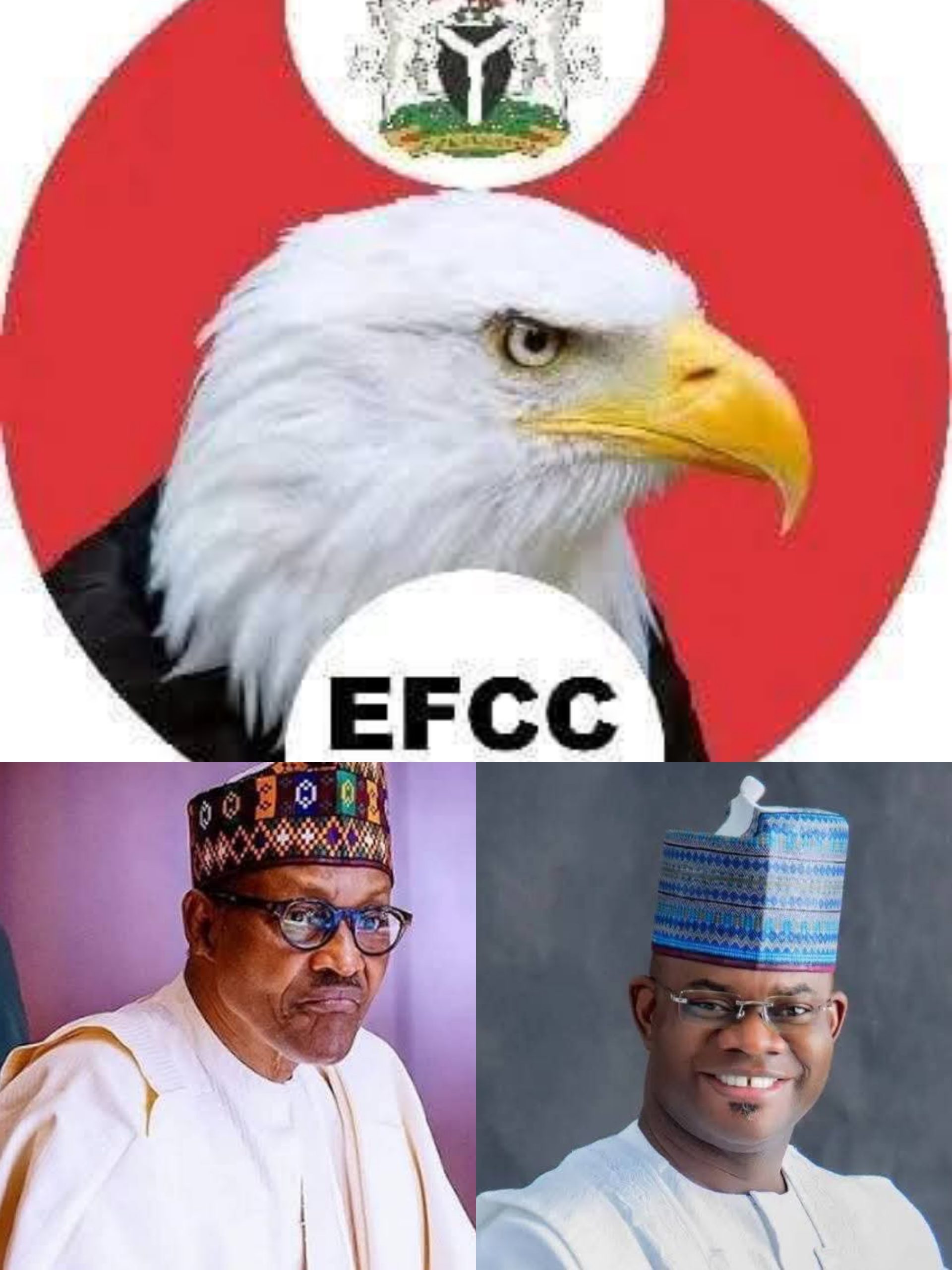
“The Battle to Kill EFCC, ICPC and NFIU: How 16 Governors Lost at the Supreme Court” — Ekene Aninze, Esq.

In 2023, 16 State Governors, through their Attorneys-General, approached the Supreme Court to help them scrap EFCC, ICPC and the Nigerian Financial Intelligence Unit (NFIU).

What triggered the action?

On January 5, 2023, the Federal Government, through the Nigerian Financial Intelligence Unit (NFIU), introduced a guideline.

The guideline mandated a total ban on cash withdrawals from all public accounts across the federal, state and local government tiers.

With the guideline, no public official was permitted to withdraw cash from a government vault or bank counter except with the express waiver of the President.

The State Governments saw this as a direct infringement on their autonomy.

So, in February 2023, the Attorney-General of Kogi State and other States approached the Supreme Court to nullify the laws establishing these anti-graft agencies.

According to the States, the National Assembly cannot legislate on the management, administration or alleged misappropriation of state and local government public funds, which fall strictly within the oversight of State Houses of Assembly.

Relying heavily on Section 12 of the 1999 Constitution, the States also argued that the EFCC Act was a direct byproduct of an international treaty, the United Nations Convention Against Corruption.

And that because the National Assembly failed to get a majority of State Houses of Assembly to ratify the law before passage, the EFCC Act was unconstitutional and inapplicable to the States.

They concluded by saying that the NFIU guidelines disrupted state operations and illegally interfered with local governance structures.

On the other hand, the Attorney-General of the Federation argued that public funds must be protected under federal anti-corruption laws to prevent State Governors from unilaterally draining public coffers.

He also drew the attention of the Supreme Court to a previous precedent in Attorney-General of Ondo v. Attorney-General of the Federation, which had already affirmed that corruption is a nationwide menace that the National Assembly has the absolute power to curb through centralized agencies.

On November 15, 2024, a seven-member panel of the Supreme Court, led by Justice Uwani Musa Abba-Aji, delivered a unanimous judgment that knocked the arguments of the States off.

According to the Supreme Court, the EFCC Act, ICPC Act and NFIU Act are all constitutional, and that the bodies possess full powers to investigate and prosecute financial crimes at all levels of government, whether federal, state or local.

The court held that the National Assembly has the ultimate power to enact anti-graft legislation.

And that the EFCC Act grew out of an international convention, which the National Assembly was fully competent to pass into law without State Assembly approvals.

The court concluded by saying that while States can pass local laws, no State legislation can compete with, contradict or invalidate Acts of the National Assembly, and that any local statute designed to frustrate federal anti-graft agencies is unconstitutional.

In the end, the case was dismissed.

That was how State Governors failed to get the Supreme Court to scrap EFCC, ICPC and NFIU.

If they had succeeded, that case would have ended the lifespan of the anti-graft bodies as we know them.

The case is cited today as Attorney-General of Kogi State v. Attorney-General of the Federation, SC/CV/178/2023.

I am Ekene Aninze, Esq.

THE ADELEKE DYNASTY: A HERITAGE OF AWKETE, THE LINEAGE OF ESTHER NNENNA ADELEKE IN EDE BY OGELE OBINGWA

Akwete Ndoki is not just a town. It is a living museum of Igbo ingenuity, a bridge of cultures, and a pride of Abia State and Igbo land.

For centuries, Akwete has stood at the crossroads of commerce, craft, and community, where the Akwete cloth was woven not just with thread, but with identity. It is a cloth that speaks volumes of data about the people so blessed by God himself. A cloth that traveled from the creeks of Ndoki to the palaces of kings, from the markets of Aba to the precincts of numerous destinations in the diaspora and across West Africa.

That heritage of excellence did not end at the border of Abia. It has traveled miles far away and has multiplied into a prosperous lineage in the natural soils of Ede where it has bloomed and blossomed into a dynasty.

Today as Akwete is remembered by providence the world looks not just to see the loom, nor the fabric, but for the values it represents: diligence, industry, unity, determination and excellence. At various historical moments when it is imperative to stand out in dignity Akwete has always answered the call from the lush grounds of Ohuru – Mkporobe to water land of Azumini there’s a feeling of gratitude for Akwete in the whole of NDOKI that Ignites as sense of pride. Akwete has produced great sons and daughters who stand among the best in various human endeavours in Nigeria and the world at large, illustrious their chosen field of profession whether in governance, academia, law, medicine, engineering, business, the arts, and public service their names shine in boardrooms, universities, court rooms, and on the global stages. They are the living proof that Akwete does not just weave cloth alone but that Akwete weaves leaders and great men and women of repute.

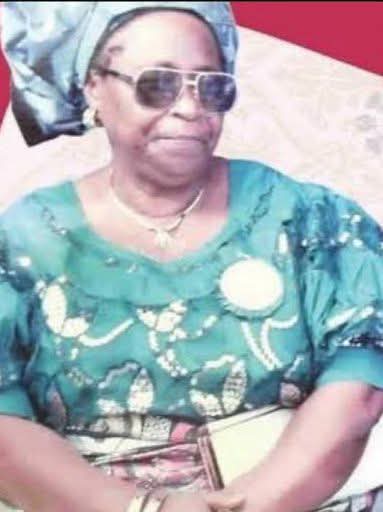
At the heart of this story is Mrs. Esther Nnenna Adeleke (Akparah), a daughter of Akwete, Ukwa East LGA, whose life became the elixir to the glory of her people far from home.

She was the second and best-known wife of the late Senator Ayoola Adeleke a prominent politician from Ede, Osun State, who served as a Senator during Nigeria’s Second Republic. Their union was more than marriage. It was a national statement. Mrs. Esther Adeleke carried the three signature gifts of Akwete to Ede, her industry, integrity, and inter-ethnic grace, a symbol of the unity Nigeria desires. While in Ede, she did not abandon her roots. She became a bridge. She took the Akwete spirit of hardwork and hospitality to Yoruba land, building a home where Igbo resilience met Yoruba royalty. Her marriage dissolved ethnic lines and became a model of national unity in a most remarkable way. She became in her husband’s land not just a dutiful wife but the Mother of a perpetual Dynasty, from her womb came leaders who have shaped Nigeria and her immediate society. From Senator Isiaka Adetunji Adeleke the first elected civilian Governor of Osun State to Senator Ademola Adeleke, the current Governor of Osun State and of course the sage and doyen of enterprise Dr. Adedeji Adeleke, billionaire businessman, founder of Adeleke University, and father of global music icon Davido, the Adeleke family name continues to echo nationally and internationally in politics, governance, education, philanthropy, business and entertainment a living proof that the Akwete DNA of excellence is exportable and thrives anywhere.

Mrs. Esther Nnenna Adeleke with her marriage which resonated with the character of the Akwete cloth, to connect people, has today successfully woven Abia into Osun and the Igbo into the Yoruba.

Like the Igbos which have a saying: “Uzọdimma a ga ya ugboro abuọ” – If a road is good, you will go through it again and again. That road of peace which started with the bold decision of Senator Ayoola Adeleke to take his heartthrob, the delectable Mrs. Esther Nnenna Adeleke as wife has continued with her children, Governor Ademola Adeleke took a wife from the Southeast and Davido her grandson, who also took a wife, Chioma, from the Southeast because the first experiment from Akwete worked, that it is power of the yarn 🧶 which is seen as a mere thread 🧵 but weaves royalty and grace as exemplified by the regal Akwete fabric.

The ready lesson that successful people don’t do tribalism is once again re-enforced by the Adeleke family experiment which teaches us to marry from anywhere in the world so long as you find love and peace there. That is the Akwete spirit, that is the Abia spirit that is urgently needed in Nigeria for us to remain united.

Notwithstanding her demise a new chapter of Akwete beyond the threads continues. On Tuesday, July 21, 2026 at the Akwete Central School in Ndoki, Ukwa East LGA another great daughter of the Niger Delta and wife of the President and Commander in Chief of the Armed Forces of the Republic of Nigeria His Excellency Senator Dr. Remi Tinubu will visit Akwete. She will walk the lands of our heritage among our people, sit with the women of the loom, and get first-hand knowledge of their crafts at the Akwete weaving Centre.

Her mission which is two-fold will be to explore the prospects of commercializing Akwete Fabric beyond the weaving of the cloth for patronage at the national and global markets and to renew the ties that bind us as one people from the Niger Delta to the Southeast, from Abia to Aso Rock. It will be a great elixir into the potentials of NDOKI land as an economic belt for Abia State and Nigeria not just for the expansion of the indigenous textile but also for roads, schools, and other social amenities that will enhance the growth and development of Ukwa East LGA under the amiable leadership of Pastor Chibunna Akara, the metropolitan mayor of modern Ndoki land.

It will be another homecoming of purpose for a great daughter of the Niger Delta, our sister and mother Distinguished Senator Oluremi Tinubu and a beautiful reminder that the hands that weave Akwete also can weave the nation together.

The legacy of Mrs Esther Nnenna and her impact in the Adeleke Dynasty is a story of Akwete’s greatest export of people of character

Akwete have not only Nigeria a craft in the weaving the world-renowned Akwete fabric, a UNESCO-recognized intangible heritage in the making but also a Culture of trade, diplomacy, and inter-ethnic marriage that has built peace with a talent pool of men and women like Esther Nnenna Adeleke who raised governors, senators, billionaires, and global stars. Akwete embodies the History of a people who have never been confined by geography, plus an avalanche of sons and daughters who continue to lift the name of Ndoki land high across the world.

As we relish the benefits of this native bequest Abia State and Igbo land will continue to celebrate the peculiar ingenuity of Akwete women, we will continue to celebrate those who have carried Akwete cloth to destinations outside our territory and planted it there.

The Adeleke Dynasty is not just a family. It is the evidence that Akwete’s endowment is a national heritage and that one day beyond today’s limitation the looms of Akwete will move from the villa to the Senate chambers, to the Government Houses across Nigeria and to the world stage with style. Akwete will not only be a symbol of our national pride but will become the official native wear for the corridors of power in Abuja and capitals in Nigeria, the thread will never be broken.

Just like the yarn that weaves the glory of the cloth into ambiance, providence has remembered Akwete again.

“Ugbu a bu oge Akwete – Sitee na ngozi chineke Nyerere ala anyi Ka anyi ga eji akpa nganga”

This is the time for Akwete, it is from the blessings of God upon our land, that we be proud.

Ogele Obingwa

Ukraine War Veterans Could Fuel Africa’s Next Wave of Instability, Experts Warn

As the war in Ukraine continues to reshape global security, analysts are raising concerns about an overlooked consequence that could have far-reaching implications for Africa: the eventual return of battle-hardened foreign fighters and military contractors.

Security experts warn that the end of the conflict could see thousands of experienced combatants seeking new opportunities abroad, potentially increasing the risk of instability across parts of the African continent.

According to researchers Brown and Krause, history offers a sobering precedent. After the internal conflicts in South Africa and the former Rhodesia ended, many ex-soldiers transitioned into mercenary activities, participating in conflicts and coup attempts across Africa. Some found employment with private military companies, most notably South Africa’s Executive Outcomes, which became one of the continent’s most influential private military firms in the 1990s.

Today, Russia maintains a significant military footprint in Africa through the Wagner Group and its rebranded successor, the Africa Corps, with thousands of contractors deployed across several countries. Analysts believe those numbers could grow substantially once the war in Ukraine comes to an end.

Brown and Krause argue that Russian President Vladimir Putin may have strategic reasons to keep large numbers of demobilised soldiers and military contractors engaged overseas rather than allowing them to return home in large numbers. They suggest that overseas deployments could help reduce domestic security risks following the armed mutiny led by the late Wagner chief, Yevgeny Prigozhin, in June 2023.

Beyond Russian contractors, African nationals who have participated in the Ukraine conflict also present a potential long-term security challenge. Security analyst Njogu cautions that some returning fighters may bring home not only advanced combat skills but also extremist political and military ideologies developed during the war.

He warns that even a relatively small number of highly trained and ideologically driven individuals could have an outsized impact in countries already struggling with weak institutions, political instability, or armed insurgencies.

However, experts stress that such an outcome is not inevitable.

The extent of the threat, they argue, will depend largely on how effectively African governments prepare for the return of these fighters. Strong border security, comprehensive reintegration and employment programmes, capable intelligence and law-enforcement agencies, and closer regional cooperation will all be critical in preventing experienced combatants from becoming catalysts for future conflicts.

As the world focuses on the battlefield in Eastern Europe, analysts say African policymakers must also begin planning for the conflict’s long-term consequences closer to home. The decisions made today could determine whether returning veterans become contributors to peace and development—or new drivers of instability across the continent.

How Governor Otti’s Bold EEDC Deal Will Electrify Abia’s Industrial Revolution – By Ebere Uzoukwa, PhD

In a bold and visionary move, Governor Alex Chioma Otti has taken a decisive step toward resolving one of Abia State’s most enduring developmental challenges—access to steady, reliable electricity. Through his administration’s strategic push to acquire a 60% equity stake in the Enugu Electricity Distribution Company (EEDC) as it operates within Abia State, Governor Otti is not merely seeking to fix power supply; he is laying the foundation for a full-scale economic transformation anchored on industrialization, MSME growth, and inclusive development.

This engagement with Interstate Electrics, the parent company of EEDC, marks a significant shift from passive advocacy to a hands-on, investment-driven approach. For the first time, the Abia State Government is asserting its intention to not just participate in, but co-own and reform a critical utility. The objective is clearly to make reliable power the bedrock of a new economic agenda especially in underserved regions such as Abia North and parts of Abia Central, which are not currently covered by Geometric Power.

Governor Otti’s vision aligns seamlessly with his administration’s well-articulated focus on industrialization and the empowerment of Micro, Small, and Medium-scale Enterprises (MSMEs). Electricity is the oxygen of modern industry—whether it’s processing agricultural produce, driving local manufacturing, or fueling the creative and digital economies. For MSMEs which form the backbone of Abia’s economy, steady electricity means lower operational costs, higher productivity, business sustainability, and massive job creation.

More than a shareholding arrangement, this acquisition represents a bid for strategic control; one that allows the government to reform, invest in, and expand power infrastructure according to Abia’s development blueprint. The administration is already in advanced negotiations, and Governor Otti has emphasized transparency, fairness, and a people-first approach as the guiding principles in finalizing the deal.

Importantly, this initiative is not just about economic growth; it is about equitable development. By targeting areas long neglected in energy access, Governor Otti is reaffirming his commitment to a balanced, all-inclusive development agenda. In his view, electricity is not a luxury but a right and a fundamental driver of growth that no community in Abia should lack.

The seriousness of this initiative is underscored by the active involvement of top government officials, including the Commissioners for Power, Finance, and Justice. The Hon. Commissioner for Power, Engr. Ikechukwu Monday, captured the essence of the move succinctly—guaranteeing reliable electricity to unlock the State’s manufacturing and industrial potential.

Ultimately, Governor Otti’s electricity acquisition initiative is not just a power sector reform but an economic masterstroke. It reflects a government that is proactive, visionary, and focused on building the hard infrastructure needed to drive sustained development. This bold move is a model worthy of emulation by other state governments across Nigeria, reaffirming that with purposeful leadership, subnational entities can indeed shape their destinies.

Abia is not just seeking electricity—it is powering its future.

Dr. Ebere Uzoukwa is the Senior Special Assistant to the Governor of Abia State on Public Affairs.

Constitution Review: Gov Otti Staying True To Conviction By Kazie Uko

One of the most memorable and eventful work I have had to undertake as a media professional outside of the newsroom was working with the then gubernatorial aspirant and now Governor of Abia State, Dr. Alex Otti, during his campaigns. I was introduced to Dr. Otti in 2018 by our mutual friend, the irrepressible Prince Emeka Obasi (God bless his soul), a quintessential journalist and publisher of the Hallmark Newspaper, who ascended into eternity in 2022, to help organise and strengthen Otti’s media.

Governor Otti, then candidate of the All Progressives Grand Alliance (APGA), was making his second attempt for the gubernatorial office of Abia State. He had run for the same office in 2015 on the platform of APGA and was coasting to victory when the results of the election was magically flipped to favour the candidate of the then ruling party in the state, Peoples Democratic Party (PDP). Even though Candidate Otti had gone to the courts to claim his victory and got the Appeal Court declare him winner, his hope of becoming Governor in 2015 was eventually sealed by the Supreme Court, which effectively shut the door against him in a very controversial decision.

I joined the Alex Otti Campaign Organisation in 2018 as the Director of Media and Publicity. It was my very first outing in local politics. I was born and bred in Aba and spent my formative years in the Enyimba City, where I attended both primary and secondary schools before leaving for ‘greener pastures’ in Lagos. So, I can confidently say that I am Nwa Aba! By the time the campaign train roared into life, it was apparent that a new wave of communicating political messages in Abia had begun, notwithstanding initial taunts by the ruling PDP and its agents that Candidate Otti imported strangers from his base in Lagos to take over Abia government. The 2019 election came and went and as usual PDP had a field day, manipulating the results of the election to maintain its strangle-hold on Abia. But Otti was not discouraged.

Just like many who had been with Otti since 2014, when he resigned his lucrative job as the Group Managing Director and Chief Executive Officer of one of Nigeria’s then foremost banks, Diamond Bank (now merged with Access Bank), I saw in him a genuine desire to bring about a positive change in the lives of the residents and citizens of Abia and the state, and stuck with him. Many of us volunteered our services and support pro bono.

So, in 2022, when we returned for the campaigns in Abia for the jinx-breaking 2023 election, the campaign team became bigger as the stakes were obviously higher and so there was a lot of adjustments to accommodate new entrants. Meanwhile, Candidate Otti had moved from APGA to the All Progressives Congress (APC) and finally settled in Labour Party (LP). Otti’s entry into Labour Party and subsequent adoption as the party’s gubernatorial candidate had immediately shot the party into limelight in Abia and positioned it as the biggest opposition to the incumbent PDP. Again, I was appointed into the media team, this time as the Head of Media, working directly with Dr. Otti. Unlike in 2018-2019 when I worked out of the campaign office, this time I was embedded in Candidate Otti’s convoy.

The 2022-2023 campaign was more intense for obvious reasons. First, it was the third time that Dr. Otti was taking a shot at the office of the governor of Abia State. Second, the mal-administration going on in Abia under PDP had got to a very embarrassing and putrefying level that Nigerians were now making a mockery of the state, wondering whether anything good can come out of Abia. The third was confronting a political behemoth, whose only winning strategy was perfecting the fraudulent art of rigging elections with result from one local government area.

In the course of the campaign for the 2023 governorship election in Abia, we traveled the breadth and depth of Abia, meeting political, religious, traditional, business and various other stakeholders and groups across party lines in every nook and cranny of the state. It was a very memorable experience for me, for which I remain ever grateful to Governor Otti. I got to really know Abia with its rich natural endowments and saw firsthand the rot and degradation that the state had been allowed to become by its past leaders, especially in the last 24 years, prior to the election. Aba, the commercial nerve of Abia was a shadow of its old self from the days of old Imo State, when Dee Sam Mbakwe was the Governor. Ditto for Umuahia, the capital of Abia, which remained a glorified village, even after 30 years as a state capital.

It was as though past leaders in Abia State, especially during the PDP years, only cared about sharing political offices and appropriating the resources of the state to themselves and their cronies. No deliberate efforts were made to improve on the infrastructure left by Mbakwe or build new ones. I remember one of our campaign stops in a community in Abia South, where Candidate Otti met with the elders and leaders of the land. During the meeting, the community leaders wanted to extract a commitment from the Labour Party candidate that one of their own be appointed Commissioner for Finance, when he (Otti) gets into office. According to them, since Otti is from Abia Central and his deputy from Abia North, it was only logical that the next Commissioner for Finance or Secretary to the State Government would come from their zone, Abia South, precisely, from their community.

The community leaders were left dumbfounded when Otti, who was aspiring to become governor, told them point-blank that he would do no such thing. He gave them his reasons. According to Dr. Otti, political appointments under his government would be given to deserving individuals, based on merit, and not to communities or groups. Besides, Candidate Otti reminded his hosts that some of their sons and daughters had in the past been appointed into different offices in the State and the Federal Government and wondered how that impacted on the infrastructural development of the community. That was Governor Otti staying true to his conviction, not minding if lost the votes. He, however, promised them that if elected, he would work to bring genuine development to the community and the state in general. Abians, including political opponents, have since attested to the fact that Governor Otti has lived up to his promise to develop the State.

So, when I read in the media space the vile spewed by the former Executive Secretary of the National Agricultural Land Development Authority (NALDA), Mr. Paul Ikonne, a member of the old order in Abia politics, who hid under the public hearing of the constitution review committee of the National Assembly, in Owerri, Imo State, recently, to malign Governor Otti for allegedly not calling for the creation of ‘Aba State’ out of the present Abia State, I knew instantly that his outburst was misplaced and borne out of deep-seated hate. It is not Otti’s fault that Ikonne and the groups he represents had the opportunity of presenting their case before the review committee in Owerri, but failed to seize the moment. Many other groups attended the committee hearing and were given opportunity to present papers on the aspects of the 1999 constitution they feel so strongly about change or review.

Many who know Otti and have been following his writings and public speeches before becoming Governor know that he has been consistent in his position that the creation of additional states out of the present 36-state structure would not in any way help the economic development of our country. His position is hinged on the fact that, except for about three, majority of the states are not viable and cannot survive outside of Federal bailout. Rather, he has often argued, just as he did in Owerri, that Nigeria should be more concerned about improving the economic structure of the current 36 states, double efforts at creating jobs for its youthful population outside of the civil service, and generally make the welfare of the ordinary Nigerian a priority.

He, however, made an exception for the creation of another state for the South East zone of the country, simply for political reasons. Out of the six geopolitical zones of Nigeria, only the South East has five states, whereas the others – South South, South West, North East and North Central, have six, while the North West zone has seven states. So, in order to correct this injustice and marginalisation of the South East people, Governor Otti clarified his speech that exception be made for the creation of additional state in the zone to give the region a sense of equity with the rest of the country. It is pertinent to note that many have welcomed and re-echoed Governor Otti’s position across the federation.

Governor Otti is never shy of calling a spade by its name or holding on to his conviction, no matter how politically incorrect one might accuse him of. As a first-class economist, successful bank chief executive officer, resilient political opposition figure, and now a sitting Governor of Abia State, Otti has rightfully earned his badge of honour and Nigerians, indeed the international community, listen and pay attention when he speaks. It is therefore incontinent of someone who rode on the back of patriarchy to rise to public office to attempt whipping up dubious public sentiment against a Governor who has worked very hard to turn around the fortune of Abia State for good, and whose record of achievements in two years is in clear sight, just because he does not agree with his view.

●Uko, former Chief Press Secretary to Governor Alex Otti, writes from Umuahia.

Renaming Of Streets In Lagos: A Dangerous Descent Into Tribal Politics And Hatred By Dr. Ubani SAN

The recent decision by the outgoing Chairman of Bariga Local Council Development Area (LCDA), Hon. Kolade Alabi David, to rename the popular Charly Boy Bus Stop to Baddo Bus Stop in honour of Nigerian artist Olamide and others may appear harmless on the surface. It may even seem laudable to those who admire the artist’s impact on Nigerian entertainment. However, beneath the surface lies a disturbing trend that requires urgent national reflection and condemnation, the systematic and silent erasure of certain historical street names in Lagos, especially those reflecting the cultural identity and heritage of non-Yoruba residents.

This is not the first time such a policy has crept into the consciousness of Lagosians. Slowly but surely, what once was a cosmopolitan city that embraced all tribes, cultures, and peoples, is sliding into an ethnocentric experiment where names of streets and public places associated with non-Yoruba citizens are being wiped off the map without justification or consultation.

Let us be clear: this practice is archaic, divisive, and dangerously tribalistic. It has no place in a modern democracy and only serves to take Nigeria back to the Stone Age. In a multi-ethnic federation like ours, unity in diversity must be preserved at all costs, especially by those in leadership positions.

No cogent or official explanation has been given for this disturbing trend. Were the original names imposed illegally? Were they not approved by the same arms of government now reversing them with reckless abandon? Were these names not given at a time when Lagos stood tall as a beacon of national unity, hospitality, and inclusiveness?

The absence of clear policy guidelines or public engagement suggests something more sinister – an attempt to rewrite the cultural history of Lagos in a way that marginalizes certain ethnic groups, particularly the Igbo community, whose contributions to the growth of Lagos are not just historical but ongoing and appreciable.

Nigeria is already hanging on a delicate thread of national unity, strained by insecurity, governance issues, and ethnic profiling. At such a time, any action by public officials, even at the local government level that promotes ethnic division or marginalisation, must be rejected in the strongest terms.

I have lived in Lagos since the 1980s. I built my law practice here. My friends, clients, professional colleagues, employees, and even church members come from different tribes, predominantly Yoruba. I was once a Chairman of Nigerian Bar Association, Ikeja Branch. The Lagos I knew, and still want to believe in, is the Lagos that gives all Nigerians a fair chance at life, peace, and prosperity, regardless of their state of origin.

This rising trend of street renaming based on ethnic calculations betrays the progressive and sophisticated image of the Yoruba people, a people known for education, enterprise, and political sagacity. This is why I am shocked that some Local Government Chairmen in Lagos are leading this wave of retrogressive ethnocentrism, not realising that it undermines the shared values that have held Lagos together as Nigeria’s melting pot.

If Lagos must continue to shine as the commercial capital of Nigeria, then it must be managed with maturity and inclusiveness. Those in government must understand that every policy has consequences – both seen and unseen. The international community, investors, and even ordinary Nigerians watching from afar will interpret these renaming exercises as signs of growing intolerance, state-backed discrimination, and a lack of cohesion within our federation

If streets named after non-Yoruba figures are being deliberately removed without any history of criminality or impropriety attached to the persons being removed, then what message are we sending? That Lagos is now a state lived by one ethnic group only? Does history and memory have no place in the state’s public policy?

It is not enough to name a street after one musician while simultaneously removing a name ( a musician too)that has stood for decades and carries sentimental or historical significance. These acts, however subtle, communicate hostility to coexistence and must be halted immediately.

I write this article not just to condemn but to seek answers. I call on the Lagos State Government and the Ministry of Local Government and Chieftaincy Affairs to explain what informed these recent renaming actions. Were these names removed with the consent of residents? Was there any public hearing or community input?

Policies that alienate, exclude, or erase certain communities are antithetical to the ideals of democracy, federalism, and nation-building. Lagos must not become a theatre of ethnic cleansing through street names. We must reverse this tide before it becomes the new normal.

This pattern of conduct by local government officials in Lagos, if not checked, will erode the minimal gains we have made in promoting national integration. It is uncivilised, unproductive, and ultimately destructive.

Let us be reminded that the greatness of Nigeria, and indeed Lagos – lies not in the dominance of one tribe over others, but in the peaceful coexistence, mutual respect, and appreciation of our rich diversity.

Let aggravated and systemic hatred through public policy be stopped! It is a solemn plea!

Dr M.O. Ubani SAN
Legal and Policy Analyst.

Governor Otti’s Strategic Partnership in the Fight Against Malnutrition and Poverty in Abia State, By Ebere Uzoukwa, PhD

Governor Alex Chioma Otti’s commitment to combating malnutrition in Abia State reflects a far-reaching, strategic, and profoundly human-centered approach to governance. Through the launch of the Nutrition 774 Initiative in partnership with the Federal Government, Governor Otti is confronting a long-standing public health crisis that continues to silently undermine the growth and future of children and families. Describing malnutrition as both a ticking time bomb and a silent emergency, the Governor has framed the issue as one that demands urgent, decisive, and sustainable action. Rather than treating it in isolation, his administration has placed it within a broader development framework that connects nutrition to poverty reduction, food security, economic empowerment, and social protection.

This integrated approach reflects both vision and pragmatism. Governor Otti recognizes that malnutrition is deeply linked to wider socio-economic conditions such as poverty, unemployment, and insecurity. Accordingly, his administration is pursuing a holistic development strategy that channels substantial investments into key sectors including healthcare, education, infrastructure, agriculture, and security. Since assuming office, the government has committed over one-third of its annual budget to education and health—affirming its belief that investing in people is the most effective way to secure the future. By prioritizing the well-being of the most vulnerable, particularly children, the administration is laying a strong foundation for long-term human capital development across the state.

Equally central to Governor Otti’s strategy is the revitalization of agriculture as a powerful tool for combating hunger and achieving food sufficiency. In a country as naturally endowed as Nigeria, the persistence of food insecurity and malnutrition is unacceptable. The Governor has made it a priority to support rural farmers through expanded access to improved seedlings, farm inputs, agricultural financing, and advisory services. These interventions are designed to increase productivity and reduce food prices, which have been driven higher by inflation, insecurity, and inadequate infrastructure. Beyond production, the Governor is actively engaging stakeholders to invest in agriculture and remove systemic barriers that discourage farming, particularly among the youth. His commitment goes beyond feeding the population—it is about creating wealth, stabilizing communities, and building resilience through a sustainable agricultural economy.

The fight against malnutrition also hinges on strong social protection systems. In this regard, Governor Otti’s administration, through the Ministry of Poverty Alleviation and Social Protection, is implementing targeted interventions to reduce economic hardship. These include conditional cash transfers to vulnerable families, women and youth empowerment programs, support for local cooperatives, and initiatives focused on job creation. The Governor’s insistence that workers be paid before political officeholders is a powerful reflection of his belief in responsible governance and social justice. He understands that a child’s nutrition and well-being cannot be separated from the economic strength of their household. By ensuring that Abians have stable incomes, the government is empowering families to meet their basic needs with dignity.

Complementing these sectoral reforms is a broader economic development agenda that is transforming Abia into a more vibrant and inclusive economy. Governor Otti is championing entrepreneurship, easing the cost of doing business, and attracting investments in high-impact sectors such as agro-processing, light manufacturing, and technology. These reforms are not only creating jobs but also fostering innovation and productivity in both urban and rural communities. Through strategic partnerships and deliberate policy reforms, the state is opening up new pathways for youth and women to participate actively in economic development and share in the prosperity being created.

Governor Otti’s leadership stands out for its clarity of purpose and commitment to inclusive growth. He understands that addressing malnutrition requires more than empathy—it requires structural change. His engagement with the Nutrition 774 Initiative is not symbolic; it is a direct extension of his governance philosophy, which is rooted in evidence-based policy, collaboration, and measurable outcomes. By working closely with federal authorities, local government area councils, traditional leaders, and civil society, he is ensuring that the fight against malnutrition reaches every community and every child.

Through the Nutrition 774 Initiative and his broader development vision, Governor Otti is restoring hope to thousands of families across Abia State. By embedding the fight against hunger and deprivation within a larger framework of social and economic renewal, he is not only building a healthier population but also strengthening the very fabric of society. His leadership sends a powerful message: with political will, strategic action, and compassion, even the most daunting challenges can be overcome. Under his watch, the Nutrition 774 Initiative is more than just a program but a bold and transformative commitment to uplift lives, uphold dignity, and secure a future of opportunity for all Abians.

Dr. Ebere Uzoukwa is the Senior Special Assistant to the Governor of Abia State on Public Affairs.