All posts by Our Reporter

NANS Mobilises Ekiti Students for Protest Over Remand of Former FUOYE SUG President

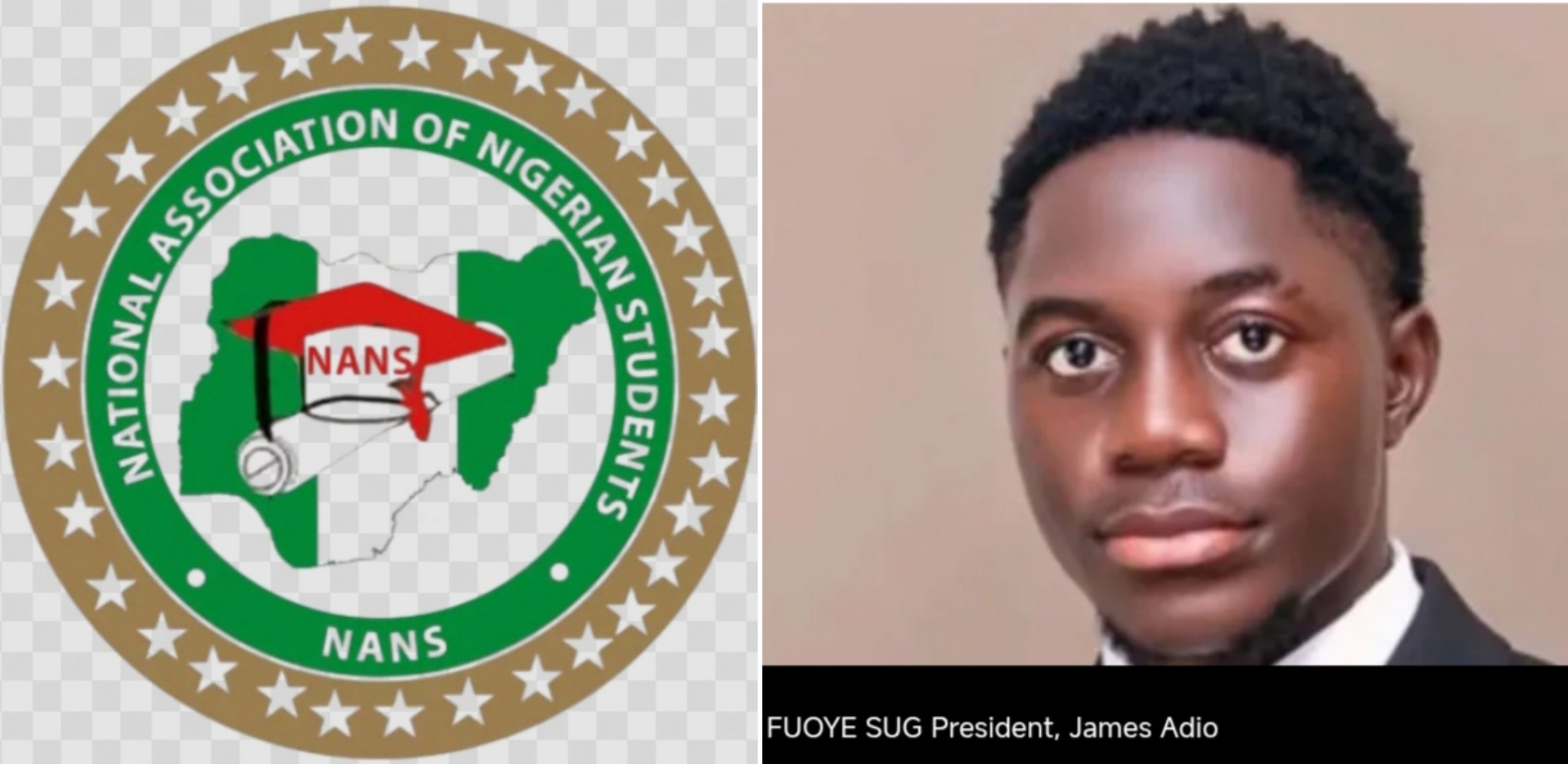
The National Association of Nigerian Students (NANS) has commenced mobilisation for peaceful protests in Ekiti State following the remand of the immediate past Students’ Union Government President of the Federal University Oye-Ekiti (FUOYE), James Adio.

NANS National President, Akinteye Babatunde, announced the planned action in a statement on Monday, describing Adio’s remand as a miscarriage of justice and alleging that the former student leader was remanded in connection with a case he had originally instituted before a Magistrate Court in the state.

According to Akinteye, Adio was the complainant in the matter and had no criminal charge against him.

He said the development was disturbing because, based on information available to the association, the case allegedly shifted from the original complaint to issues involving Adio himself.

NANS consequently directed its Joint Campus Committee Chairman for the Ekiti Axis and its National Head of Administration to commence mobilisation for peaceful demonstrations.

The association said the protests would include lawful actions at the Ekiti State High Court, the Magistrate Court and the office of the Directorate of Public Prosecutions, with the aim of demanding justice and Adio’s release.

What led to the court case?

In a separate open letter addressed to Ekiti State Governor Biodun Oyebanji, the state’s Chief Judge and the Attorney-General and Commissioner for Justice, NANS Head of Administration, Owolewa Taiwo, provided further details of the association’s allegations.

NANS claimed that Adio had approached the court after private and consensual moments between him and another adult were allegedly recorded and circulated on social media without his consent.

The association said the case centred on alleged cyberbullying and the unlawful publication of private media.

However, NANS alleged that the focus of the proceedings before Magistrate Abayomi Adeosun of the Magistrate Court, Fajuyi, Ado-Ekiti, shifted from the alleged cyberbullying complaint to the private conduct of the parties involved.

The association claimed that Adio and the defendants were subsequently ordered to remain in remand custody until August 4, 2026.

NANS alleges concerns over prosecution

NANS further alleged that officials from the Ekiti State Ministry of Justice raised issues concerning the treatment of the parties by FUOYE.

According to the association, the Director of Public Prosecutions, Akinlabi O.O., and the Director of Citizenship Rights, H.A. Adeyemi, argued during proceedings that the university had treated the parties differently by suspending only the female involved while allowing Adio to sit for his examinations.

NANS, however, said Adio’s lawyers produced records indicating that his earlier suspension was unrelated to the matter before the court.

The association further claimed that Adio had subsequently been exonerated and reinstated by the university senate.

NANS also alleged that the principal defendant in the case had made repeated visits to the Ministry of Justice before the proceedings, raising what the student body described as concerns about the neutrality of the judicial process.

These allegations have not been independently established.

NANS demands reassignment of case

Against the backdrop of the controversy, NANS called for the immediate recusal of Magistrate Adeosun from the matter and the reassignment of the case to another judge.

The association also demanded an independent review of Adio’s remand order and an investigation into the conduct of the Director of Public Prosecutions and the Director of Citizenship Rights.

NANS warned that failure to address its demands would compel the association to petition the National Judicial Council and other relevant disciplinary bodies over the alleged conduct of the judicial officers involved.

The association said it remained committed to defending the rights of Nigerian students and promoting justice and the rule of law.

As of the time of filing this report, the Ekiti State Ministry of Justice had not publicly responded to the allegations contained in the NANS statement and open letter.

The development is expected to attract further attention as NANS proceeds with its planned mobilisation and as the legal process surrounding Adio’s remand continues.

Nigeria’s Air Power Gets Major Boost as First 3 M-346 Fighter Jets Pass Final Tests

Nigeria’s efforts to strengthen its air power have received a major boost following the successful completion of the Factory Acceptance Test (FAT) for the first batch of three M-346 Fighter Attack (FA) aircraft acquired for the Nigerian Air Force (NAF).

The milestone was recorded at the Leonardo Aircraft Division facility in Venegono, Italy, where a joint delegation of the Nigerian Air Force and the Ministry of Defence conducted the acceptance exercise between June 29 and July 9, 2026.

The development was disclosed on Monday in Abuja by the Director of Public Relations and Information, Air Commodore Ehimen Ejodame.

According to the NAF, the successful completion of the exercise means the three aircraft have fulfilled all contractual, technical and airworthiness requirements and have been formally certified for delivery to Nigeria.

The aircraft, designated NAF 01, NAF 02 and NAF 03, underwent comprehensive inspections by representatives of the Nigerian Air Force, Ministry of Defence and Leonardo Aircraft Division before receiving clearance for delivery.

The three platforms are expected to be inducted into the NAF’s growing inventory of modern combat aircraft as Nigeria continues to invest in advanced platforms to address evolving security challenges.

M-346 to boost combat readiness

The Chief of the Air Staff, Air Marshal Sunday Kelvin Aneke, described the acquisition as a strategic move to further strengthen the operational capabilities of the Nigerian Air Force.

Aneke said the M-346’s combination of advanced pilot-training capabilities and frontline combat functions would enhance the Air Force’s ability to produce highly trained and combat-ready aircrew.

He added that the aircraft would expand the NAF’s capacity to conduct missions including precision strikes, close air support, air interdiction and other combat operations.

The development is particularly significant as the Nigerian military continues to confront complex security threats requiring increased air support and rapid-response capabilities.

Focus shifts to training and long-term support

Beyond the aircraft acceptance process, the Nigerian delegation engaged Leonardo Aircraft Division on pilot training, maintenance training, logistics support and the long-term sustainment of the M-346 fleet.

The team also inspected Leonardo’s Full Mission Simulator, virtual reality-enabled training systems and other ground-based facilities designed to prepare pilots and technical personnel for the effective operation and maintenance of the aircraft.

The NAF said the investment in training and technical support would help strengthen Nigeria’s indigenous capacity, improve operational self-sufficiency and sustain the fleet’s mission readiness over the long term.

Another step in NAF fleet modernisation

The successful Factory Acceptance Test represents another milestone in the Nigerian Air Force’s ongoing fleet modernisation programme.

The development also aligns with the Chief of the Air Staff’s command philosophy of building a highly motivated, professional and mission-ready force capable of delivering decisive air power in synergy with ground forces.

The Federal Government, under President Bola Tinubu, has continued to prioritise the acquisition of modern defence platforms as part of efforts to improve the operational effectiveness of the Armed Forces.

With the first three M-346 Fighter Attack aircraft now cleared for delivery, attention will shift to their arrival in Nigeria and subsequent induction into the NAF.

The programme is expected to strengthen Nigeria’s aerial combat and training capabilities while contributing to the country’s broader objective of developing a modern, technologically advanced and sustainable defence force.

Soludo Birthday Outreach: Anambra Women Get Free Fibroid Surgeries as Medical Intervention Begins

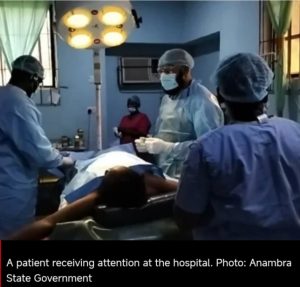
Women living with fibroids and ovarian cysts in Anambra State have begun receiving free surgical treatment as part of a medical outreach organised by the Friends of Soludo to commemorate the birthdays of Governor Chukwuma Soludo and his wife, Dr Nonye Soludo.

The healthcare intervention, which commenced at the Enugu-Ukwu General Hospital in Njikoka Local Government Area, is providing free screenings, treatments and surgeries to residents, particularly those who have been unable to access medical care because of financial constraints.

Among the major components of the programme is free myomectomy for women diagnosed with fibroids, as well as surgical treatment for ovarian cysts and other medical conditions at designated hospitals across the state.

Speaking at the commencement of the exercise on Monday, the Chief Medical Officer of Enugu-Ukwu General Hospital, Dr Dozie Udeolisa, described the initiative as a significant intervention that is giving women an opportunity to access treatments they had previously been unable to afford.

According to him, the cost of fibroid surgery can place considerable pressure on families, forcing some patients to postpone treatment and continue living with pain and other complications.

He said the Friends of the Governor had helped remove that financial barrier by providing the surgeries at no cost to beneficiaries.

Enugu-Ukwu General Hospital is one of the designated centres for the programme, with women who completed the required registration and medical screening now undergoing surgery.

Udeolisa explained that screening commenced before the surgical procedures, while a team comprising experienced surgeons, anaesthetists, nurses and other healthcare professionals had been deployed to ensure that beneficiaries receive safe and quality care.

He noted that the duration of each operation varies according to the individual patient’s medical condition, stressing that every case requires a different approach.

The Chief Medical Officer also disclosed that the response from beneficiaries had been encouraging, particularly among women who had previously delayed surgery because they could not afford the associated costs.

He commended Governor Soludo and the Friends of the Governor for supporting the initiative, describing it as a practical expression of compassion and a commitment to improving access to healthcare in the state.

The medical outreach extends beyond fibroid and ovarian cyst surgeries.

According to Udeolisa, free cataract surgeries, alongside glaucoma screening and treatment, are being provided at the Anambra State Specialist Eye Centre in Nise, while free hernia surgeries are being conducted at the General Hospital, Umueri.

Eligible residents have therefore been encouraged to take advantage of the ongoing intervention.

The organisers assured beneficiaries that the surgeries are completely free and that patients would receive appropriate medical attention throughout the treatment process.

The initiative forms part of broader efforts to expand access to affordable healthcare in Anambra State, with the birthday outreach providing an opportunity to bring essential medical services directly to residents who might otherwise struggle to meet the cost of treatment.

For many beneficiaries, the intervention represents more than a birthday celebration—it is an opportunity to finally receive medical treatment that had been delayed by financial hardship.

Nigeria Needs $228bn to Fix Power Sector by 2045 — Presidency

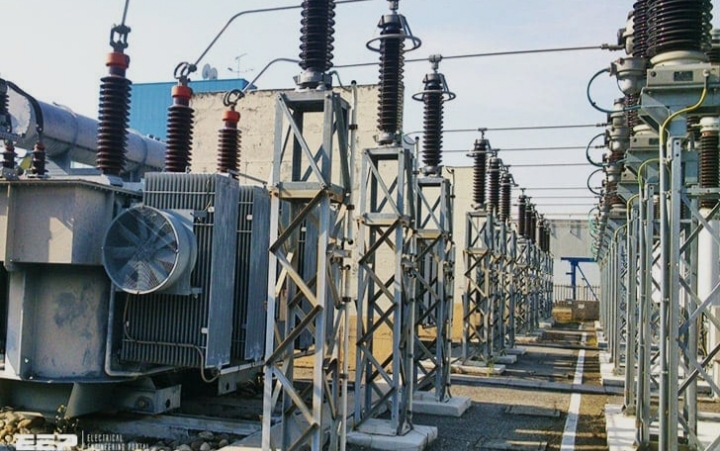
Nigeria will require an estimated $228 billion in electricity investments by 2045 to stabilise the national grid, expand power infrastructure and meet the country’s growing energy needs.

The projection translates to an average investment requirement of about $12 billion annually over the period, a figure that starkly contrasts with the approximately $1 billion currently being invested in Nigeria’s electricity sector each year.

The Special Adviser to the President on Power Infrastructure, Sadiq Wanka, disclosed this at Asharami Square 3.0 in Lagos, where he stressed that closing the massive investment gap would require coordinated policy reforms, stronger regulation and a deliberate strategy for attracting both domestic and international capital.

“Nigeria, potentially, needs $12 billion in electricity investments annually through 2045, versus $1 billion being spent currently,” Wanka said.

Generation, Transmission and Distribution Need Billions

Wanka said the required investment would have to be spread across the three major components of the electricity value chain — generation, transmission and distribution.

According to him, approximately $6.1 billion is required for generation, while about $2 billion is needed for transmission infrastructure.

The distribution segment, he added, could require between $2 billion and $4 billion to achieve the level of stability and efficiency required between 2025 and 2045.

The figures underline the scale of the challenge confronting Nigeria, where inadequate generation capacity, transmission constraints, distribution bottlenecks and financial weaknesses have continued to limit reliable electricity supply.

Electricity Act Opens Door to Greater State Participation

Despite the huge funding requirement, Wanka said recent reforms have begun reshaping the power sector and creating opportunities for decentralised investment.

He pointed particularly to the Electricity Act 2023, which has expanded the role of state governments in electricity regulation and opened the door to new categories of licences and greater private-sector participation.

He disclosed that regulatory oversight has already transitioned to subnational regulators in 16 states, potentially giving states greater room to develop electricity solutions suited to their local economies and energy needs.

Wanka cited recent initiatives as evidence of the emerging investment opportunities, including a $200 million public-private partnership announced by the Imo State Government to provide electricity across its local government areas.

He also referenced a N50 billion equity investment by franchise state governments in KEDCO aimed at supporting embedded energy and improving electricity networks.

Government Pushes Cost-Reflective Electricity Market

The Special Adviser also highlighted fiscal reforms designed to reduce the financial pressure on the Federal Government and move the electricity market towards greater commercial sustainability.

According to him, Band A electricity customers have transitioned towards cost-reflective tariffs, a development he said has contributed to an estimated N1 trillion annual reduction in electricity subsidies.

He also argued that the removal of subsidies on petroleum products has improved the economics of alternative power sources compared with self-generation.

Nigeria, he said, is currently importing approximately 1,700MW of solar panels annually, reflecting growing demand for alternative and distributed energy solutions.

Meanwhile, reforms in the oil and gas sector have helped unlock about $10 billion in Final Investment Decisions (FID) for major gas development projects, which could strengthen the fuel supply needed for gas-fired electricity generation.

New Investment Opportunities in Transmission and Hydropower

Wanka said the Federal Government is also pursuing several initiatives aimed at strengthening electricity infrastructure and attracting private capital.

Among them is the Light Up Nigeria pilot in Agbara, designed to improve electricity supply to industrial customers.

He said the Electricity Act has also created room for independent transmission network operators, potentially allowing private investors to participate more directly in the financing and operation of transmission infrastructure.

Another major initiative is the Transmission Infrastructure Fund, which was instituted in the third quarter of 2025 and is targeted for operationalisation in the fourth quarter of 2026.

The Federal Ministry of Power is also working with the Ministry of Water Resources on a fresh concession process for viable hydropower assets.

In addition, the World Bank-backed Sustainable Power and Irrigation Programme is developing a hydropower masterplan aimed at supporting financing for medium- and large-scale hydropower projects across Nigeria.

$23bn Needed to Close Electrification Gap by 2030

Wanka further called for stronger financial mechanisms to accelerate investment in the power sector, noting that Nigeria’s electrification gap could require approximately $23 billion by 2030 to address.

He advocated the establishment of a Power Project Development Fund, the designation of a nodal financial institution for the power sector and the creation of a Power Consumer Assistance Fund.

According to him, these mechanisms would help mobilise financing, de-risk investments and accelerate the development of electricity infrastructure.

He also urged investors to build the wider ecosystem required to develop bankable power projects and attract global pools of capital into Nigeria.

Development partners, he said, should equally support reforms, investment mobilisation and advocacy for a coordinated, Nigeria-led power sector development plan.

The Real Challenge: Turning Reform Into Investment

Nigeria’s power sector is therefore at a critical crossroads.

The country has embarked on regulatory and fiscal reforms designed to decentralise electricity development, increase private-sector participation and reduce the burden of subsidies. But the scale of the required investment remains enormous.

With the sector currently attracting roughly $1 billion annually against a potential requirement of $12 billion, Nigeria must find ways to mobilise significantly more long-term capital if it is to build a reliable electricity system capable of supporting industrialisation, job creation and economic growth.

The message from the Presidency is clear: Nigeria’s power challenge is no longer simply about generating more electricity. It is about mobilising the capital, infrastructure, regulation and investment ecosystem required to deliver reliable power at scale.

Sweden Moves to Fix Major Intelligence Blind Spot After Misjudging Putin’s Ukraine War

Sweden is overhauling its intelligence architecture after one of the most consequential misjudgments by its security establishment in recent years: underestimating the likelihood that Russian President Vladimir Putin would launch a full-scale invasion of Ukraine.

In the months before Russia invaded Ukraine in February 2022, American and British intelligence agencies repeatedly warned that Moscow was preparing for a major military operation. But some European intelligence services remained unconvinced.

Among the sceptics was Sweden’s military-intelligence service, MUST, which had built a reputation for its expertise in analysing Russia’s military capabilities and intentions. Like intelligence officials in France and Germany, Swedish officials reportedly considered a full-scale invasion too risky and irrational for Putin to pursue.

The war proved them wrong.

Now, Sweden is seeking to ensure that such a strategic miscalculation does not happen again.

The Swedish government has announced plans to establish a new civilian intelligence agency, the Utrikesunderrättelsetjänsten (UND), or Foreign Intelligence Service. The proposed agency is expected to function in a role broadly comparable to Britain’s Secret Intelligence Service, MI6.

Unlike MUST, which operates within Sweden’s military intelligence structure, UND would be a civilian organisation focused on foreign intelligence. It would operate alongside MUST while taking over some of its existing responsibilities.

One of the most sensitive areas expected to come under the new agency is the Special Collection Office, a little-known unit involved in covert intelligence operations and activities involving agents abroad.

Swedish Foreign Minister Maria Malmer Stenergard has described the initiative as part of a broader effort to strengthen the country’s ability to gather and assess intelligence in an increasingly uncertain international environment.

The proposal is expected to go before Sweden’s parliament, with lawmakers scheduled to consider it on August 13 ahead of the country’s September general election. If approved, the new intelligence service is expected to begin operations in January.

Learning From the Ukraine War

Sweden’s decision underscores one of the most difficult challenges facing intelligence agencies: knowing not only what an adversary is capable of doing, but also accurately judging what it is actually prepared to do.

In the case of Russia, Western intelligence agencies had access to substantial information about Moscow’s military preparations before the invasion. The challenge for some European governments was interpreting those signals and determining whether Putin would ultimately take the enormous political, military and economic risks associated with a full-scale war.

That experience appears to have influenced Sweden’s decision to separate civilian foreign intelligence from military intelligence.

The new arrangement could provide Stockholm with a more specialised structure for collecting intelligence abroad, recruiting and managing foreign sources, and assessing threats beyond Sweden’s borders.

A New Era for Swedish Intelligence

The proposed UND comes at a historic moment for Sweden’s national security policy.

Russia’s invasion of Ukraine fundamentally altered the European security landscape, prompting Sweden to abandon decades of military non-alignment and join NATO.

The creation of a dedicated civilian foreign-intelligence service therefore represents more than an administrative adjustment. It signals Sweden’s recognition that the country’s security challenges now require a broader and more sophisticated intelligence capability.

For Stockholm, the objective is clear: avoid being caught off guard again.

The real test, however, will not simply be whether Sweden establishes another intelligence institution. It will be whether UND can provide decision-makers with timely, independent and accurate assessments—even when those assessments challenge prevailing assumptions.

The lesson from 2022 is perhaps the simplest one: intelligence agencies can collect vast amounts of information, but the value of intelligence ultimately depends on how accurately leaders interpret the warning signs.

Sweden now wants to make sure it is better prepared the next time those warning signs appear.

Atiku: Tinubu Finally Embraces My 21-Year-Old Blueprint to Fix Nigeria’s Power Crisis

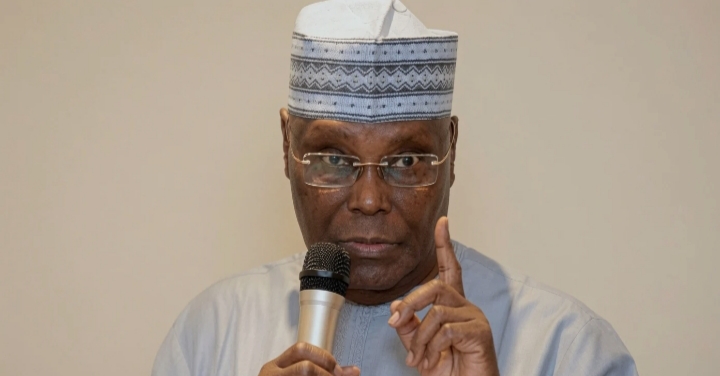
Former Vice President of Nigeria and presidential candidate of the African Democratic Congress (ADC), Atiku Abubakar, has accused the administration of President Bola Tinubu of belatedly adopting a power-sector strategy he says he championed more than two decades ago.

Atiku made the claim through his spokesperson, Phrank Shaibu, in a statement issued on Sunday, following comments by the Minister of Power, Joseph Tegbe, that Nigeria can no longer rely solely on large, centralised power plants to meet the country’s electricity needs.

According to Atiku, the minister’s position amounts to a belated endorsement of the decentralised electricity generation model he had advocated during his time as Vice President under former President Olusegun Obasanjo.

“This has been my position for over two decades,” Atiku said.

The ADC presidential candidate recalled that while serving as Vice President, he consistently urged the Obasanjo administration to diversify and decentralise electricity generation by taking advantage of Nigeria’s abundant energy resources, including hydroelectric power, solar energy and gas.

Atiku argued that a decentralised approach would make it possible to generate electricity closer to communities and consumers while reducing the country’s dependence on large, centralised power plants.

“It should not take a government three years in office to discover what was obvious more than two decades ago,” he said.

The former Vice President also criticised the Tinubu administration over electricity tariffs, arguing that the government increased tariffs before implementing the reforms needed to improve electricity supply.

“A government that thinks before it acts would have fixed the system before asking citizens to pay more,” Atiku said.

He maintained that the administration had taken the opposite approach by increasing tariffs while only now beginning to consider the structural reforms required to improve power generation and supply.

The comments come amid continued debate over how best to address Nigeria’s longstanding electricity challenges, with policymakers increasingly examining alternative and decentralised power-generation models.

Atiku’s position also adds a political dimension to the ongoing power-sector debate as the former Vice President prepares to contest the 2027 presidential election under the platform of the ADC.

The former Vice President has continued to argue that Nigeria’s electricity crisis requires a fundamental restructuring of the power sector rather than isolated interventions, insisting that the country must fully exploit its diverse energy resources to achieve reliable and affordable electricity.

APC Unveils 276-Member Campaign Council for Osun 2026 Poll, Names Uzodimma Chairman

The ruling All Progressives Congress (APC) has unveiled a 276-member National Campaign Council and a series of specialised subcommittees to coordinate its campaign for the Osun State governorship election scheduled for August 15, 2026.

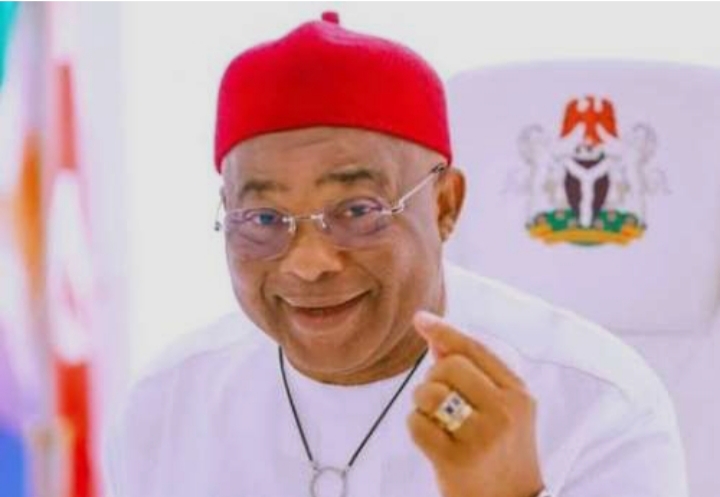
The party named Imo State Governor and Chairman of the Progressive Governors’ Forum, Senator Hope Uzodimma, as Chairman of the National Campaign Council, signalling a high-level national mobilisation ahead of the keenly anticipated poll.

The composition of the council was contained in a notice signed by the APC National Secretary, Senator Surajudeen Ajibola Basiru, and published on the party’s official X handle on Sunday.

Serving alongside Uzodimma as co-chairmen are Yobe State Governor, Mai Mala Buni; President of the Senate, Senator Godswill Obot Akpabio; and Speaker of the House of Representatives, Rt. Hon. Tajudeen Abbas.

The Senior Special Assistant to the President on Political and Other Matters, Hon. Ibrahim Kabir Masari, was appointed Deputy Chairman, while the Deputy President of the Senate, Senator Barau I. Jibrin, will serve as Secretary of the council.

According to the APC, the campaign council brings together prominent party leaders and stakeholders from across the country, including serving governors, members of the National Working Committee, principal officers of the National Assembly, ministers, federal and state lawmakers and other influential party figures.

The broad-based composition is aimed at creating a formidable national campaign structure capable of coordinating the party’s mobilisation and electoral strategy across Osun State.

Beyond the central campaign council, the APC has established specialised subcommittees to handle critical aspects of the election campaign.

The committees will focus on election planning and management; finance and resource mobilisation; contact, grassroots engagement and mobilisation; logistics and campaign management; monitoring and compliance; protocol; media and publicity; security; youth mobilisation; persons with disabilities and other special-interest groups; women’s mobilisation; and secretariat operations.

The structure underscores the APC’s attempt to approach the Osun governorship contest with a coordinated, multi-sectoral strategy, placing emphasis not only on political mobilisation but also on logistics, communications, grassroots engagement, finance, security and election-day coordination.

The party said the inauguration of the National Campaign Council and its various subcommittees is scheduled for Tuesday.

With the August 15 election drawing closer, the unveiling of the 276-member structure effectively marks a major step in the APC’s preparations for the Osun contest, with the party deploying some of its most prominent national figures to spearhead its campaign for victory.

The development is expected to intensify political activities in Osun State as the APC seeks to consolidate its presence and mount a strong challenge in the governorship race.

PENGASSAN Ends Leadership Battles, Makes Deputy President Automatic Successor

The Petroleum and Natural Gas Senior Staff Association of Nigeria (PENGASSAN) has introduced a new leadership succession model aimed at ending rancour, factionalisation and prolonged disputes that have historically accompanied transitions within the association.

Under the new arrangement, the elected Deputy President of PENGASSAN will automatically succeed the President, effectively eliminating a fresh contest for the presidency at the point of transition.

PENGASSAN President, Festus Osifo, disclosed this on Saturday in Abuja during a day of tributes organised by the association in honour of its late former president, Francis Johnson.

Johnson served as PENGASSAN President from June 2014 to May 31, 2019, before his death on May 31, 2019, at the National Hospital, Abuja, following a brief illness.

Osifo said the experience surrounding Johnson’s death and the leadership vacuum that followed reinforced the need for the association to build a more predictable and orderly succession system.

According to him, PENGASSAN amended its constitution in August 2025 after examining succession arrangements adopted by prominent professional and membership organisations in Nigeria, including the Nigerian Bar Association (NBA) and the Institute of Chartered Accountants of Nigeria (ICAN).

He explained that the association eventually settled for a model similar to that of ICAN, where the person positioned to become president is known ahead of the transition.

“In PENGASSAN, whoever is the deputy president elected is going to automatically become the president. So, there is no contestation again in the office of the president.”

Osifo said the arrangement was designed to remove the intense competition associated with presidential elections and reduce the tension, factionalisation and instability that can arise when several contenders compete for the same position.

He said the impact of the reform was already being felt ahead of PENGASSAN’s next leadership transition.

“Normally, two years before transition in PENGASSAN, you will see problems everywhere. But I will tell you, 100 per cent stability. The National Executive Council and the Central Working Committee, we are intact. The transition is going smoothly. There is no issue as of today whatsoever,” he said.

The PENGASSAN president described the new succession model as one of the major legacies of the current administration, saying it would help protect the association from internal distractions and enable its leadership to concentrate on its core responsibilities.

He said the constitutional amendment was unanimously approved in August 2025 after the union undertook a review of different succession models and sought to identify the system best suited to its structure.

The reform comes as PENGASSAN prepares for its delegates conference scheduled for August 22, 2026, when the next leadership transition is expected to take place.

With the successor already determined through the constitutional succession arrangement, the association hopes to make the transition less about political competition and more about continuity, stability and institutional development.

For a major professional association representing senior staff in Nigeria’s petroleum and natural gas industry, the move could mark a significant shift in how leadership transitions are managed.

Rather than allowing succession contests to dominate the organisation’s attention, PENGASSAN’s new model seeks to ensure that leadership change is predictable, orderly and focused on preserving the stability of the institution.

Osifo said the objective is ultimately to ensure that PENGASSAN remains focused on its responsibilities and does not become consumed by internal battles over who succeeds the incumbent president.

The August 22 delegates conference will therefore provide the first major test of the new succession framework and could establish a new precedent for leadership transition within the association.

David Jonsson Is the New Black Panther: Ryan Coogler Finally Reveals T’Challa’s Son for ‘Black Panther 3’

The wait for the next Black Panther is finally over—and Marvel has delivered a casting surprise that few fans saw coming.

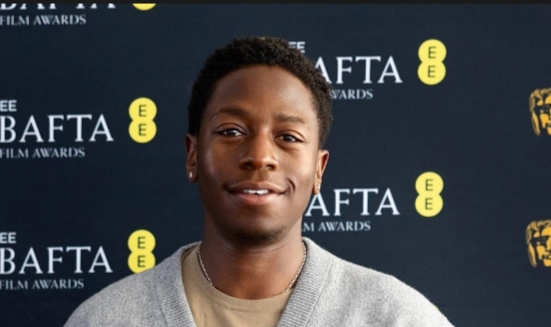
British actor David Jonsson has officially been cast as the grown-up son of the late King T’Challa, the character whose existence was revealed in the emotional closing moments of Black Panther: Wakanda Forever. Jonsson will take on the mantle of the new Black Panther in the highly anticipated third installment of the franchise.

The announcement was made by director Ryan Coogler at San Diego Comic-Con, putting an end to years of speculation over who would eventually inherit the iconic Wakandan superhero role.

Since Wakanda Forever premiered in 2022, fans have been debating who could become the next Black Panther following the death of Chadwick Boseman, whose portrayal of T’Challa became one of the defining performances of the Marvel Cinematic Universe.

The revelation that T’Challa had a son, Toussaint, introduced a potentially game-changing direction for the franchise. As anticipation grew for the third movie, numerous names were linked to the role, with British actor Damson Idris among those frequently mentioned by fans and in speculation surrounding the project.

But Marvel ultimately went in a different direction.

David Jonsson Takes Over the Black Panther Legacy

Jonsson’s casting represents a significant step in the evolution of the Black Panther story. Rather than simply introducing another character to wear the suit, the film will reportedly explore the legacy of T’Challa through his son.

The young prince was introduced at the end of Wakanda Forever as T’Challa’s son, born to Nakia. His character was revealed to have been given the name Toussaint, while also carrying his father’s Wakandan name.

Now, with Jonsson stepping into the role as an adult, audiences will get the opportunity to see how T’Challa’s son grows into the responsibilities attached to the Black Panther mantle.

Speaking about joining the franchise, Jonsson expressed gratitude for becoming part of the Marvel family while deliberately keeping details about his character under wraps.

“Thank you to this family that I have the honor and the blessing to join. I don’t want to say too much, because I want to let the screen do the talking.”

His comments are likely to fuel even more curiosity about what Coogler has planned for the character.

From British Television to Wakanda

Jonsson’s rise to one of Hollywood’s most coveted roles is the latest chapter in an increasingly impressive career.

He made his television debut in 2018 with appearances in ITV’s detective drama Endeavour. He subsequently expanded his creative credentials by writing, directing and starring in the short film Gen Y.

In 2019, he appeared as Isaac Turner in the second series of the espionage thriller Deep State, further establishing himself as a versatile performer.

His career continued to gather momentum, eventually earning him the 2025 Rising Star Award at the British Academy Film Awards, an honour that highlighted his growing profile and potential.

His casting as the new Black Panther now represents arguably the biggest opportunity of his career.

‘Black Panther 3’ Takes the Story Forward

The third Black Panther film is expected to continue the story established by Wakanda Forever, while opening a new chapter for the royal family of Wakanda.

The transition from T’Challa to his son also gives Ryan Coogler an opportunity to explore themes of legacy, identity, family and responsibility from an entirely new perspective.

While Marvel has kept much of the plot under wraps, the decision to age up T’Challa’s son suggests that the character will play a major role in the future of Wakanda and potentially the wider Marvel Cinematic Universe.

The film is currently scheduled to arrive in cinemas on December 15, 2028.

Coogler has also revealed an ambitious technical decision for the production: Black Panther 3 will be shot entirely on larger-format celluloid film, a move that could give the sequel an especially striking visual presentation.

A New Era for Wakanda

The casting of David Jonsson marks more than a change of actor behind the Black Panther mask. It signals the beginning of a new era for one of Marvel’s most important franchises.

Chadwick Boseman’s T’Challa left behind an enormous legacy, and Wakanda Forever deliberately centred on grief, remembrance and the future of Wakanda.

Now, the story appears ready to move forward.

With T’Challa’s son stepping into the spotlight, audiences will soon discover whether the young prince can carry the weight of his father’s legacy while forging an identity of his own.

One thing is already certain: the Black Panther may be changing, but the legacy of T’Challa is far from over.

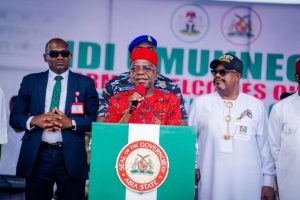
Umunneochi Stands with Otti: Thousands Endorse Governor’s 2027 Re-election Bid as New Projects Transform the LGA

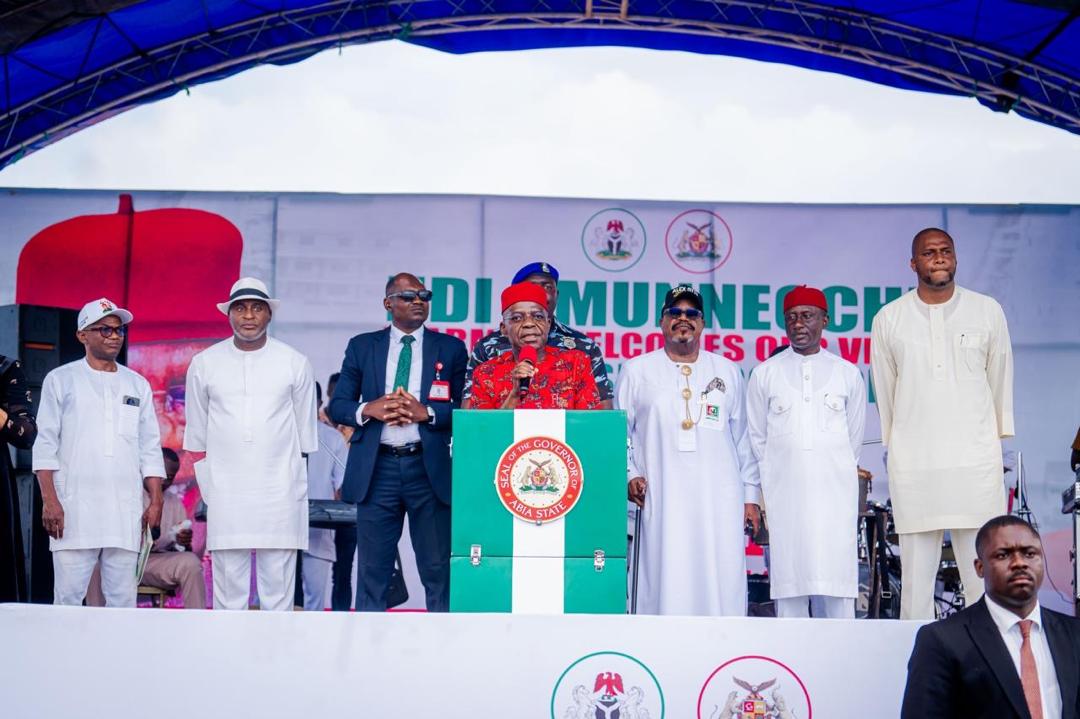
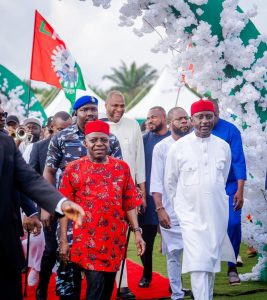
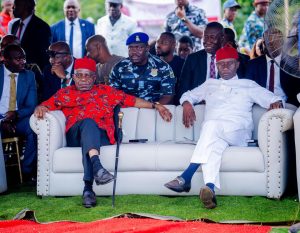
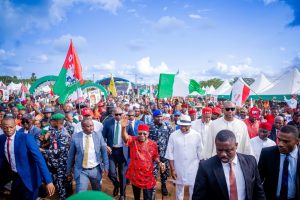
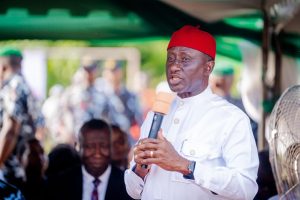
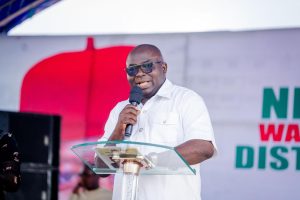
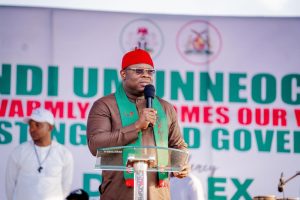
The people of Umunneochi Local Government Area on Friday rolled out the drums in honour of the Executive Governor of Abia State, Dr. Alex Otti, OFR, hosting him to a grand civic reception at Peace Secondary School, Amuda, Isuochi, in recognition of what they described as his remarkable developmental strides across the area and the state.

The colourful event, held on July 24, 2026, attracted political leaders, traditional stakeholders, community leaders, and residents, who unanimously reaffirmed their confidence in Governor Otti’s leadership and endorsed him for a second term in office ahead of the 2027 governorship election.


Addressing the enthusiastic crowd, Governor Otti reiterated his administration’s unwavering commitment to inclusive governance, equitable development, and sustained transformation in every part of Abia State.

He declared that Abia had permanently departed from the era of poor governance and underdevelopment, assuring the people that the state would continue on the path of progress and prosperity.


According to the Governor, his administration remains focused on ensuring that no community is left behind in the ongoing transformation of the state. He announced that the long-awaited Mmam Bridge, which was captured in the 2026 budget following engagements with stakeholders from Umunneochi, would soon become a reality alongside other critical infrastructure projects.

Governor Otti stressed that investments in free and quality education, modern road infrastructure, healthcare, and other people-oriented programmes remain central to his administration’s vision of building a prosperous Abia.

“This is your government, and because it is your government, we will continue to invest in your future through education, infrastructure and other people-oriented projects,” the Governor said.


In another major announcement, Governor Otti disclosed that the state’s Electric Bus Green Shuttle Scheme would soon be extended to Umunneochi following the arrival of over 20 additional electric buses.

He revealed that new transport routes linking Umuahia–Umunneochi and Umuahia–Okigwe–Uturu–Abia State University (ABSU) would soon commence operations to improve mobility, reduce transportation costs, and make commuting easier for residents, students, and visitors.

On security, the Governor commended the people for supporting the government’s efforts in combating crime, noting that peace and security remain indispensable to development.


He warned criminals to either abandon their activities or leave the state, stressing that his administration would continue to pursue every criminal element threatening the peace of Abia.

The civic reception also witnessed overwhelming commendations from prominent leaders across Abia North.

Among those who spoke were Labour Party Abia North Senatorial candidate, Chief David Ogba Onuoha; the Member representing Isuikwuato/Umunneochi Federal Constituency, Hon. Amobi Ogah; Member representing Umunneochi State Constituency, Hon. Mathias Umeh; and elder statesman and former Minister of Education and Health, Prof. Ihechukwu Madubuike.


The leaders praised Governor Otti for restoring public confidence in government through transparent leadership and visible achievements in road infrastructure, healthcare delivery, education, and security.

They unanimously declared that the Governor had demonstrated exceptional leadership deserving of another mandate in 2027.

Similarly, the Commissioner for Lands, Mr. Chaka Chukwumerije; Special Adviser to the Governor on Health, Dr. Ngozi Azode; Mayor of Umunneochi, Chief Sunny Afurobi; Mr. Uche Okoroafor; and the representative of the Northern community in Umuchieze, Alhaji Buba Abdullahi, applauded the Governor’s people-centred leadership style.


They highlighted several interventions already delivered in Umunneochi, including the restoration of security, approval for a brand-new General Hospital, the retrofitting of 19 Primary Healthcare Centres—12 of which are already operational—road construction projects, and significant improvements in educational infrastructure.

Speaking on behalf of the Northern community, Alhaji Buba Abdullahi described Governor Otti as a leader whose actions consistently match his promises, noting that Umunneochi has become significantly more peaceful due to the administration’s decisive security measures.


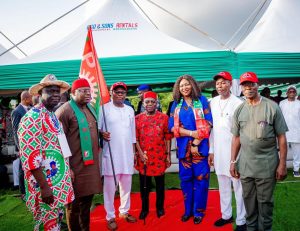
One of the major highlights of the event was the formal reception of new members into the Labour Party.

The Governor, alongside the Abia State Chairman of the Labour Party, officially presented the party flag to the new entrants, who were led by the 2023 PDP Deputy Governorship candidate in Abia State, Dr. Jasper Uche, in what observers described as another boost for the ruling party’s growing political strength in the state.


The event drew a large gathering of political leaders, government officials, traditional rulers, party faithful, and supporters from different parts of Abia State, underscoring the growing popularity of Governor Otti’s administration and the widespread support for its developmental agenda.