Category Archives: NEWS

Osun 2026: IGP Disu Pledges Police Neutrality, Warns Politicians Against Vote-Buying, Thuggery

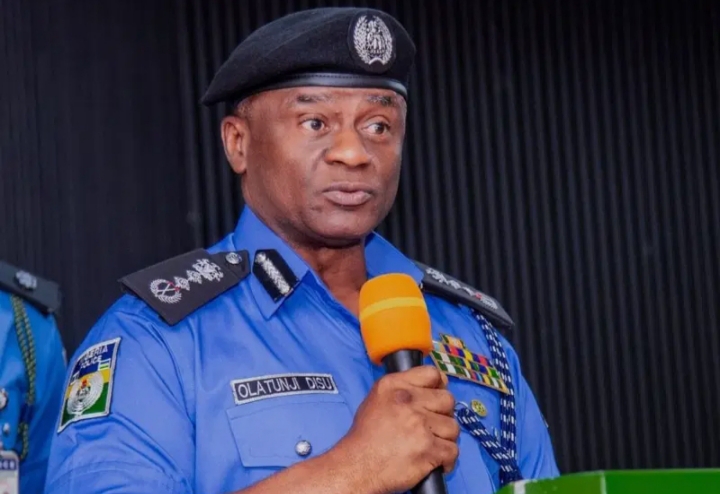
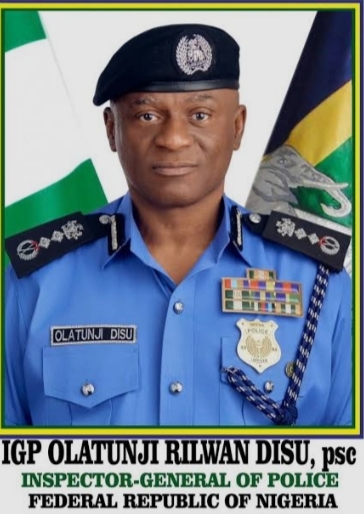
The Inspector-General of Police, IGP Tunji Disu, has assured Nigerians that the Nigeria Police Force will remain neutral and professional before, during and after the August 15 governorship election in Osun State.

Disu gave the assurance on Friday in Abuja during a meeting with civil society organisations (CSOs) led by Auwal Rafsanjani of the Civil Society Legislative Advocacy Centre (CISLAC), where discussions centred on security arrangements for the forthcoming election.

The IGP said the police had put robust security measures in place to guarantee a peaceful, free and credible poll, stressing that officers deployed for election duties had been instructed to discharge their responsibilities professionally and without political bias.

According to Disu, the Nigeria Police Force has no preferred candidate or political party and is only interested in ensuring that the lawful choice of Osun voters is respected.

“The Nigeria Police Force remains a professional, apolitical and impartial institution.”

He further stated that the police had “no candidate, no political party and no vested interest in the outcome of the election other than ensuring that the lawful choice of the people prevails.”

Disu disclosed that security personnel and operational equipment had already been deployed across Osun State as part of preparations for the election.

He added that intelligence gathering had also been intensified to detect and prevent possible threats before they could disrupt the electoral process.

The police chief warned that individuals involved in vote-buying, voter intimidation, ballot box snatching, thuggery and other electoral offences would be arrested and prosecuted in accordance with the law, regardless of their political affiliation or status.

“Anyone found engaging in vote buying, voter intimidation, ballot box snatching, thuggery or any other electoral offence will be dealt with in accordance with the law, irrespective of political affiliation or status,” he said.

Disu Calls for Peaceful Election

The IGP urged political parties, candidates and their supporters to conduct themselves peacefully and avoid actions capable of threatening the credibility of the election.

He stressed that the contest should be determined by competing ideas, policies and the choice of voters rather than violence, intimidation or other unlawful means.

Disu also called on residents of Osun State to participate actively in the election and exercise their civic responsibility without fear.

With heightened security preparations and the police promising impartiality, attention now shifts to August 15, when Osun voters will head to the polls to choose their next governor.

IGP Disu: Nigeria’s State Police Framework Draws Lessons from India, US and Pakistan

The Inspector-General of Police (IGP), Olatunji Disu, has revealed that Nigeria’s proposed State Police framework was developed after an extensive study of policing systems in India, the United States and Pakistan.

Speaking on Thursday at a one-day workshop on State Police organised by the Nigeria Police Institute at the Nigeria Police Resource Centre in Abuja, the IGP said the comparative analysis of these countries helped shape the recommendations currently under consideration by stakeholders.

Disu described the workshop as a timely opportunity for officers of the Nigeria Police Force to deepen their understanding of one of the country’s most significant security reform proposals.

He urged police personnel to actively participate in the ongoing national conversation on State Police by engaging with the issues objectively, contributing informed opinions and helping to educate the public on the proposed reform.

“As discussions on the creation of State Police continue to gain momentum across the country, members of the Nigeria Police Force must remain well-informed and contribute constructively to the ongoing discourse,” the IGP said.

According to him, the workshop provides a platform for participants to examine the implications of establishing State Police, raise critical questions, address legitimate concerns and make meaningful contributions that will strengthen national policy on policing and internal security.

Disu disclosed that the committee responsible for drafting the State Police framework carried out detailed comparative studies of countries operating decentralized policing systems.

“A lot of comparative analysis has been done. We have taken time to study nations where they have state police—India, America and even Pakistan—and how things work there,” he said.

He further explained that while state governors had already constituted committees to work on the initiative, the Nigeria Police Force was able to develop its own framework within just 17 days.

“The governors have already set up their committees. They have already almost concluded. In fact, they have concluded. We started late, but we caught up with them, and I’m happy to say our work is what they are deliberating on today,” he stated.

Disu added that the framework produced by the police has become the foundation for the ongoing discussions on State Police, although additional refinements are still being made.

The police chief also revealed that retired Inspectors-General of Police reviewed the document and made valuable recommendations aimed at strengthening the proposed framework.

“Retired Inspectors-General of Police have visited me, and they have shown their concern. We deliberated together, and they have contributed significantly to this process,” he said.

The debate over the establishment of State Police has continued to generate national interest, with supporters arguing that decentralised policing would improve intelligence gathering, enhance community policing and strengthen the fight against insecurity.

However, critics have consistently raised concerns about possible political interference, abuse of power and the need for strong constitutional safeguards to ensure accountability.

As deliberations continue among federal and state stakeholders, the framework developed by the Nigeria Police Force is expected to play a significant role in shaping the final model for State Police in Nigeria.

GOV. OTTI MOVES TO STRENGTHEN GRASSROOTS DEMOCRACY, SEEKS MANDATORY TRAINING FOR LOCAL GOVT LEGISLATORS

…As Abia Councillors Unanimously Adopt Mandatory Legislative Orientation for New Councils

The Executive Governor of Abia State, Dr. Alex Chioma Otti, OFR, has reaffirmed his administration’s commitment to strengthening democratic institutions at the grassroots, with a call for mandatory legislative orientation and capacity-building programmes for newly elected local government legislators across the state.

The Governor’s position was conveyed on Friday by the Deputy Governor, Engr. Ikechukwu Emetu, FNSE, who represented him at a one-day capacity-building seminar for local government legislators organised by the Abia State Law Reform and Review Commission in collaboration with the Office of the Senior Special Assistant to the Governor on Legal Matters, the Ministry of Justice and the Ministry of Local Government and Chieftaincy Affairs.
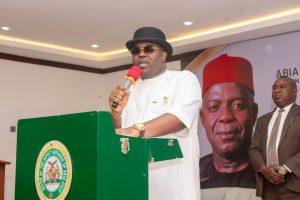
The seminar, themed “Strengthening Local Government Legislative Capacity for Effective Grassroots Governance in Abia State,” brought together mayors, councillors, legislative officers, legal practitioners, government officials and other stakeholders from the state’s 17 local government areas.

Declaring the seminar open, Emetu said sustainable development at the grassroots depends on strong legislative institutions, competent lawmakers and quality legislation. Describing laws as “the quiet architects of civilization,” he stressed that enduring development is built on strong institutions rather than individuals.
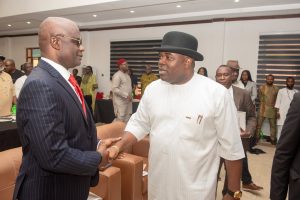
He noted that the ongoing exercise by the Abia State Law Reform and Review Commission to collate, review and document existing bye-laws across the 17 local government areas had exposed gaps in legislative capacity and underscored the need for continuous training of councillors.

According to him, obsolete and poorly drafted bye-laws, weak legislative procedures and inadequate understanding of constitutional responsibilities could undermine democratic accountability, effective oversight and service delivery at the grassroots.
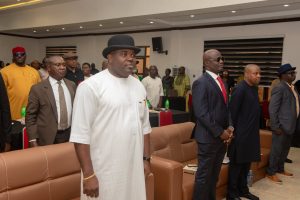
Emetu urged the legislators to take full advantage of the seminar to deepen their knowledge of legislative procedures, lawmaking, budget scrutiny and oversight, stressing that local government legislative councils must become effective instruments of accountability and grassroots development.

“Our legislative councils should serve as guardians of accountability, partners in development and the conscience of local democracy,” he said.

The Deputy Governor further advocated that structured legislative orientation and capacity-building programmes should become mandatory within the first quarter after the inauguration of every new local government legislative council in Abia State.
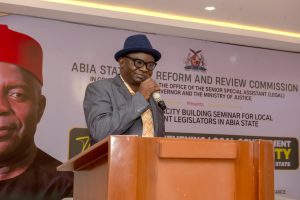
The proposal was unanimously adopted by participants through a voice vote.

Emetu also urged councillors to focus on enacting people-oriented bye-laws capable of protecting vulnerable citizens, promoting economic growth, preserving public order and addressing the peculiar needs of their communities.

He stressed that effective legislation must be developed through proper procedures, public consultation and a clear understanding of the legal and constitutional responsibilities of local government legislative councils.
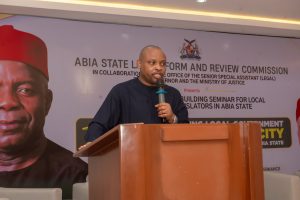
“The quality of governance at the grassroots is directly connected to the quality of the laws and institutions that guide it,” the Deputy Governor stated, urging councillors to see their legislative responsibilities as a solemn mandate to the people.

Speaking on behalf of the Speaker of the Abia State House of Assembly, Rt. Hon. Emmanuel Emeruwa, the member representing Ohafia South State Constituency, Hon. Kalu Mba Nwoke, described local government as the tier of government closest to the people.
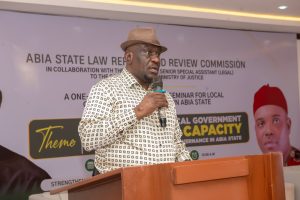
He observed that many councillors assume office without adequate knowledge of legislative procedures, public financial management, budget analysis and oversight functions, resulting in weak legislative councils, poorly drafted bye-laws and limited accountability.

Hon. Nwoke said well-trained local government legislators would be better positioned to enact relevant and enforceable bye-laws, conduct effective oversight of the executive arm, ensure that budgets reflect the priorities of the people, promote transparency and serve as a bridge between government and their communities.

He commended Governor Otti for supporting the initiative and called for sustained capacity-building programmes for local government legislators across the state.
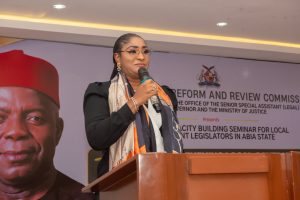
Earlier in his welcome address, the Secretary of the Abia State Law Reform and Review Commission, Barr. Dave Okwum Kalu, described the seminar as the first state-wide capacity-building programme specifically organised for local government legislators in Abia State.

He explained that the initiative was conceived against the backdrop of the Commission’s ongoing exercise to compile, review and document bye-laws across the 17 local government areas.
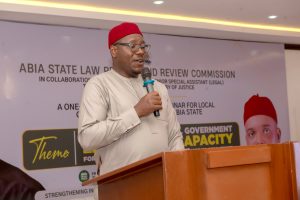
According to him, the exercise had revealed the need to strengthen the capacity of councillors in legislative drafting, lawmaking and the proper application of legal procedures.

Barr. Kalu urged participants to actively engage with the training and adopt a “train-the-trainer” approach by sharing the knowledge acquired with their colleagues in their respective legislative councils.

Presenting a lead paper on the “Legal Framework for Local Government Legislation,” the Attorney-General and Commissioner for Justice, Mr. Ikechukwu Uwanna, SAN, stressed the importance of legislative competence, proper drafting procedures and extensive public participation before the passage of any bye-law.
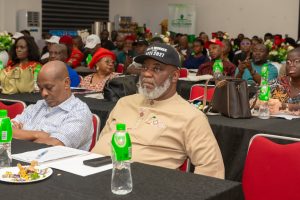
He outlined the essential elements of quality legislation to include clear drafting, appropriate enforcement mechanisms, clearly defined offences and penalties, public hearings and effective committee scrutiny.

Uwanna also highlighted provisions of the Abia State Local Government Administration Law 2025 relating to digital financial management systems, electronic personnel records, online publication of financial reports and transparent procurement processes, noting that such measures were designed to strengthen accountability and transparency in local government administration.
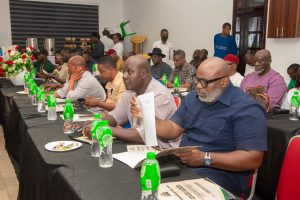
He said the seminar reflected Governor Otti’s commitment to institutional development and continuous capacity building, while commending the revitalisation of the Abia State Law Reform and Review Commission and its growing role in legal and institutional reforms in the state.

In her remarks, the Senior Special Assistant to the Governor on Legal Matters, Barr. Mrs. Nkolika Cleopatra Ubani, described the programme as an investment in democratic institutions and legislative excellence.
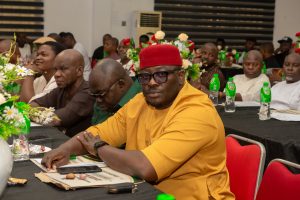
She said properly drafted and legally compliant bye-laws were essential to effective local government administration, urging participants to use the opportunity to strengthen their legislative competence and develop laws capable of addressing contemporary challenges in their respective communities.

Also speaking, the Commissioner for Local Government and Chieftaincy Affairs, Prince Uzor Nwachukwu, described the seminar as timely and beneficial, urging the organisers to extend similar programmes to all councillors across the 17 local government areas to ensure that no legislator is left behind.
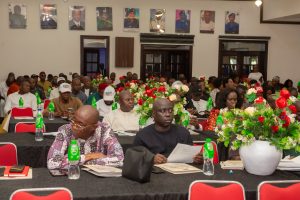
Delivering the keynote address, former Deputy Governor of Abia State and former Speaker of the Abia State House of Assembly, Rt. Hon. Sir Ude Oko Chukwu, said strong legislative councils were indispensable to effective grassroots governance.

He noted that effective lawmaking, representation and oversight remained critical to improving service delivery, community development and accountability at the local government level.

Sir Ude urged the state government to sustain regular capacity-building programmes for local government legislators, while encouraging councillors to see their legislative responsibilities as a critical component of democratic governance.
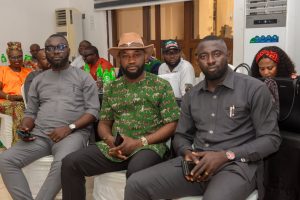
Presenting a paper on “The Strategic Role of Local Government Legislators in Advancing Grassroots Governance and Development,” constitutional law scholar, Dr. Udo Ugochukwu, urged councillors to prioritise people-oriented legislation through community engagement, effective oversight and responsible representation.

He emphasised that stronger legislative capacity, financial autonomy and continuous training would enhance transparency, improve service delivery and deepen democratic participation at the grassroots.
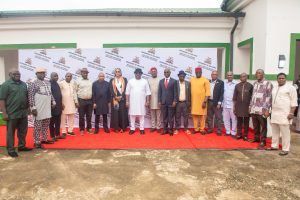
The seminar featured technical sessions on the legal framework for local government legislation, legislative drafting and practical lawmaking, including demonstrations on the preparation of model bye-laws, interactive discussions and question-and-answer sessions.

Participants were drawn from the 17 local government areas of Abia State and included mayors, councillors, legislative officers, legal practitioners, government officials and other stakeholders in local government administration.

Sir Cyril Chukwudi Eke Mba
Chief Press Secretary to the Deputy Governor of Abia State
Government House, Umuahia
August 1, 2026.
60 Years After Ironsi: Tinubu, Obasanjo, Otti Unite in Umuahia to Honour Nigeria’s First Military Head of State

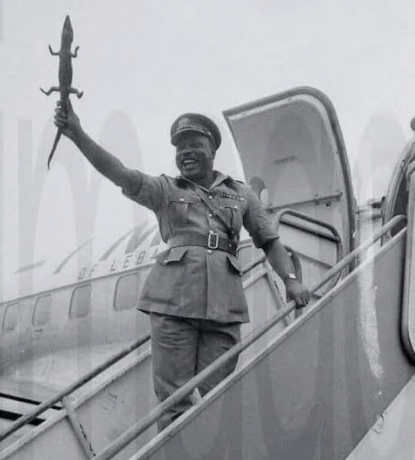
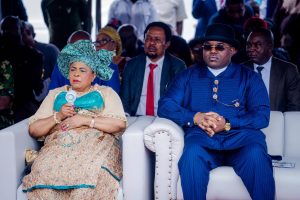
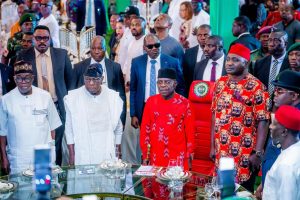
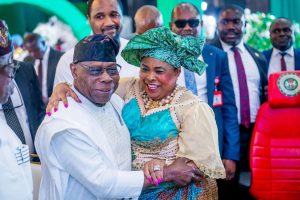
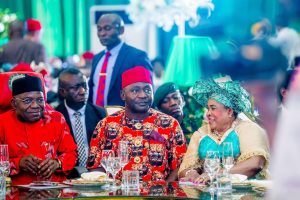
Umuahia, the capital of Abia State, became the centre of national remembrance on Wednesday as President Bola Ahmed Tinubu, former President Olusegun Obasanjo, Dame Patience Jonathan and other eminent Nigerians paid glowing tribute to Nigeria’s first Military Head of State, the late Major-General Johnson Thomas Umunnakwe Aguiyi-Ironsi, during the 60th memorial anniversary of his death.

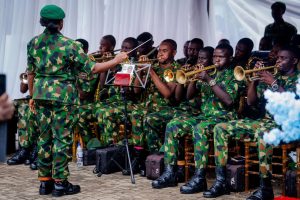
The solemn event, held at the International Conference Centre, Umuahia, attracted political leaders, senior military officers, traditional rulers, religious leaders, diplomats and members of the Aguiyi-Ironsi family, all united by a common purpose—to celebrate the life and enduring legacy of one of Nigeria’s most remarkable military leaders.

President Tinubu, represented by the Minister of Defence, General Christopher Gwabin Musa (Rtd.), described the late Aguiyi-Ironsi as an exceptional patriot who devoted his life to the unity, peace and stability of Nigeria.

According to the President, General Aguiyi-Ironsi assumed leadership during one of the country’s most turbulent political periods and displayed uncommon courage, discipline and unwavering loyalty to the Nigerian nation.

He said the values exemplified by the late military leader—patriotism, integrity, discipline, selfless service and national unity—remain indispensable to Nigeria’s continued growth and democratic development.

President Tinubu also used the occasion to commend Governor Alex Otti for what he described as exemplary leadership in Abia State, noting that the governor has set a remarkable standard in governance through visible development delivered without unnecessary publicity.

Expressing optimism about the governor’s political future, General Musa said he looked forward to returning to Abia to celebrate Governor Otti’s second-term inauguration.

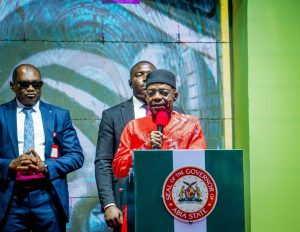
In his keynote address, Governor Alex Otti called on Nigerians to embrace unity above ethnic and sectional interests, insisting that the country stands stronger together than divided.

He described the late Aguiyi-Ironsi as a courageous patriot whose willingness to sacrifice everything for Nigeria should continue to inspire present and future generations of leaders.

“We came here to celebrate a man who gave his life for the rest of us. Personally, I believe we are better off as one country, connected and working together, than divided,” Governor Otti declared.

The governor also reaffirmed his administration’s commitment to meritocracy, explaining that appointments into public offices in Abia are determined by competence, integrity and capacity rather than ethnicity or state of origin.

To demonstrate this commitment, Governor Otti cited the appointment of an indigene of Edo State as the Head of Service of Abia State, describing it as evidence that his administration rewards excellence irrespective of background.

He equally paid tribute to former President Olusegun Obasanjo, whom he described as a father and mentor, while appreciating Dame Patience Jonathan for her continued commitment to preserving Nigeria’s history and promoting national unity.

The gathering featured goodwill messages from former President Olusegun Obasanjo, former Chief of Army Staff General Azubuike Onyeabo Ihejirika (Rtd.) and former First Lady Dame Patience Jonathan.

The trio described Aguiyi-Ironsi as a courageous patriot whose sacrifice remains one of the defining moments in Nigeria’s history, urging Nigerians to continue promoting peace, patriotism and national cohesion.

They also applauded Governor Otti for sustaining initiatives that preserve Nigeria’s historical heritage and strengthen national unity.

One of the emotional highlights of the ceremony came when Mrs. Louisa Aguiyi-Ironsi presented the citation of her late father.

She described him as a nationalist whose leadership was founded on discipline, professionalism, patriotism and merit, stressing that the memorial was designed not to reopen old wounds but to preserve history and inspire future generations.

According to her, the commemoration serves as a reminder that the Nigerian dream must always be anchored on justice, accountability, discipline and the collective good.

Former Minister of Defence and first son of the late military leader, Ambassador Thomas Aguiyi-Ironsi, expressed gratitude to President Tinubu, Governor Otti and all Nigerians who participated in the memorial.

He praised Governor Otti’s performance in office, describing it as exceptional and deserving of a second term.

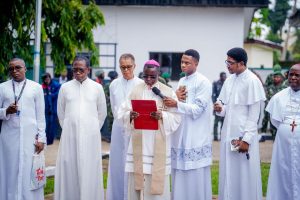
The event also featured a special prayer session led by the Bishop of the Catholic Diocese of Umuahia, Most Rev. Michael Kalu Ukpong, who consecrated the tomb of the late General Aguiyi-Ironsi at the Aguiyi-Ironsi Conference Centre.

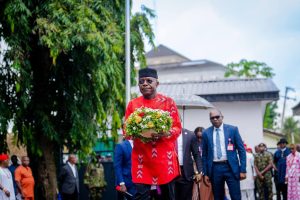
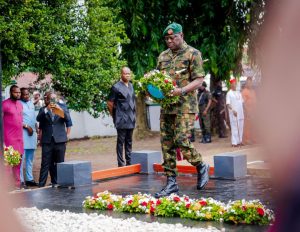
A symbolic wreath-laying ceremony followed, with wreaths laid by President Tinubu’s representative, Governor Alex Otti, representatives of Governor Chukwuma Soludo of Anambra State, Dame Patience Jonathan and other distinguished personalities.

Sixty years after his death, the memory of Major-General Johnson Thomas Umunnakwe Aguiyi-Ironsi continues to resonate across Nigeria—not merely as the country’s first Military Head of State, but as a symbol of patriotism, sacrifice and an enduring belief in a united Nigeria.

The memorial in Umuahia was more than a remembrance ceremony; it was a national call for unity, visionary leadership, meritocracy and the preservation of the ideals that continue to bind the country together.

NIWA Intensifies Waterway Safety Campaign in Abuja as Flood Risks Rise During Peak Rainy Season

As Nigeria enters the peak of the rainy season with rising water levels and heightened environmental concerns, the National Inland Waterways Authority (NIWA) has intensified its campaign to promote marine safety and environmental protection across waterfront communities in the Federal Capital Territory (FCT).

The renewed effort took the NIWA Abuja Area/Liaison Office to communities in the Abaji Area Council on Wednesday, where residents were sensitised on safe navigation practices, accident prevention, and the importance of protecting the nation’s inland waterways from pollution.

The campaign comes at a critical time when increased rainfall often leads to dangerous water conditions, making safety awareness essential for communities that rely on waterways for transportation and livelihoods.

Speaking during the exercise, the Area Manager of NIWA Abuja, Hajia Aisha Eri, commended the host communities for their warm reception and cooperation. She reaffirmed the agency’s commitment to ensuring safer inland waterways through continuous public enlightenment and strict enforcement of safety standards.

According to her, the sensitisation programme aligns with the Renewed Hope Agenda of President Bola Ahmed Tinubu’s administration, which places high priority on safeguarding lives and enforcing a zero-tolerance policy against water transportation accidents and other violations of established safety regulations.

Traditional institutions also threw their weight behind the initiative. The Emir of Kwali, HRH Alhaji Adamu Saba Aguma, praised NIWA for taking proactive steps to educate riverine communities, assuring the agency of the full support of traditional rulers in promoting compliance with waterway safety regulations.

Other community leaders, including John Dogole, District Head of Kundu and Sarkin Tungbufu; Mohammed Yusuf Ayahaya Nassarawa, Sarkin Nassarawa; Musa Wabai, Sarkin Kutara; Musa Alanana, Sarkin Kwago and Padama; and Abdullahi Kwakwa, Sarkin Kwakwa, equally applauded the awareness campaign. They pledged to work closely with NIWA in ensuring that residents observe the safety measures introduced during the exercise.

The nationwide sensitisation campaign follows a directive from the Minister of Marine and Blue Economy, Adegboyega Oyetola, mandating sustained engagement with littoral communities to reduce accidents and promote environmental sustainability across Nigeria’s inland waterways.

Similarly, the Acting Managing Director of NIWA, Alhaji Umar Yusuf Girei, has instructed all Area Offices to treat the campaign as a top operational priority.

With the Abuja Area Office set to extend the exercise to more waterfront communities across the FCT in the coming week, NIWA says the initiative remains a key strategy in preventing avoidable waterway accidents while fostering a culture of environmental responsibility among residents.

As the rainy season continues, the authority is urging all water transport operators, boat users, and riverside communities to comply with safety regulations, use approved life jackets, and support efforts to keep Nigeria’s inland waterways safe and free from pollution.

Nigeria Congratulates São Tomé President Carlos Vila Nova on Re-election, Pledges Stronger Bilateral Ties

The Federal Government of Nigeria has congratulated President Carlos Vila Nova of São Tomé and Príncipe on his re-election, describing the peaceful electoral process as another demonstration of the country’s commitment to democracy, the rule of law and constitutional governance.

In a statement issued by the Ministry of Foreign Affairs, Nigeria commended the people of São Tomé and Príncipe for participating peacefully in the electoral process and reaffirmed its solidarity with the island nation.

The Federal Government said the outcome of the election reflects the commitment of the people of São Tomé and Príncipe to democratic values and the rule of law.

Nigeria also pledged to deepen bilateral relations with São Tomé and Príncipe, particularly in areas of mutual interest, including regional peace and security, economic development and democratic consolidation.

According to the statement, the Federal Government remains committed to strengthening the longstanding relationship between both countries and exploring opportunities that would promote shared prosperity and stability.

Nigeria further wished President Vila Nova a successful second term in office, expressing optimism that his administration would continue to advance the progress and development of São Tomé and Príncipe.

The Federal Government also prayed for continued peace, stability and prosperity for the people of São Tomé and Príncipe, while reaffirming Nigeria’s readiness to work with the country towards stronger regional cooperation.

President Vila Nova’s re-election, Nigeria noted, provides another opportunity for both countries to strengthen their partnership and contribute to greater democratic stability and economic development within the region.

Reps Uncover 29 Allegedly Forged Documents in PFIPC Scandal, Give Police 48 Hours to Produce ‘DG’

The House of Representatives has uncovered what lawmakers described as an elaborate attempt to give legitimacy to the controversial Presidential Foreign Investment Promotion Council (PFIPC), with investigators identifying about 29 documents allegedly forged in the name of top government institutions.

The development emerged on Monday as the House Ad Hoc Committee probing the council resumed its investigative hearing and directed the Inspector-General of Police, Olatunji Disu, to produce the self-acclaimed Director-General of the PFIPC, Adeyemi Adeniyi, before the committee within 48 hours.

Chairman of the committee, Hon. Yusuf Gagdi (APC, Plateau), said the discovery had significantly widened the scope of the investigation, noting that the suspected forgeries went beyond individual letters to documents purportedly establishing the council itself.

According to Gagdi, one of the documents under scrutiny was a purported Act of the National Assembly allegedly used to create the agency.

The committee said it had identified about 29 suspicious documents, including purported approvals and official correspondence attributed to the State House, the Office of the Secretary to the Government of the Federation, the Office of the Head of the Civil Service of the Federation, the Federal Ministry of Finance and other government institutions.

Gagdi said representatives of several affected institutions had appeared before the committee and disowned documents allegedly issued in their names.

The committee subsequently directed its Clerk, Baba Kaigama, to formally notify the Inspector-General of Police to ensure that Adeniyi appears before lawmakers by noon on Wednesday.

Police confirm criminal investigation

The demand for Adeniyi’s appearance followed revelations from the Nigeria Police Force that criminal investigations had already been instituted against him.

Representing the Inspector-General of Police, Assistant Commissioner of Police Bashir Abdullahi told the committee that the police had investigated part of the case and filed an eight-count charge against Adeniyi before the Federal High Court.

He said the suspect had been arrested and arraigned, but cautioned the committee against making disclosures capable of prejudicing the ongoing investigation and court proceedings.

The police also confirmed receiving a petition dated October 17, 2025, from the Office of the Chief of Staff to the President, alleging that Adeniyi falsely presented himself as the Director-General of both the Presidential Economic Advisory Council (PEAC) and the Presidential Foreign Investment Promotion Council.

The petition reportedly alleged that the purported office was used to seek accommodation within the Federal Secretariat, obtain approval to recruit about 300 personnel, pursue a N1.3 billion allocation in the 2026 Appropriation Act and plan a World Investment Summit.

Signature discrepancy raises fresh questions

The committee also examined documents purportedly originating from the Office of the Chief of Staff to the President and compared signatures on them with authentic official correspondence.

When asked whether the signatures matched, ACP Abdullahi responded that they did not.

The discrepancy, lawmakers said, further heightened concerns that some of the documents used by the purported council may have been forged.

How the alleged scheme reached the Treasury

A major revelation came from the Accountant-General of the Federation, Shamseldeen Ogunjimi, who told lawmakers that the Treasury had acted on correspondence it believed originated from the State House.

Ogunjimi said a letter dated November 7, 2024, bearing a State House reference number, requested the creation of an administrative code for the Presidential Economic Advisory Council to facilitate budgeting, accounting and financial reporting.

The Treasury processed the request and created the administrative code before communicating its approval to the State House.

The development later triggered additional requests allegedly linked to the purported council, including applications for self-accounting status, deployment of personnel, the opening of Treasury Single Account and domiciliary accounts, as well as funding approvals.

However, Ogunjimi stressed that no public funds were released to the organisation.

He said a request for an establishment grant of N27.4 billion was rejected because there was no budgetary provision for it.

Although the Central Bank of Nigeria subsequently opened two domiciliary accounts for the organisation, the accounts were never activated because the necessary regulatory requirements were not fulfilled.

‘The letter was hijacked’

Ogunjimi told lawmakers that the alleged fraud was initially difficult to detect because the correspondence received by the Treasury appeared to have come from the State House.

He said the Treasury later discovered that its response to the purported State House request never reached the Presidency.

According to him, the response was allegedly intercepted by the same individual who claimed to be the council’s Director-General.

The revelation raised questions about how official correspondence was allegedly intercepted and subsequently used to advance the activities of an organisation whose legitimacy was under investigation.

Treasury unaware of staff attachment

The committee also questioned the Accountant-General over how some civil servants originally posted to the Office of the Chief Economic Adviser to the President came to be attached to the purported council.

Ogunjimi said the Treasury received no formal communication informing it that the affected officials had been transferred or absorbed by another organisation.

He explained that the Treasury believed the officials remained with the Office of the Chief Economic Adviser because there was no official notification indicating otherwise.

The issue only came to light after the controversy surrounding the purported council emerged.

Probe continues

The House of Representatives constituted the ad hoc committee to investigate how the controversial PFIPC found its way into the 2026 Appropriation framework.

The investigation has already produced several revelations, including confirmation that two foreign-currency domiciliary accounts were opened for the organisation but never activated.

The Ministry of Foreign Affairs has also reportedly told the committee that it rejected requests from the purported agency after due diligence raised concerns about inconsistencies in its documentation.

With the committee now demanding the appearance of Adeniyi, lawmakers are expected to seek clarification on the origins of the documents, the identities of those behind the alleged scheme and how the purported council was able to engage multiple government institutions.

The committee said hearing directly from the self-acclaimed Director-General was now critical to its investigation, particularly because the controversy involves the names and institutional integrity of several government offices.

The investigation is ongoing, while the allegations remain subject to further findings by the House committee, the police and the courts.

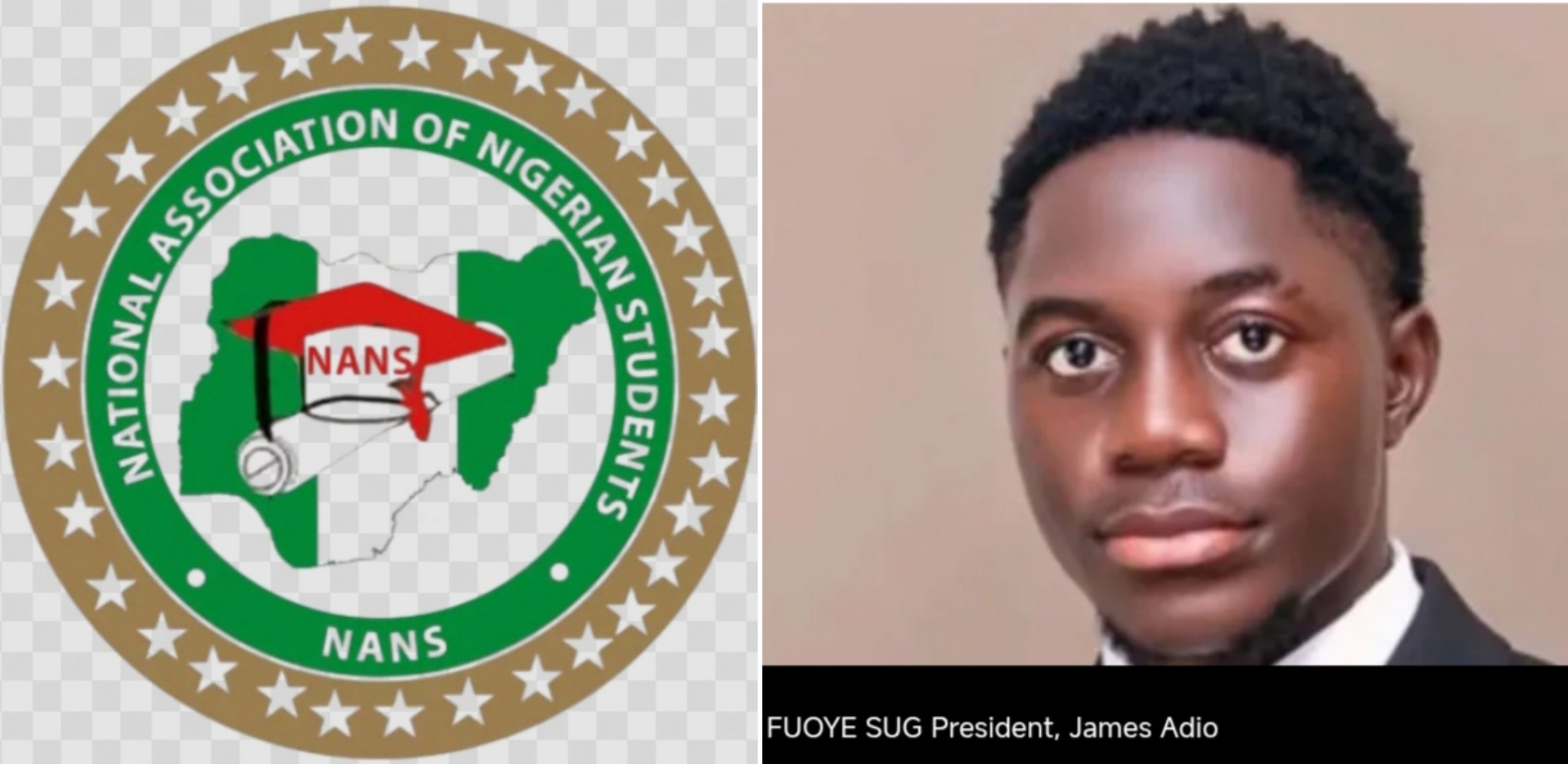
NANS Mobilises Ekiti Students for Protest Over Remand of Former FUOYE SUG President

The National Association of Nigerian Students (NANS) has commenced mobilisation for peaceful protests in Ekiti State following the remand of the immediate past Students’ Union Government President of the Federal University Oye-Ekiti (FUOYE), James Adio.

NANS National President, Akinteye Babatunde, announced the planned action in a statement on Monday, describing Adio’s remand as a miscarriage of justice and alleging that the former student leader was remanded in connection with a case he had originally instituted before a Magistrate Court in the state.

According to Akinteye, Adio was the complainant in the matter and had no criminal charge against him.

He said the development was disturbing because, based on information available to the association, the case allegedly shifted from the original complaint to issues involving Adio himself.

NANS consequently directed its Joint Campus Committee Chairman for the Ekiti Axis and its National Head of Administration to commence mobilisation for peaceful demonstrations.

The association said the protests would include lawful actions at the Ekiti State High Court, the Magistrate Court and the office of the Directorate of Public Prosecutions, with the aim of demanding justice and Adio’s release.

What led to the court case?

In a separate open letter addressed to Ekiti State Governor Biodun Oyebanji, the state’s Chief Judge and the Attorney-General and Commissioner for Justice, NANS Head of Administration, Owolewa Taiwo, provided further details of the association’s allegations.

NANS claimed that Adio had approached the court after private and consensual moments between him and another adult were allegedly recorded and circulated on social media without his consent.

The association said the case centred on alleged cyberbullying and the unlawful publication of private media.

However, NANS alleged that the focus of the proceedings before Magistrate Abayomi Adeosun of the Magistrate Court, Fajuyi, Ado-Ekiti, shifted from the alleged cyberbullying complaint to the private conduct of the parties involved.

The association claimed that Adio and the defendants were subsequently ordered to remain in remand custody until August 4, 2026.

NANS alleges concerns over prosecution

NANS further alleged that officials from the Ekiti State Ministry of Justice raised issues concerning the treatment of the parties by FUOYE.

According to the association, the Director of Public Prosecutions, Akinlabi O.O., and the Director of Citizenship Rights, H.A. Adeyemi, argued during proceedings that the university had treated the parties differently by suspending only the female involved while allowing Adio to sit for his examinations.

NANS, however, said Adio’s lawyers produced records indicating that his earlier suspension was unrelated to the matter before the court.

The association further claimed that Adio had subsequently been exonerated and reinstated by the university senate.

NANS also alleged that the principal defendant in the case had made repeated visits to the Ministry of Justice before the proceedings, raising what the student body described as concerns about the neutrality of the judicial process.

These allegations have not been independently established.

NANS demands reassignment of case

Against the backdrop of the controversy, NANS called for the immediate recusal of Magistrate Adeosun from the matter and the reassignment of the case to another judge.

The association also demanded an independent review of Adio’s remand order and an investigation into the conduct of the Director of Public Prosecutions and the Director of Citizenship Rights.

NANS warned that failure to address its demands would compel the association to petition the National Judicial Council and other relevant disciplinary bodies over the alleged conduct of the judicial officers involved.

The association said it remained committed to defending the rights of Nigerian students and promoting justice and the rule of law.

As of the time of filing this report, the Ekiti State Ministry of Justice had not publicly responded to the allegations contained in the NANS statement and open letter.

The development is expected to attract further attention as NANS proceeds with its planned mobilisation and as the legal process surrounding Adio’s remand continues.

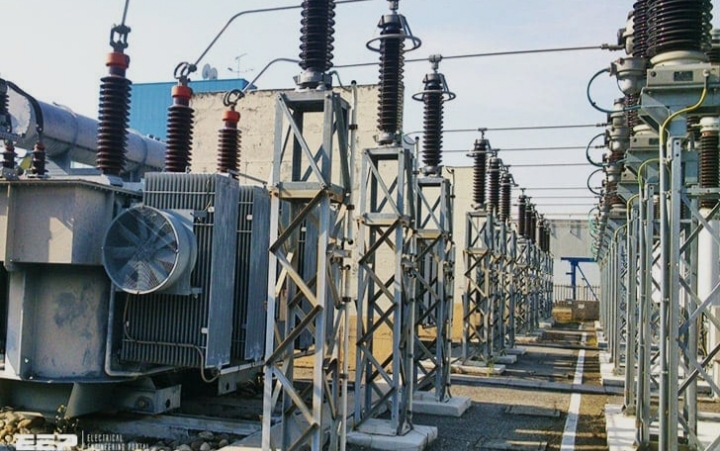
Nigeria Needs $228bn to Fix Power Sector by 2045 — Presidency

Nigeria will require an estimated $228 billion in electricity investments by 2045 to stabilise the national grid, expand power infrastructure and meet the country’s growing energy needs.

The projection translates to an average investment requirement of about $12 billion annually over the period, a figure that starkly contrasts with the approximately $1 billion currently being invested in Nigeria’s electricity sector each year.

The Special Adviser to the President on Power Infrastructure, Sadiq Wanka, disclosed this at Asharami Square 3.0 in Lagos, where he stressed that closing the massive investment gap would require coordinated policy reforms, stronger regulation and a deliberate strategy for attracting both domestic and international capital.

“Nigeria, potentially, needs $12 billion in electricity investments annually through 2045, versus $1 billion being spent currently,” Wanka said.

Generation, Transmission and Distribution Need Billions

Wanka said the required investment would have to be spread across the three major components of the electricity value chain — generation, transmission and distribution.

According to him, approximately $6.1 billion is required for generation, while about $2 billion is needed for transmission infrastructure.

The distribution segment, he added, could require between $2 billion and $4 billion to achieve the level of stability and efficiency required between 2025 and 2045.

The figures underline the scale of the challenge confronting Nigeria, where inadequate generation capacity, transmission constraints, distribution bottlenecks and financial weaknesses have continued to limit reliable electricity supply.

Electricity Act Opens Door to Greater State Participation

Despite the huge funding requirement, Wanka said recent reforms have begun reshaping the power sector and creating opportunities for decentralised investment.

He pointed particularly to the Electricity Act 2023, which has expanded the role of state governments in electricity regulation and opened the door to new categories of licences and greater private-sector participation.

He disclosed that regulatory oversight has already transitioned to subnational regulators in 16 states, potentially giving states greater room to develop electricity solutions suited to their local economies and energy needs.

Wanka cited recent initiatives as evidence of the emerging investment opportunities, including a $200 million public-private partnership announced by the Imo State Government to provide electricity across its local government areas.

He also referenced a N50 billion equity investment by franchise state governments in KEDCO aimed at supporting embedded energy and improving electricity networks.

Government Pushes Cost-Reflective Electricity Market

The Special Adviser also highlighted fiscal reforms designed to reduce the financial pressure on the Federal Government and move the electricity market towards greater commercial sustainability.

According to him, Band A electricity customers have transitioned towards cost-reflective tariffs, a development he said has contributed to an estimated N1 trillion annual reduction in electricity subsidies.

He also argued that the removal of subsidies on petroleum products has improved the economics of alternative power sources compared with self-generation.

Nigeria, he said, is currently importing approximately 1,700MW of solar panels annually, reflecting growing demand for alternative and distributed energy solutions.

Meanwhile, reforms in the oil and gas sector have helped unlock about $10 billion in Final Investment Decisions (FID) for major gas development projects, which could strengthen the fuel supply needed for gas-fired electricity generation.

New Investment Opportunities in Transmission and Hydropower

Wanka said the Federal Government is also pursuing several initiatives aimed at strengthening electricity infrastructure and attracting private capital.

Among them is the Light Up Nigeria pilot in Agbara, designed to improve electricity supply to industrial customers.

He said the Electricity Act has also created room for independent transmission network operators, potentially allowing private investors to participate more directly in the financing and operation of transmission infrastructure.

Another major initiative is the Transmission Infrastructure Fund, which was instituted in the third quarter of 2025 and is targeted for operationalisation in the fourth quarter of 2026.

The Federal Ministry of Power is also working with the Ministry of Water Resources on a fresh concession process for viable hydropower assets.

In addition, the World Bank-backed Sustainable Power and Irrigation Programme is developing a hydropower masterplan aimed at supporting financing for medium- and large-scale hydropower projects across Nigeria.

$23bn Needed to Close Electrification Gap by 2030

Wanka further called for stronger financial mechanisms to accelerate investment in the power sector, noting that Nigeria’s electrification gap could require approximately $23 billion by 2030 to address.

He advocated the establishment of a Power Project Development Fund, the designation of a nodal financial institution for the power sector and the creation of a Power Consumer Assistance Fund.

According to him, these mechanisms would help mobilise financing, de-risk investments and accelerate the development of electricity infrastructure.

He also urged investors to build the wider ecosystem required to develop bankable power projects and attract global pools of capital into Nigeria.

Development partners, he said, should equally support reforms, investment mobilisation and advocacy for a coordinated, Nigeria-led power sector development plan.

The Real Challenge: Turning Reform Into Investment

Nigeria’s power sector is therefore at a critical crossroads.

The country has embarked on regulatory and fiscal reforms designed to decentralise electricity development, increase private-sector participation and reduce the burden of subsidies. But the scale of the required investment remains enormous.

With the sector currently attracting roughly $1 billion annually against a potential requirement of $12 billion, Nigeria must find ways to mobilise significantly more long-term capital if it is to build a reliable electricity system capable of supporting industrialisation, job creation and economic growth.

The message from the Presidency is clear: Nigeria’s power challenge is no longer simply about generating more electricity. It is about mobilising the capital, infrastructure, regulation and investment ecosystem required to deliver reliable power at scale.

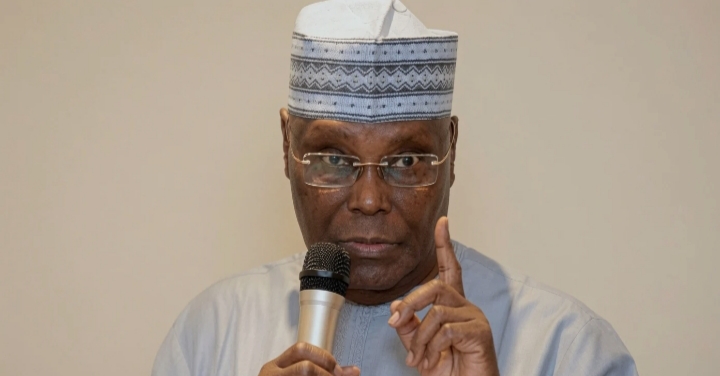
Atiku: Tinubu Finally Embraces My 21-Year-Old Blueprint to Fix Nigeria’s Power Crisis

Former Vice President of Nigeria and presidential candidate of the African Democratic Congress (ADC), Atiku Abubakar, has accused the administration of President Bola Tinubu of belatedly adopting a power-sector strategy he says he championed more than two decades ago.

Atiku made the claim through his spokesperson, Phrank Shaibu, in a statement issued on Sunday, following comments by the Minister of Power, Joseph Tegbe, that Nigeria can no longer rely solely on large, centralised power plants to meet the country’s electricity needs.

According to Atiku, the minister’s position amounts to a belated endorsement of the decentralised electricity generation model he had advocated during his time as Vice President under former President Olusegun Obasanjo.

“This has been my position for over two decades,” Atiku said.

The ADC presidential candidate recalled that while serving as Vice President, he consistently urged the Obasanjo administration to diversify and decentralise electricity generation by taking advantage of Nigeria’s abundant energy resources, including hydroelectric power, solar energy and gas.

Atiku argued that a decentralised approach would make it possible to generate electricity closer to communities and consumers while reducing the country’s dependence on large, centralised power plants.

“It should not take a government three years in office to discover what was obvious more than two decades ago,” he said.

The former Vice President also criticised the Tinubu administration over electricity tariffs, arguing that the government increased tariffs before implementing the reforms needed to improve electricity supply.

“A government that thinks before it acts would have fixed the system before asking citizens to pay more,” Atiku said.

He maintained that the administration had taken the opposite approach by increasing tariffs while only now beginning to consider the structural reforms required to improve power generation and supply.

The comments come amid continued debate over how best to address Nigeria’s longstanding electricity challenges, with policymakers increasingly examining alternative and decentralised power-generation models.

Atiku’s position also adds a political dimension to the ongoing power-sector debate as the former Vice President prepares to contest the 2027 presidential election under the platform of the ADC.

The former Vice President has continued to argue that Nigeria’s electricity crisis requires a fundamental restructuring of the power sector rather than isolated interventions, insisting that the country must fully exploit its diverse energy resources to achieve reliable and affordable electricity.