All posts by Our Reporter

IGP Disu: Nigeria’s State Police Framework Draws Lessons from India, US and Pakistan

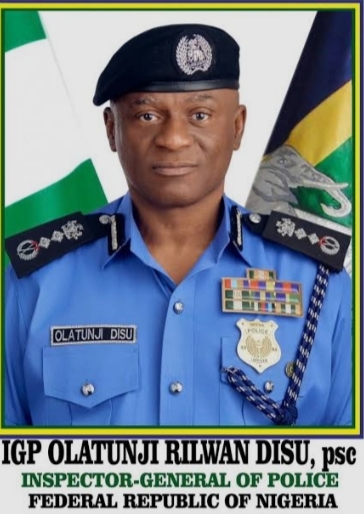
The Inspector-General of Police (IGP), Olatunji Disu, has revealed that Nigeria’s proposed State Police framework was developed after an extensive study of policing systems in India, the United States and Pakistan.

Speaking on Thursday at a one-day workshop on State Police organised by the Nigeria Police Institute at the Nigeria Police Resource Centre in Abuja, the IGP said the comparative analysis of these countries helped shape the recommendations currently under consideration by stakeholders.

Disu described the workshop as a timely opportunity for officers of the Nigeria Police Force to deepen their understanding of one of the country’s most significant security reform proposals.

He urged police personnel to actively participate in the ongoing national conversation on State Police by engaging with the issues objectively, contributing informed opinions and helping to educate the public on the proposed reform.

“As discussions on the creation of State Police continue to gain momentum across the country, members of the Nigeria Police Force must remain well-informed and contribute constructively to the ongoing discourse,” the IGP said.

According to him, the workshop provides a platform for participants to examine the implications of establishing State Police, raise critical questions, address legitimate concerns and make meaningful contributions that will strengthen national policy on policing and internal security.

Disu disclosed that the committee responsible for drafting the State Police framework carried out detailed comparative studies of countries operating decentralized policing systems.

“A lot of comparative analysis has been done. We have taken time to study nations where they have state police—India, America and even Pakistan—and how things work there,” he said.

He further explained that while state governors had already constituted committees to work on the initiative, the Nigeria Police Force was able to develop its own framework within just 17 days.

“The governors have already set up their committees. They have already almost concluded. In fact, they have concluded. We started late, but we caught up with them, and I’m happy to say our work is what they are deliberating on today,” he stated.

Disu added that the framework produced by the police has become the foundation for the ongoing discussions on State Police, although additional refinements are still being made.

The police chief also revealed that retired Inspectors-General of Police reviewed the document and made valuable recommendations aimed at strengthening the proposed framework.

“Retired Inspectors-General of Police have visited me, and they have shown their concern. We deliberated together, and they have contributed significantly to this process,” he said.

The debate over the establishment of State Police has continued to generate national interest, with supporters arguing that decentralised policing would improve intelligence gathering, enhance community policing and strengthen the fight against insecurity.

However, critics have consistently raised concerns about possible political interference, abuse of power and the need for strong constitutional safeguards to ensure accountability.

As deliberations continue among federal and state stakeholders, the framework developed by the Nigeria Police Force is expected to play a significant role in shaping the final model for State Police in Nigeria.

Farmer Jailed 35 Years for Killing Lodger, Hiding Body in Concrete-Filled Barrel for Nearly Six Years

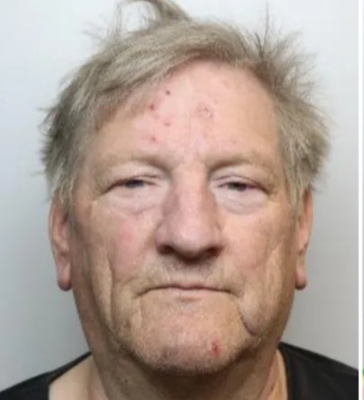
A 73-year-old farmer has been sentenced to 35 years in prison after being found guilty of murdering his lodger, dismembering his body, and concealing the remains in a concrete-filled barrel that went undiscovered for almost six years.

Christopher Wright was convicted at Sheffield Crown Court for the murder of 55-year-old Richard Dyson, who disappeared in November 2019. Investigators later discovered Dyson’s remains inside a barrel hidden in a locked livestock trailer on farmland near Barnsley.

The court heard that Wright shot Dyson with a shotgun after accusing him of stealing one of his firearms. Prosecutors said Wright became enraged when he learned Dyson had taken a valuable machine gun from his collection. Wright, described during the trial as a firearms enthusiast and collector of vintage weapons, farm machinery, and musical instruments, acted in a fit of anger and killed Dyson.

After the murder, Wright enlisted the help of his longtime childhood friend, 72-year-old Karl Schwalbe, to dispose of the body. Schwalbe was later convicted of perverting the course of justice and sentenced to three years in prison.

In addition to murder, Wright was found guilty of conspiracy to pervert the course of justice, preventing a lawful burial, and six firearms-related offences.

Richard Dyson had been living in his car outside Wright’s cottage in Hoyland, South Yorkshire, while helping with farm work, including repairing tractors, cutting hedges, and driving Wright to appointments.

Dyson’s disappearance sparked years of anguish for his family, particularly his daughter, Bethany Dainty, who repeatedly appealed to the public for information about her father’s whereabouts.

In an emotional victim impact statement presented in court, Dainty described the ordeal as a “living nightmare.”

“Someone watched me suffering for years and said nothing. That level of cruelty is impossible for me to understand,” she said.

Although Wright and Schwalbe were questioned by police shortly after Dyson was reported missing in November 2019, both denied any knowledge of his disappearance.

The breakthrough came in July 2025 when investigators reviewing historical mobile phone records discovered Wright had contacted a neighbouring farmer just days after Dyson vanished. Wright requested permission to temporarily store a livestock trailer on the neighbouring property, claiming he was “tidying up” his own farm.

The trailer remained untouched until investigators later searched it and found Dyson’s remains sealed inside a concrete-filled barrel. Wright’s identification was also recovered from the trailer, providing crucial evidence that helped secure his conviction.

The case, which remained unsolved for years, has now ended with justice for Richard Dyson’s family after one of the region’s most disturbing murder investigations.

Abia Assembly Passes Landmark Tenancy Bill: Landlords, Tenants Face New Rules, Strict Penalties

The passage of the Abia State Real Estate, Landlords and Tenancy Bill by the Abia State House of Assembly marks a major milestone in the state’s efforts to reform property relations and create a fairer housing system for landlords, tenants, and estate agents.

One of the co-sponsors of the bill described its passage as a transformative moment that will bring order, transparency, and justice to property transactions across Abia State. The legislation, which now awaits the assent of Governor Alex Chioma Otti, OFR, is expected to take effect immediately after being signed into law.

According to the lawmaker, the bill is the product of an extensive legislative process that included public hearings where landlords, tenants, estate agents, and other stakeholders contributed to shaping its final provisions.

A major highlight of the legislation is the establishment of the Abia State Property and Tenancy Regulatory Agency, which will regulate property transactions, oversee compliance with tenancy laws, register estate agents, and ensure that disputes are handled within the framework of the law.

The new bill introduces clear limits on rent advance payments to protect tenants from excessive financial demands.

Under the proposed law:

  • Sitting tenants cannot be required to pay more than six months’ rent in advance.
  • New tenants cannot be asked to pay more than one year’s rent in advance.

Any landlord who violates these provisions risks prosecution.

To curb exploitation in the real estate sector, estate agents will no longer be permitted to charge more than five percent of the annual rent as agency fees.

Agents who collect more than the approved rate will not only be fined but will also be required to refund any excess amount collected from tenants.

The legislation significantly strengthens tenants’ rights by making illegal eviction a punishable offence.

Landlords will no longer be permitted to demolish, alter, or damage buildings to force tenants out without following due legal process. Likewise, intimidation, harassment, threats, or destruction of tenants’ property now attract criminal sanctions.

Tenants can only be evicted through valid court orders.

The bill also provides that warrants for possession remain valid for three months and may only be renewed up to three times. In addition, no eviction warrant can be executed on Sundays or public holidays.

The legislation prescribes penalties for several offences.

Landlords who demand rent beyond the approved limits face a fine of ₦100,000, three months imprisonment, or both.

Failure to issue rent receipts also attracts a ₦100,000 fine, one month imprisonment, or both.

Illegal eviction, harassment, demolition of occupied property, or damage to tenants’ belongings carries a penalty of ₦250,000, six months imprisonment, or both.

Individuals who obstruct court orders or unlawfully retake possession of property after judicial decisions face similar penalties.

The bill makes registration compulsory for all estate agents operating in Abia State.

Anyone acting as an unregistered agent faces a ₦50,000 fine, three months imprisonment, or both.

All property transactions must also be recorded in the state’s Property Registry. Transactions that are not registered may attract a ₦250,000 fine or six months imprisonment and will not be recognized by courts in Abia State.

The legislation introduces severe penalties for financial misconduct involving escrow or trust accounts.

Anyone found diverting or misappropriating such funds faces up to five years imprisonment or a minimum fine of ₦500,000, or both.

Administrative violations such as late permit renewals or failure to display property identification numbers will attract regulatory fines imposed by the Authority rather than criminal prosecution.

The lawmaker emphasized that the House of Assembly remains committed to ensuring effective implementation of the legislation once it receives the Governor’s assent.

According to him, the Assembly will monitor the establishment and operations of the Regulatory Agency through its oversight responsibilities to ensure the law is implemented fairly and that the rights of landlords, tenants, and estate professionals are adequately protected.

He noted that the legislation balances the rights and responsibilities of all parties by protecting landlords’ investments while safeguarding tenants from exploitation and illegal eviction.

The lawmaker described the passage of the bill as a victory for every Abian, saying it demonstrates the commitment of the Abia State House of Assembly to promoting justice, accountability, and order in the state’s housing sector.

If signed into law by Governor Alex Chioma Otti, the legislation is expected to usher in a new era of regulated property transactions and significantly improve landlord-tenant relationships across Abia State.

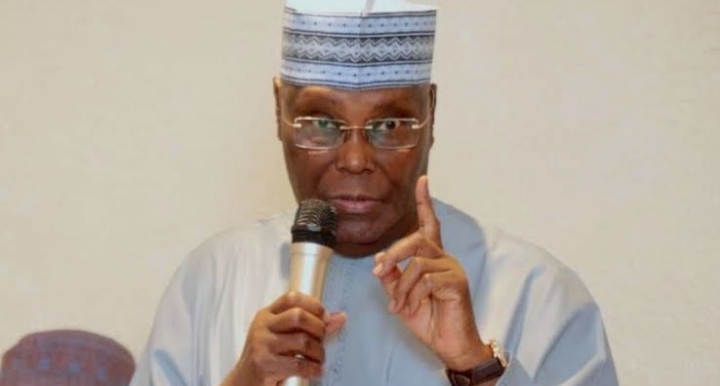
“Mortgaged Future: Atiku Demands Full Disclosure of Tinubu’s Secret Crude Oil Deals”

In a fiery exchange that has reignited debates over Nigeria’s economic transparency, former Vice President Atiku Abubakar has thrown down the gauntlet, demanding that President Bola Tinubu’s administration fully disclose the terms of crude oil-backed financing deals that he claims are mortgaging the nation’s future earnings.

The controversy began when the Presidency attempted to defend its economic record—but according to Atiku’s camp, that defense only confirmed their worst fears.

Phrank Shaibu, Atiku’s Senior Special Assistant on Public Communication, released a statement Monday arguing that the Presidency’s response inadvertently validated their concerns rather than dispelling them.

“In attempting to rebut our position, the Presidency inadvertently strengthened it,” Shaibu stated. “It admitted that despite higher international crude oil prices, Nigerians cannot fully benefit because substantial volumes of the nation’s crude have already been committed under crude-backed financing arrangements.”

Atiku, who also serves as the presidential candidate of the African Democratic Congress (ADC), didn’t mince words. He framed the admission as an “indictment rather than a defence,” arguing that if Nigeria’s future oil earnings are already encumbered, the administration has simply replaced one fiscal burden with another.

The former Vice President has posed pointed questions that he insists demand public answers:

· Who authorized these transactions?
· How many barrels of crude have been pledged?
· What are the repayment terms?
· How much revenue has been received so far?
· Which specific projects did the funds finance?
· Who are the counterparties to these deals?

“These are not political questions; they are constitutional questions about transparency and accountability,” Atiku declared.

Perhaps most damning is the link Atiku draws between these undisclosed oil deals and the administration’s removal of fuel subsidies. He argues that the Presidency cannot simultaneously celebrate eliminating subsidies while explaining away missing oil revenues by pointing to obligations created by that very subsidy financing.

“That contradiction speaks louder than any press statement,” he said.

Atiku’s message is clear: transparency, not propaganda, remains the true test of fiscal responsibility. A government unwilling to disclose the terms of its crude-backed borrowing, he argues, has no moral authority to lecture Nigerians on prudence.

As Nigerians grapple with rising costs and economic uncertainty, these questions about who is benefiting from the nation’s oil wealth—and at what cost—are unlikely to fade from public discourse.

The ball is now in the Presidency’s court. Will they answer the questions, or will they continue to leave Nigerians in the dark about the deals being made with their future?

Onaiyekan: My First and Final Epistle on the Matter By Omokugbo Ojeifo

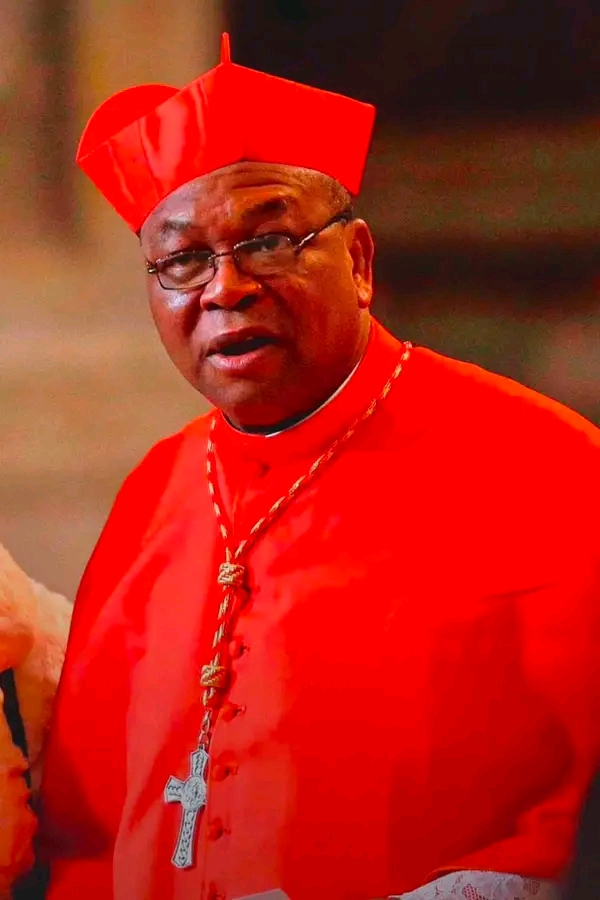
The insinuation that Cardinal Onaiyekan is criticizing Tinubu because he is supporting Obi is as lame as the P in Psychology. The only evidence those throwing this false claim have is a group photo of Onaiyekan and other bishops with Peter Obi at Archbishop Alaba Job’s triple anniversaries in Ibadan last month. Nowhere has Onaiyekan promised Obi that he’d fight for him; neither has the CBCN ever said that Obi is the ‘Catholic Church’s candidate’ for the presidency. I think the peddlers of this falsehood can do better!

For the records, Cardinal Onaiyekan has earned a solid reputation for prophetic advocacy on behalf of the Nigerian people for nearly 40 years. He has been forthright with every government from IBB and Abacha down to Tinubu’s. In 1994 when he was promoted from Bishop to Archbishop of Abuja, in his homily at his cathedral he fired a salvo at Abacha for creating unnecessary tension in the nation in the aftermath of the June 1993 crisis. Abacha was just next door to him. Even though Abacha considered Onaiyekan quite unsparing in criticizing his regime, when Onaiyekan’s father Pa. Bartholomew died in 1995, Abacha sent a handwritten condolence with a despatch of a major general of the regime to attend the funeral in Kabba.

On December 18, 2005, at the National Christmas Carols at the Ecumenical Center in Abuja, Onaiyekan told President Obasanjo straight to his face to resist the temptation of seeking a third term. Obasanjo was sitting right there in the front row. When El Rufai was going about his demolition spree in Abuja in the 2000s, Onaiyekan stood up to the FCT Minister for treating the poor people in Abuja shabbily and destroying their houses and their means of livelihoods without providing an alternative. Onaiyekan didn’t spare Jonathan for the bogus corruption in his government. Neither did he spare Buhari for the gross ineptitude of his administration. His voice has been consistent right from his days as Bishop of Ilorin in the mid-1980s till date. As President of CBCN for 6 years, he articulated the challenges of the nation with clarity and honesty.

It’s lame to think that he is critical of Tinubu’s regime because of Obi. If Obi were to become president of Nigeria today, what will he give to Onaiyekan? Will he make Onaiyekan vice-president of Nigeria or give him a contract? Onaiyekan does not give a hoot about who becomes president. Neither he nor the other Catholic bishops are eyeing the president’s seat. What they care about is that the country is governed well and that the government serves the common good of all Nigerians. When the Catholic bishops speak about the state of the nation, they are not speaking as partisan chieftains or political lords; they are speaking as prophets and shepherds who are articulating the sufferings of the people. As shepherds at the grassroots, Bishops feel the pulse of what is happening in the most interior villages, slums, and local communities across the country. They have regular pastoral visits to risky and dangerous places that the average Nigerian politician does not dare to go. They experience firsthand the sufferings and miseries of the poor and they consider it their prophetic social responsibility to amplify these concerns to those in power. Telling the bishops to face the pulpit and stay out of politics is both ignorant and dishonest. Are Bishops living in Mars? Aren’t they and the rest of Nigerians affected by the depredations of Nigerian politics?

Cardinal Onaiyekan is already 82 years old and God has immensely blessed him. His parents each died at 92, ten years apart from each other. Longevity flows in the Onaiyekan family. But even if Onaiyekan were to die today, he has lived a most accomplished life. He graduated from secondary school in Aliade in 1962 with the best result in the whole of northern Nigeria and turned down a scholarship to study anywhere in the world from the Sardauna and Premier, Sir Ahmadu Bello. He went to seminary and became a priest at 25, finished his doctorate in Rome with first class honors at 32, became the youngest ever rector of a Catholic major seminary in Nigeria at 34, was appointed to two Vatican International Commissions at 36, became a bishop at 38, an archbishop at 50, and a cardinal at 68. He has been auxiliary bishop of Ilorin, bishop of Ilorin, apostolic administrator of Ilorin, co-adjutor bishop of Abuja, bishop of Abuja, and Archbishop of Abuja for a combined period of 36 years. He has been a bishop for 43 years now. Tomorrow, August 3, 2026 he will mark his 57th year as a Catholic priest.

Onaiyekan has been CAN Chairman of Kwara State. He has been President of the Catholic Bishops Conference of Nigeria (CBCN) for two terms. He has been President of Christian Association of Nigeria (CAN). He has been Co-President of the Nigeria Interreligious Council (NIREC). He has been President of the Catholic Bishops Conferences of West Africa (RECOWA) for two terms. He has been President of the Symposium of Catholic Bishops Conferences in the continent of Africa (SECAM). He has been President of the African Council for Religious Leaders (ACRL). He has been Co-President of the World Council of Religions for Peace (WCRL-RfP). He is an Honorary Life President of WRCL-RfP. He has been a Member of the General Council of the Synod of Bishops at the Vatican for several years. He has been a Member of the Global Agenda Council on Religions at the World Economic Forum (WEF). Onaiyekan has been president of every possible national and continental Christian body you can dream of. So why would anyone think he has something to gain for speaking truth to power other than the good interest of the Nigerian people?

As he is today, Cardinal Onaiyekan can travel on a Vatican diplomatic passport, if he wants to. He has food to eat; he has clothes to wear; he has a roof over his head; he has access to the best healthcare facilities, if need be. He has a means of mobility. He has been using the only two cars he has for 12 and 13 years respectively and has refused to change them. If he wanted new vehicles today, at the snap of a finger tens of persons will make new ones available. But he has chosen to live a life of simplicity, modesty, and frugality. He spends the gifts he receives doing charity, even to people he doesn’t know and has never met because they are in need of help. He has supported the education of countless numbers of indigent children; given hope and support to families without means of livelihood. When he speaks, he is not speaking for himself. He is speaking for the poor, the suffering, the hungry, the sick, all those whose lives have been put on hold due to the dire economic situation in the country. This is what Jesus would do!

Trump Pressures Chevron and U.S. Oil Companies to Cut Gas Prices Amid Rising Profits and Election Pressure

President Donald Trump is turning up the heat on Big Oil.

In a sharp message posted Monday on Truth Social, Trump called out Chevron CEO Mike Wirth and other top oil executives, demanding immediate relief for American drivers at the pump.

At the center of the dispute is Wirth’s recent television interview, which Trump said failed to acknowledge what his administration has done to strengthen the U.S. oil industry.

Trump pointed specifically to Chevron’s century-long footprint in Venezuela — noting the company was previously forced out but has now returned in a stronger position under his administration’s policies.

His message to the rest of the industry was even more direct:
“Get your consumer (retail!) Oil Prices DOWN, NOW!”
Chevron has not yet publicly responded.

Why Gas Prices Are Back in the Spotlight

The timing is no coincidence. With the November midterm elections approaching, rising gasoline prices and cost-of-living concerns are becoming a major political flashpoint.

For the White House, gas prices are one of the most visible economic indicators. Even a small increase at the pump hits household budgets instantly — and shapes how voters feel about the economy.

There was some relief on the global market: crude oil prices dropped sharply after Trump called off a planned major military action against Iran over the weekend.

But that drop hasn’t reached American motorists yet. Retail gas prices don’t move in lockstep with crude. They are set by a mix of factors — the price of crude, refinery margins, distribution and transportation costs, taxes, and local market conditions.

Big Oil’s Big Profits

The push to lower prices comes as America’s largest energy companies post blockbuster numbers.

ExxonMobil, Chevron, Valero Energy and Marathon Petroleum have all reported strong results, boosted by higher crude prices and refining margins since the war that began in February.

Valero just posted its strongest quarterly profit since the 2022 energy crisis that followed Russia’s invasion of Ukraine. Chevron reported its highest quarterly earnings in at least six years.

That profitability is giving the White House political leverage to argue that producers and refiners can afford to cut prices.

Still, the link between record profits and pump prices is complicated. Major oil companies operate across the entire supply chain — from drilling to refining — while what you pay at the station is heavily influenced by global markets and refining costs beyond any single company’s control.

The Balancing Act

Trump’s latest statement captures the central tension of his energy policy: championing increased U.S. oil and gas production while demanding that American consumers see the benefit in cheaper fuel.

His administration has consistently pushed for more domestic drilling and fewer restrictions on the industry. Now, it wants that production boom to translate into lower retail prices.

For drivers, the question is simple: When will falling crude prices mean cheaper gas?

For oil executives in Houston and beyond, the message from Washington is even simpler: The White House is watching — and it wants prices down now.

Two Helicopters Collide Mid-Air While Battling Greece Wildfire, Killing Two Crew Members

ATHENS — Two crew members have been killed after two Bell helicopters collided mid-air while battling a major wildfire in Greece, authorities have confirmed.

The victims were identified as a Danish pilot and a Greek fire service liaison officer who were aboard one of the helicopters involved in the crash.

The accident occurred on Sunday along the Attica-Boeotia border, about 65 kilometres (42 miles) west of Athens, as the helicopters were taking part in firefighting operations.

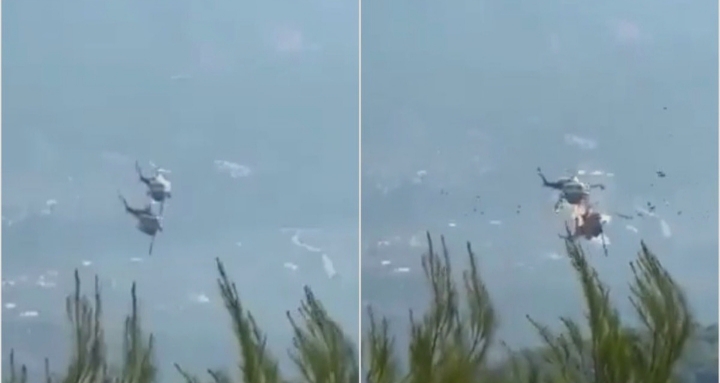
Video footage of the incident shows one of the Bell helicopters striking the propellers of the other aircraft before bursting into flames and crashing into a ravine. The second helicopter managed to make an emergency landing in an area with low vegetation.

According to the Greek Fire Service, the two helicopters had been leased from Australian aviation company McDermott Aviation to support efforts to contain the wildfire.

The crew members aboard the helicopter that crashed were initially rescued unconscious and were later pronounced dead. The other aircraft had two people on board — a British pilot and a Greek fire service liaison officer — both of whom survived with minor injuries.

The two survivors reportedly remained conscious after the emergency landing and were taken to hospital for observation.

A source from Greece’s civil protection ministry told the BBC that the British pilot was a private pilot hired specifically for the wildfire season and was not part of any official UK-Greece exchange programme.

Following the accident, authorities grounded Bell helicopters operating across Greece in accordance with established safety protocols, pending further assessment.

The collision has cast a sombre shadow over Greece’s ongoing battle against wildfires, which have prompted mass evacuations in several areas.

Greek Prime Minister Kyriakos Mitsotakis expressed his deepest sorrow over the deaths, saying the loss of the Greek coordinator and Danish pilot was a source of grief for the country.

He extended his condolences to the families, friends and colleagues of the victims.

The names of the four crew members involved in the accident had not been publicly released at the time of reporting.

John McDermott, founder and president of McDermott Aviation, also expressed condolences to the families and colleagues affected by what he described as a tragic incident.

McDermott Aviation said it was working with the relevant authorities and would continue to assist with the investigation into the circumstances surrounding the collision.

Meanwhile, firefighting operations have continued, with Erickson Air-Crane and Chinook helicopters, alongside Canadair water-bombing aircraft, deployed to combat the flames.

Greek media have described the firefighting operation as a “titanic battle”, with more than 500 firefighters reportedly working to contain fires across areas including Porto Germeno, Psatha, Fokida, Megara and Kefalonia.

The crisis comes amid a wider wave of wildfires across parts of Europe, following prolonged periods of extreme heat.

France and Spain have also battled major fires in recent days, including blazes near Madrid and Bordeaux. Although some of the fires have been brought under control, authorities have continued to monitor affected areas, while hundreds of thousands of evacuated residents have begun returning home.

Scientists have repeatedly warned that climate change is increasing the frequency of hot and dry conditions that can create favourable environments for wildfires.

In Greece, authorities have also pointed to the role of human activity in many wildfire outbreaks. A mild and wet winter encouraged vegetation growth, while subsequent periods of intense heat dried the vegetation, creating additional fuel for fires.

As Greece continues its battle against the flames, the helicopter tragedy has added another devastating dimension to an already dangerous firefighting operation.

Emetu to Ohafia Youth Leaders: Put Ohafia First, Embrace Unity and Selfless Service

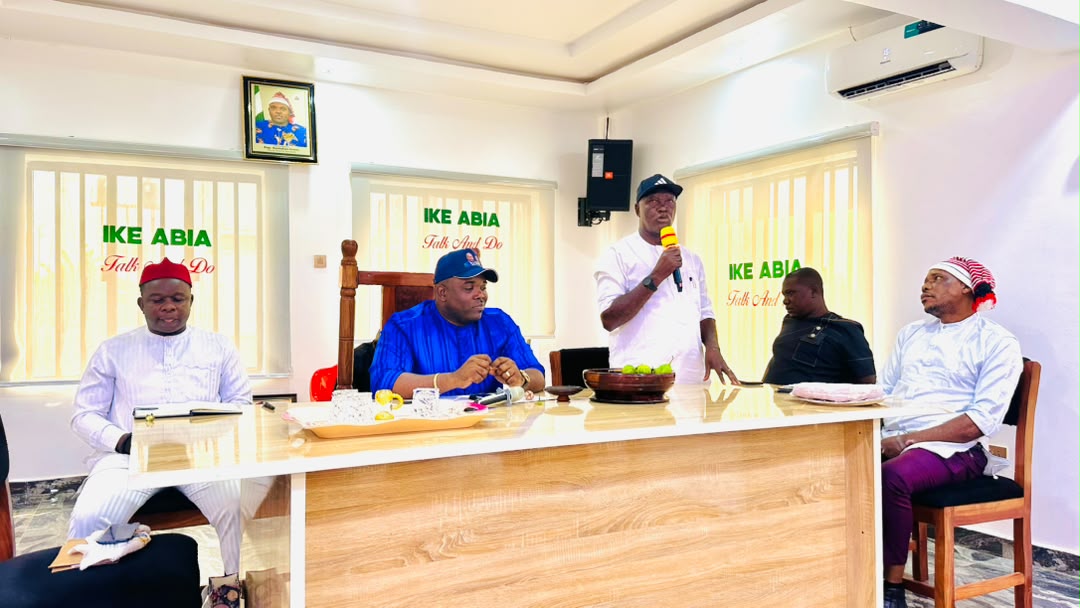
The Deputy Governor of Abia State, Engr. Ikechukwu Emetu, FNSE, has charged the new leadership of the Ohafia Improvement Union (OIU) Youth Wing and youth leaders from across Ohafia Clan to put the collective interest of Ohafia above personal interests and work together to advance the development of the area.

Emetu gave the charge on Saturday when he received the leadership of the OIU Youth Wing and Ohafia Community Youth Leaders at his residence in Amaekpu, Ohafia.

The meeting was convened to felicitate the newly elected leadership of the OIU Youth Wing and provide an opportunity for greater collaboration among the various youth leadership structures in Ohafia.

Emetu urged the leaders to recognise that their positions are a responsibility and a call to service, rather than an avenue for personal advantage.

He specifically charged them to protect the integrity, dignity and interests of the Ohafia people, irrespective of community affiliations, and to demonstrate maturity, fairness and selflessness in the discharge of their responsibilities.

The Deputy Governor said stronger collaboration among the youth leaders would be critical to promoting peace, security, unity and development across Ohafia.

Responding, the National President of the OIU Youth Wing, Chief Ukariwe Godwin, and the Home Branch President, Hon. Ume Kalu, who spoke on behalf of the youth leaders, thanked the Deputy Governor for the warm reception and for his continued support and affection for Ohafia sons and daughters across the various communities.

They pledged to work hand in hand with the community youth leaders to promote peace, strengthen unity and build a safer and more prosperous Ohafia for all.

The engagement underscored the importance of a united youth leadership in driving positive change and ensuring that the collective aspirations of the Ohafia people remain at the centre of community development.

The meeting was attended by the executive members of the Ohafia Improvement Union Youth Wing, as well as youth leaders from the various communities across Ohafia Clan.

MOUAU Students Celebrate as VC Akanwa Begins Refund of School Fees Paid Before NELFUND Disbursement

There was excitement and jubilation among students of Michael Okpara University of Agriculture, Umudike (MOUAU), as the institution commenced the refund of school fees paid by students before the disbursement of funds under the Nigerian Education Loan Fund (NELFUND).

The development followed a directive by the Vice-Chancellor of the University, Prof. Ursula Ngozi Akanwa, that students who had paid their school fees before receiving their NELFUND loans should be refunded.

Some of the beneficiaries who spoke with MOUAU UPDATE confirmed that they had received their refunds and expressed appreciation to the Vice-Chancellor for keeping her promise to the students.

A graduate of Human Nutrition and Dietetics, Onu Edith Amarachukwu, said she received her refund on July 28, 2026, describing the development as a welcome relief.

“I am very happy. I had planned to use the money for something important. I thank God and the Vice-Chancellor for making this possible,” she said.

Similarly, Ikechi Divine, a 500 Level student of Chemical Engineering, said he had almost lost hope of receiving the refund.

“I nearly lost hope that the refund would not come. May God bless our Vice-Chancellor, Prof. Ursula Ngozi Akanwa, for fulfilling her promise in less than one week,” he said.

For Samuel Onyeka Ozondiniru, a 300 Level Civil Engineering student, the refund demonstrated the Vice-Chancellor’s commitment to the welfare of students.

“The Vice-Chancellor has truly shown that she is a mother. She kept her promise, and this has restored the confidence of many students. We are grateful for this kind gesture,” he said.

The Vice-Chancellor had announced the refund initiative during the inauguration and swearing-in ceremony of the newly elected Students’ Union Government (SUG) last week.

Prof. Akanwa disclosed that she had directed the University Bursar to immediately process refunds for students who had paid their school fees before the Federal Government disbursed their NELFUND loans.

According to her, the decision was aimed at ensuring that students who had already paid their fees did not lose the financial benefit provided under the education loan scheme.

The commencement of the refunds has therefore been welcomed by beneficiaries as a demonstration of the University’s responsiveness to students’ concerns and commitment to their welfare.

For many of the affected students, the refund is not only financial relief but also a fulfilment of the assurance given by the Vice-Chancellor that they would not be disadvantaged for paying their fees before the arrival of their NELFUND funds.

GOV. OTTI MOVES TO STRENGTHEN GRASSROOTS DEMOCRACY, SEEKS MANDATORY TRAINING FOR LOCAL GOVT LEGISLATORS

…As Abia Councillors Unanimously Adopt Mandatory Legislative Orientation for New Councils

The Executive Governor of Abia State, Dr. Alex Chioma Otti, OFR, has reaffirmed his administration’s commitment to strengthening democratic institutions at the grassroots, with a call for mandatory legislative orientation and capacity-building programmes for newly elected local government legislators across the state.

The Governor’s position was conveyed on Friday by the Deputy Governor, Engr. Ikechukwu Emetu, FNSE, who represented him at a one-day capacity-building seminar for local government legislators organised by the Abia State Law Reform and Review Commission in collaboration with the Office of the Senior Special Assistant to the Governor on Legal Matters, the Ministry of Justice and the Ministry of Local Government and Chieftaincy Affairs.
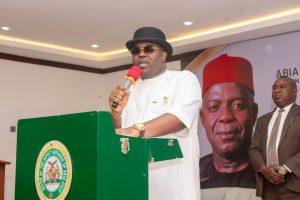
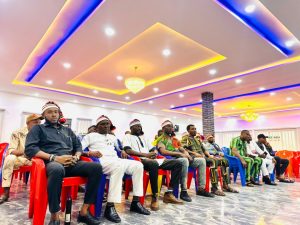
The seminar, themed “Strengthening Local Government Legislative Capacity for Effective Grassroots Governance in Abia State,” brought together mayors, councillors, legislative officers, legal practitioners, government officials and other stakeholders from the state’s 17 local government areas.

Declaring the seminar open, Emetu said sustainable development at the grassroots depends on strong legislative institutions, competent lawmakers and quality legislation. Describing laws as “the quiet architects of civilization,” he stressed that enduring development is built on strong institutions rather than individuals.
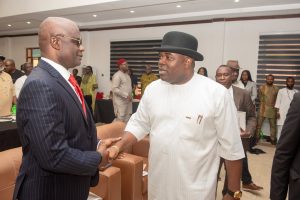
He noted that the ongoing exercise by the Abia State Law Reform and Review Commission to collate, review and document existing bye-laws across the 17 local government areas had exposed gaps in legislative capacity and underscored the need for continuous training of councillors.

According to him, obsolete and poorly drafted bye-laws, weak legislative procedures and inadequate understanding of constitutional responsibilities could undermine democratic accountability, effective oversight and service delivery at the grassroots.
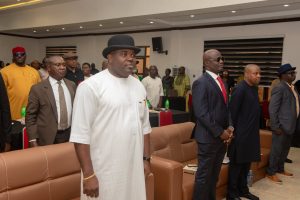
Emetu urged the legislators to take full advantage of the seminar to deepen their knowledge of legislative procedures, lawmaking, budget scrutiny and oversight, stressing that local government legislative councils must become effective instruments of accountability and grassroots development.

“Our legislative councils should serve as guardians of accountability, partners in development and the conscience of local democracy,” he said.

The Deputy Governor further advocated that structured legislative orientation and capacity-building programmes should become mandatory within the first quarter after the inauguration of every new local government legislative council in Abia State.
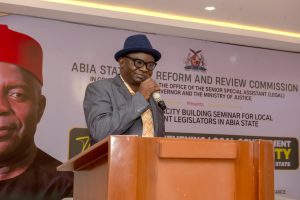
The proposal was unanimously adopted by participants through a voice vote.

Emetu also urged councillors to focus on enacting people-oriented bye-laws capable of protecting vulnerable citizens, promoting economic growth, preserving public order and addressing the peculiar needs of their communities.

He stressed that effective legislation must be developed through proper procedures, public consultation and a clear understanding of the legal and constitutional responsibilities of local government legislative councils.
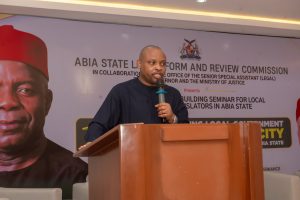
“The quality of governance at the grassroots is directly connected to the quality of the laws and institutions that guide it,” the Deputy Governor stated, urging councillors to see their legislative responsibilities as a solemn mandate to the people.

Speaking on behalf of the Speaker of the Abia State House of Assembly, Rt. Hon. Emmanuel Emeruwa, the member representing Ohafia South State Constituency, Hon. Kalu Mba Nwoke, described local government as the tier of government closest to the people.
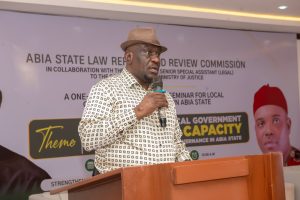
He observed that many councillors assume office without adequate knowledge of legislative procedures, public financial management, budget analysis and oversight functions, resulting in weak legislative councils, poorly drafted bye-laws and limited accountability.

Hon. Nwoke said well-trained local government legislators would be better positioned to enact relevant and enforceable bye-laws, conduct effective oversight of the executive arm, ensure that budgets reflect the priorities of the people, promote transparency and serve as a bridge between government and their communities.

He commended Governor Otti for supporting the initiative and called for sustained capacity-building programmes for local government legislators across the state.
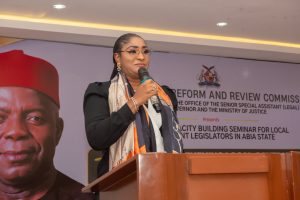
Earlier in his welcome address, the Secretary of the Abia State Law Reform and Review Commission, Barr. Dave Okwum Kalu, described the seminar as the first state-wide capacity-building programme specifically organised for local government legislators in Abia State.

He explained that the initiative was conceived against the backdrop of the Commission’s ongoing exercise to compile, review and document bye-laws across the 17 local government areas.
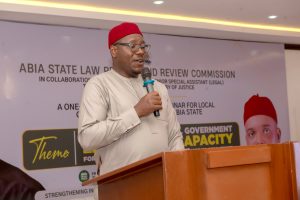
According to him, the exercise had revealed the need to strengthen the capacity of councillors in legislative drafting, lawmaking and the proper application of legal procedures.

Barr. Kalu urged participants to actively engage with the training and adopt a “train-the-trainer” approach by sharing the knowledge acquired with their colleagues in their respective legislative councils.

Presenting a lead paper on the “Legal Framework for Local Government Legislation,” the Attorney-General and Commissioner for Justice, Mr. Ikechukwu Uwanna, SAN, stressed the importance of legislative competence, proper drafting procedures and extensive public participation before the passage of any bye-law.
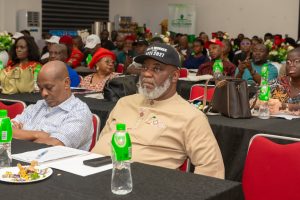
He outlined the essential elements of quality legislation to include clear drafting, appropriate enforcement mechanisms, clearly defined offences and penalties, public hearings and effective committee scrutiny.

Uwanna also highlighted provisions of the Abia State Local Government Administration Law 2025 relating to digital financial management systems, electronic personnel records, online publication of financial reports and transparent procurement processes, noting that such measures were designed to strengthen accountability and transparency in local government administration.
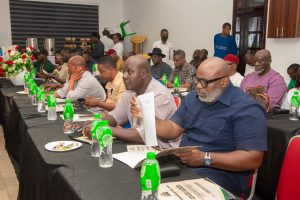
He said the seminar reflected Governor Otti’s commitment to institutional development and continuous capacity building, while commending the revitalisation of the Abia State Law Reform and Review Commission and its growing role in legal and institutional reforms in the state.

In her remarks, the Senior Special Assistant to the Governor on Legal Matters, Barr. Mrs. Nkolika Cleopatra Ubani, described the programme as an investment in democratic institutions and legislative excellence.
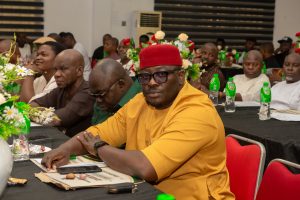
She said properly drafted and legally compliant bye-laws were essential to effective local government administration, urging participants to use the opportunity to strengthen their legislative competence and develop laws capable of addressing contemporary challenges in their respective communities.

Also speaking, the Commissioner for Local Government and Chieftaincy Affairs, Prince Uzor Nwachukwu, described the seminar as timely and beneficial, urging the organisers to extend similar programmes to all councillors across the 17 local government areas to ensure that no legislator is left behind.
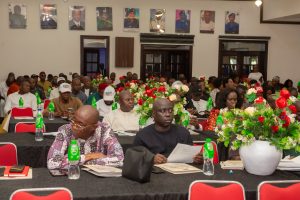
Delivering the keynote address, former Deputy Governor of Abia State and former Speaker of the Abia State House of Assembly, Rt. Hon. Sir Ude Oko Chukwu, said strong legislative councils were indispensable to effective grassroots governance.

He noted that effective lawmaking, representation and oversight remained critical to improving service delivery, community development and accountability at the local government level.

Sir Ude urged the state government to sustain regular capacity-building programmes for local government legislators, while encouraging councillors to see their legislative responsibilities as a critical component of democratic governance.

Presenting a paper on “The Strategic Role of Local Government Legislators in Advancing Grassroots Governance and Development,” constitutional law scholar, Dr. Udo Ugochukwu, urged councillors to prioritise people-oriented legislation through community engagement, effective oversight and responsible representation.

He emphasised that stronger legislative capacity, financial autonomy and continuous training would enhance transparency, improve service delivery and deepen democratic participation at the grassroots.
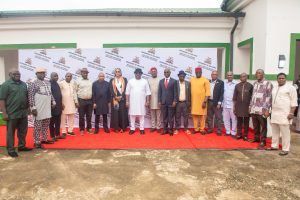
The seminar featured technical sessions on the legal framework for local government legislation, legislative drafting and practical lawmaking, including demonstrations on the preparation of model bye-laws, interactive discussions and question-and-answer sessions.

Participants were drawn from the 17 local government areas of Abia State and included mayors, councillors, legislative officers, legal practitioners, government officials and other stakeholders in local government administration.

Sir Cyril Chukwudi Eke Mba
Chief Press Secretary to the Deputy Governor of Abia State
Government House, Umuahia
August 1, 2026.